
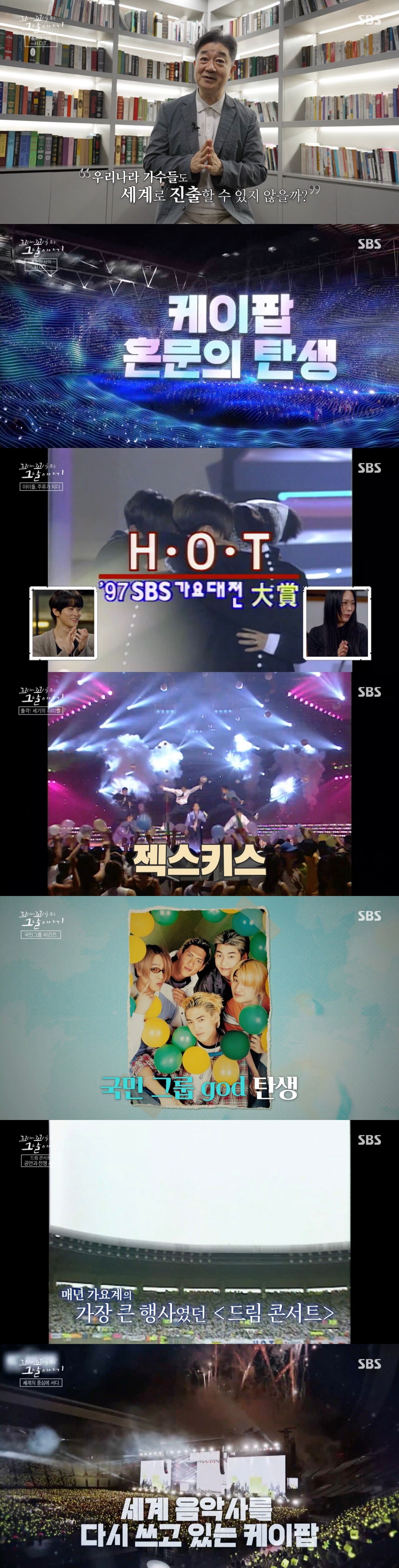
On the Nov. 27 episode of SBS’ "Tails of Tales", the series spotlighted the birth of K-pop’s fan-powered culture, tracing it back to the genre’s first wave of idols.
In June 1999, at the Michael Jackson & Friends charity concert, the King of Pop delivered a signature showstopper―and then invited a Korean act to close the night. H.O.T., then at the absolute peak, took the finale. One journalist who watched wished their performance would be etched into minds worldwide, daring to hope that a global breakthrough might finally be possible for Korean pop.
H.O.T., who debuted on Sept. 7, 1996, sparked a full-blown teen phenomenon, with fans hanging on their every move.
Their rivals SECHSKIES quickly rose on a parallel track, igniting fierce fandom battles that defined the era.
The two idol juggernauts swept music awards. In 1997, H.O.T. took the top honor (Daesang) at year-end ceremonies, proving idol music wasn’t just kid stuff.
By 1998, H.O.T. and SECHSKIES even shared a joint Daesang at a year-end awards show.
Then came g.o.d in 1999, pushing through early setbacks after a lukewarm first album. Momentum shifted fast: their second album’s title track, “Love and Memory,” heated up at the year’s end, and the following year they became a national phenomenon with the hit variety series "g.o.d’s Baby Diary" and their signature anthem “Lies.”
Riding that wave, g.o.d closed 2001 by sweeping the Daesangs across the three major broadcasters’ year-end music awards―cementing a reputation as the group you could count on.
At the height of first-gen idol mania, the Dream Concert offered a panoramic snapshot of fandom scale. Seas of color-coded balloons and thunderous chant guides filled the stadiums, as fans declared their love and artists soaked it in.
Fans even began donating in their idols’ names―a tradition that continues today, evolving K-pop fandom into a force for social good beyond simple stanning.
H.O.T.’s album releases in China scored big, hinting at K-pop’s global potential well before the current boom.
From that first generation on, the idol system and fandom culture took shape in earnest―opening a runway for Korean pop to travel the world.
At the center of it all were countless artists, producers, and staff whose sweat and passion laid the groundwork.
Years later, BTS would pack London’s Wembley Stadium, making K-pop fever―across nationalities, ages, and genders―an undeniable reality.
And this year, "KPop Demon Hunters" drew fresh global attention. Director Maggie Kang shared in an interview that she was a devoted H.O.T. fan, noting that a “Saja Boys” performance reference drew from the group―proof that a K-pop-loving girl grew up to splash K-pop across the world stage.
Korean independence leader Kim Gu once wrote in his memoir Baekbeom Ilji that the power of culture brings happiness and should make Korea a source and model for a higher, new culture―so that true peace might spread from Korea to the world.
With K-pop shaking the globe, that vision feels closer than ever.
The first generation who helped start it all call that legacy an “honor”―and they credit younger idols for elevating the genre and carrying it forward.
(SBS Entertainment News | Kim Hyo-jung)

댓글