
 KOR
KOR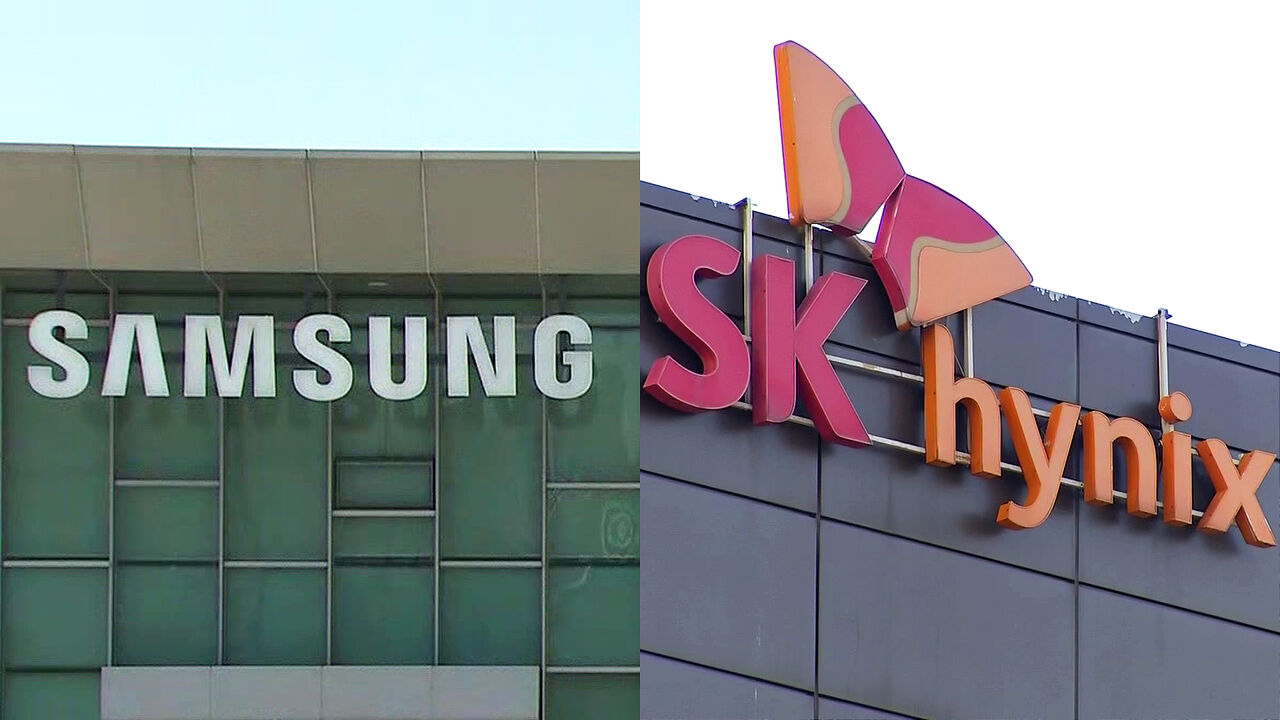
▲ Samsung, SK Hynix
Samsung Electronics and SK Hynix are reviewing plans to expand semiconductor cluster investments in the Honam region, including Gwangju and South Jeolla Province, as well as the Chungcheong region.
The investment scale is estimated to reach hundreds of trillions of won.
According to industry sources on June 28, Samsung Electronics and SK Hynix are coordinating details to announce large-scale regional investment plans, including these initiatives, at a public-private joint meeting on "National Spatial Transformation (Balanced National Development)" to be held at the Presidential Office later this month, presided over by President Lee Jae-myung.
It is reported that both companies are considering plans to build both memory semiconductor production facilities (front-end process) and packaging facilities (back-end process) within the semiconductor clusters to be established in the Honam and Chungcheong regions.
The front-end process involves forming circuits on wafers to create memory cells and devices during semiconductor manufacturing, while the back-end process involves cutting, packaging, and testing the completed chips to finalize them as usable products.
Initially, the industry expected that Samsung Electronics and SK Hynix would focus their investments on the back-end process, considering the infrastructure conditions such as power and water supply in those regions.
However, as discussions now include the core front-end manufacturing process to enhance the clustering effect of the semiconductor industry in the region, there is a possibility that the scale of investment will exceed initial expectations.
Considering that the construction cost for a single semiconductor fabrication plant (fab) is at least 60 trillion won, some observers suggest that the total investment by Samsung Electronics and SK Hynix could reach 300 to 400 trillion won.
In relation to this, President Lee is scheduled to meet with Samsung Electronics Chairman Lee Jae-yong on June 25 to discuss specific investment plans, and he is reported to have met with SK Group Chairman Chey Tae-won on June 19.
In particular, there is speculation that Chairman Lee and Chairman Chey may personally announce investment plans for semiconductor plants and AI data centers during their respective visits to Asan, South Chungcheong Province (July 2), and Gwangju (June 30).
These discussions are aligned with the regional balanced development strategy promoted by the government.
The government is currently pursuing the "5-Pole, 3-Special" national balanced development strategy (five super-regional areas and three special self-governing provinces) and the construction of a semiconductor belt in the southern region.
Furthermore, the "Special Act on Strengthening Competitiveness and Support for the Semiconductor Industry" (Semiconductor Special Act), which is set to take effect in August, includes provisions for semiconductor cluster support and special exemptions for permits that take regional balanced development into account, serving as a background for these companies to consider regional investments.
In his recent press conference marking his first year in office, President Lee stated, "We will move toward becoming a powerhouse in super-gap industries where all citizens and the entire nation equally enjoy the opportunities and benefits of growth. We will soon unveil large-scale investment projects that will bring about a major transformation in our growth strategy."
If semiconductor production facilities, currently concentrated in the capital region, are expanded to the southern regions such as Honam, competition among regions to attract investments is expected to intensify.
※ Please note: This article was translated by AI and may contain errors.


 Video News

 Video News

 Video News