
 KOR
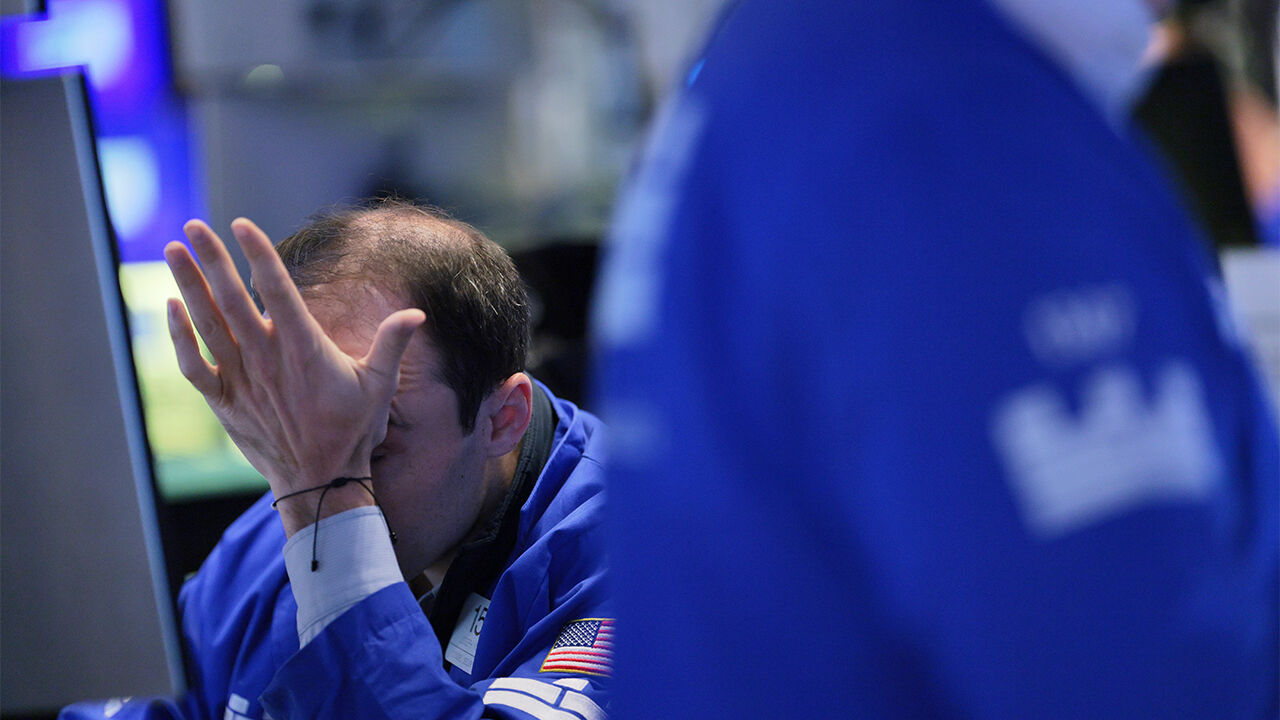
▲ New York Stock Exchange
Market capitalization of stocks on the tech-heavy Nasdaq Composite evaporated by more than 2 trillion dollars in a single day as anxieties over artificial intelligence (AI) trading hit the stock market.
On the 5th local time, the Nasdaq Composite plummeted 5.52% to close at 24,315.00, falling 11.9% from October 6 and entering correction territory.
The drop on this day was the largest in 19 months, since April of last year when President Donald Trump announced mutual tariff rates by country.
Consequently, about 2.5 trillion dollars (approx. 3,391 trillion KRW) in market capitalization of Nasdaq Composite components evaporated on this day.
This marks the largest drop in the history of the Nasdaq Composite.
Based on the Nasdaq 100 Index, 2.3 trillion dollars (approx. 3,119 trillion KRW) of market cap vanished, also recording an all-time high drop for the Nasdaq 100 Index.
On this day, the Nasdaq 100 Index tumbled 6.36% to close at 26,629.81.
This is the largest drop in about 6 years and 7 months since March 2020, when the market plunged due to the COVID-19 pandemic.
The top market-cap Magnificent 7 (M7) stocks all declined.
At one point on this day, market capitalization evaporated by about 1 trillion dollars.
Tesla plummeted 10.8% and Nvidia plunged 9.3%.
Nvidia's market capitalization evaporated by about 447 billion dollars (approx. 606 trillion KRW).
The Philadelphia Semiconductor Index crashed 12.2%.
This sharp decline is interpreted as being influenced by growing concerns that regulations on data centers could be tightened after the Democratic Party secured control of both the Senate and the House of Representatives in the midterm elections on the 3rd.
The Wall Street Journal (WSJ) explained that the previous day, hyperscalers such as Microsoft, Amazon, and Alphabet rose while infrastructure companies like semiconductors and construction plummeted, but on this day, the polarization could not be sustained and selling pressure spread across all sectors.
Jonathan Corpina, senior managing partner at asset management firm Meridian Equity Partners, said, "It feels like the rug is being pulled out from under our feet," adding, "Because of all this uncertainty ahead, the market continues to be extremely vulnerable."
Supply and demand also magnified the drop.
Bloomberg reported that Barclays estimated volatility control funds would sell about 135 billion dollars (approx. 183조 KRW -> 183 trillion KRW) worth of U.S. stock futures over the next 24 to 48 hours.
The Volatility Index (VIX), known as Wall Street's fear gauge, surged 11.54 points (69.5%) to close at 28.15.
The single-day surge is the largest since April of last year.
(Photo: Getty Images)
※ Please note: This article was translated by AI and may contain errors.


 Video News
 Video News


 Video News