
 KOR
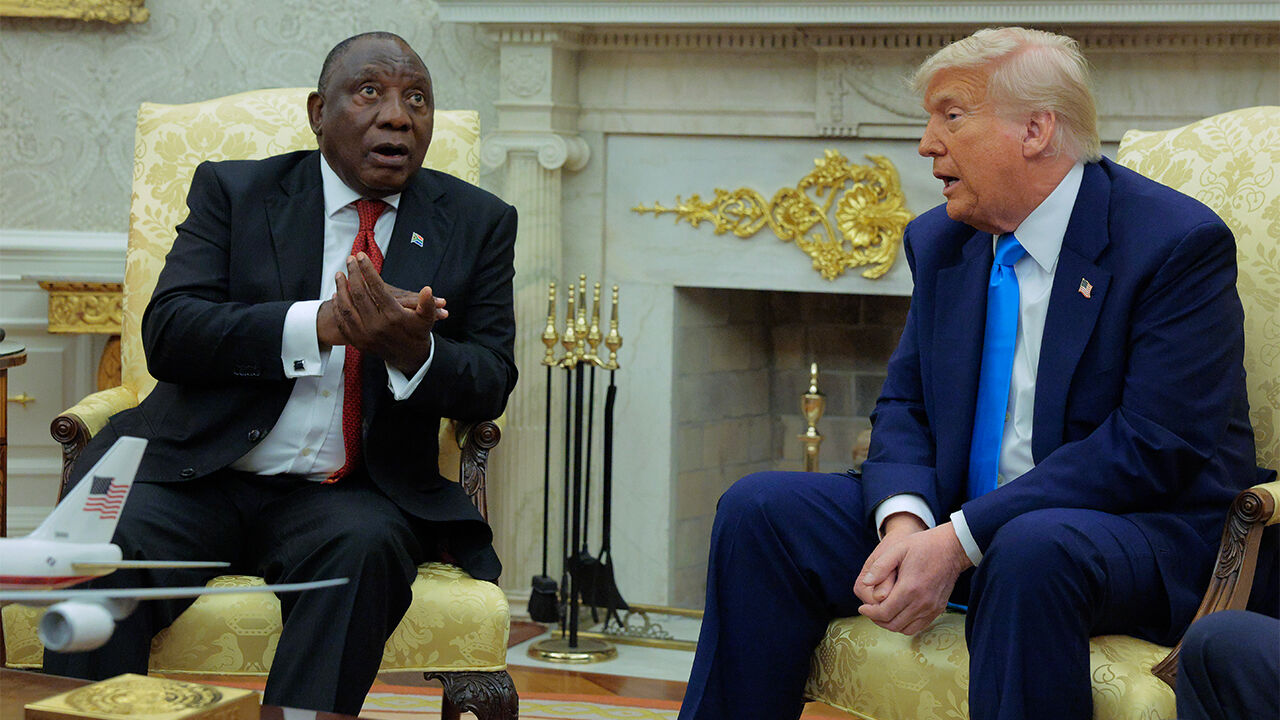
▲ South African President Cyril Ramaphosa and US President Donald Trump
Regarding the United States' decision to exclude South Africa from the African Growth and Opportunity Act (AGOA) beneficiaries and suspend its duty-free privileges starting January of next year, the South African government and business community projected on November 3 (local time) that the overall macroeconomic impact will be limited.
However, concerns are rising that certain sectors, such as agriculture and automobiles, may face unavoidable consequences including weakened export competitiveness, reduced profitability, and job losses.
In a statement, South Africa's Department of Trade, Industry and Competition (DTIC) explained that last year, the scale of exports to the US under AGOA amounted to $1.7 billion, accounting for about 10% of total exports, which represents a significant decrease compared to $4.0 billion (28%) in 2024.
The department added that approximately 89% of last year's exports to the US were conducted under the World Trade Organization's (WTO) standard Most-Favored-Nation (MFN) conditions.
A DTIC spokesperson posted on X (formerly Twitter) that "this is not a disaster" and "the numbers show that."
Agricultural economist Wandile Sihlobo told Reuters that the exclusion from AGOA does not mean the loss of access to the US market itself, explaining that it will have an effect comparable to the imposition of an additional tariff of about 3.4%.
Business Unity South Africa (BUSA) estimated that the number of jobs affected by this measure would be in the thousands.
However, the Congress of South African Trade Unions (COSATU) warned that job losses could threaten entire local economies, particularly in small towns such as citrus-producing regions.
The Citrus Growers' Association (CGA) also expressed concern over job losses, stating that orchards established specifically targeting the US market would find it difficult to redirect their exports to other markets.
The wine industry similarly projected that its price competitiveness would weaken compared to competitor nations such as Chile and Argentina.
The South African government stated that it plans to cooperate with affected industries to assess the impact, prepare support measures for individual businesses, and diversify its export markets toward Africa, Europe, and Asia.
Parks Tau, South Africa's Minister of Trade, Industry and Competition, also emphasized that dialogue with the US will continue.
(Photo: Getty Images)
※ Please note: This article was translated by AI and may contain errors.


 Video News
 Video News
 Video News
 Video News
 Video News