
 KOR
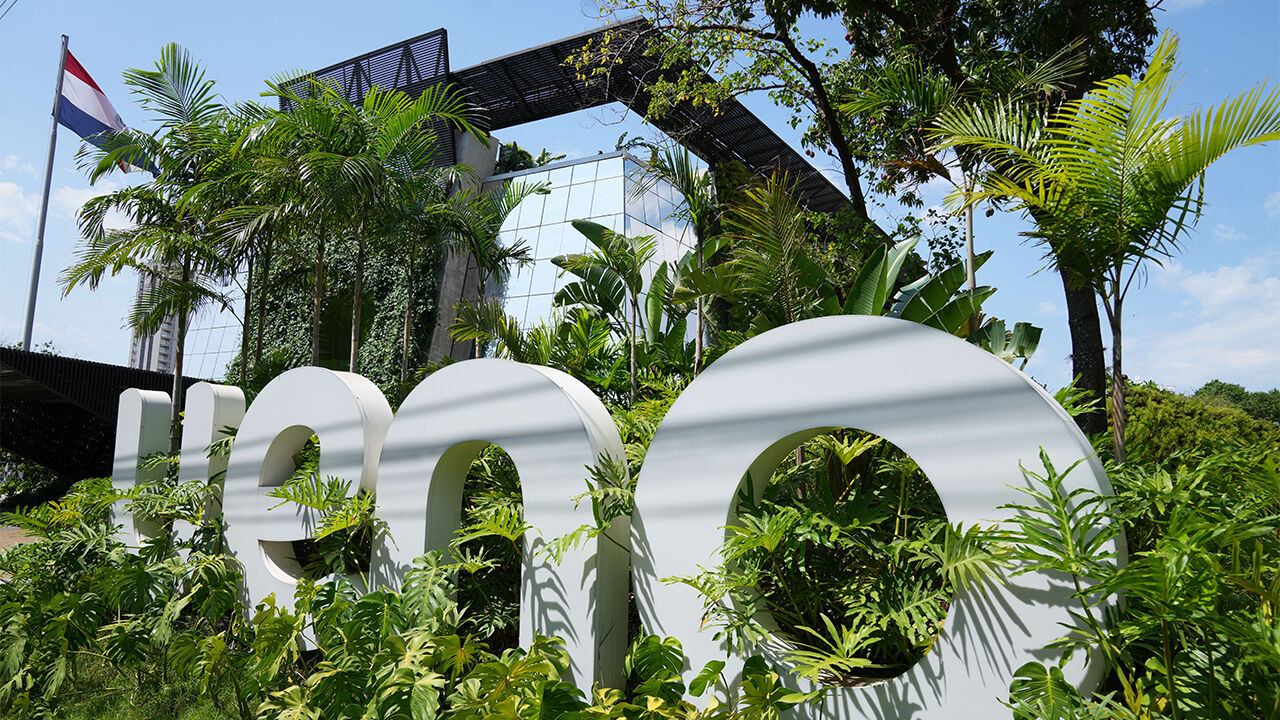
▲ Ueno Bank headquarters
Paraguayan media outlets including ABC Color and Bloomberg reported on November 3 (local time) that Paraguay's central bank has initiated liquidation proceedings for Ueno, a major digital bank facing insolvency risks.
According to the reports, the central bank board unanimously voted the previous day to initiate liquidation proceedings for Ueno Bank.
Paraguay's central bank houses the Superintendency of Banks, which is equivalent to South Korea's Financial Supervisory Service and oversees the resolution of troubled financial institutions.
Unlike standard court-led bankruptcies, the central bank's liquidation process is an administrative measure that allows authorities to transfer the assets of ordinary depositors to other more stable banks before the troubled bank's assets are liquidated to creditors.
Currently, deposit withdrawals by customers have been completely suspended.
Ueno Bank's effective collapse stems from a sharp plunge in its reserve requirement ratio to less than half of the required standard.
This means that funds akin to emergency reserves that commercial banks are legally mandated to deposit with the central bank to prepare for a bank run fell significantly short of the threshold, making it difficult to maintain normal operations.
Ueno Bank is a major digital bank with 3 million customers, accounting for 60 percent of Paraguay's adult population.
In particular, it has managed public funds amounting to between 800 million and 850 million dollars (approximately 1.07 trillion to 1.15 trillion won), which includes 380 million dollars (510 billion won) invested by Paraguay's national pension fund (IPS).
The fallout has driven President Santiago Peña into a political crisis.
Shortly after taking office in 2023, President Peña appointed Carlos Carvallo, then head of Ueno Bank, as the governor of the central bank.
Since then, controversies surrounding collusion and conflicts of interest between the administration and the financial sector have persisted.
It was revealed that government agencies and state funds poured massive amounts of capital into Ueno Bank, which was struggling with liquidity issues.
Juan Manuel Gustale, the head of Ueno Bank, recently stated that public funds accounted for about a quarter of the bank's total deposits.
This points to anticipated friction ahead regarding the recovery of public funds.
As the crisis escalated, President Peña canceled his attendance at the Ibero-American Summit scheduled to be held in Spain, citing the need to manage domestic affairs.
Central Bank Governor Carvallo, who stands at the center of the controversy, offered to resign to take responsibility for the situation.
(Photo: AP, Yonhap News)
※ Please note: This article was translated by AI and may contain errors.


 Video News
 Video News
 Video News
 Video News
 Video News