
 KOR
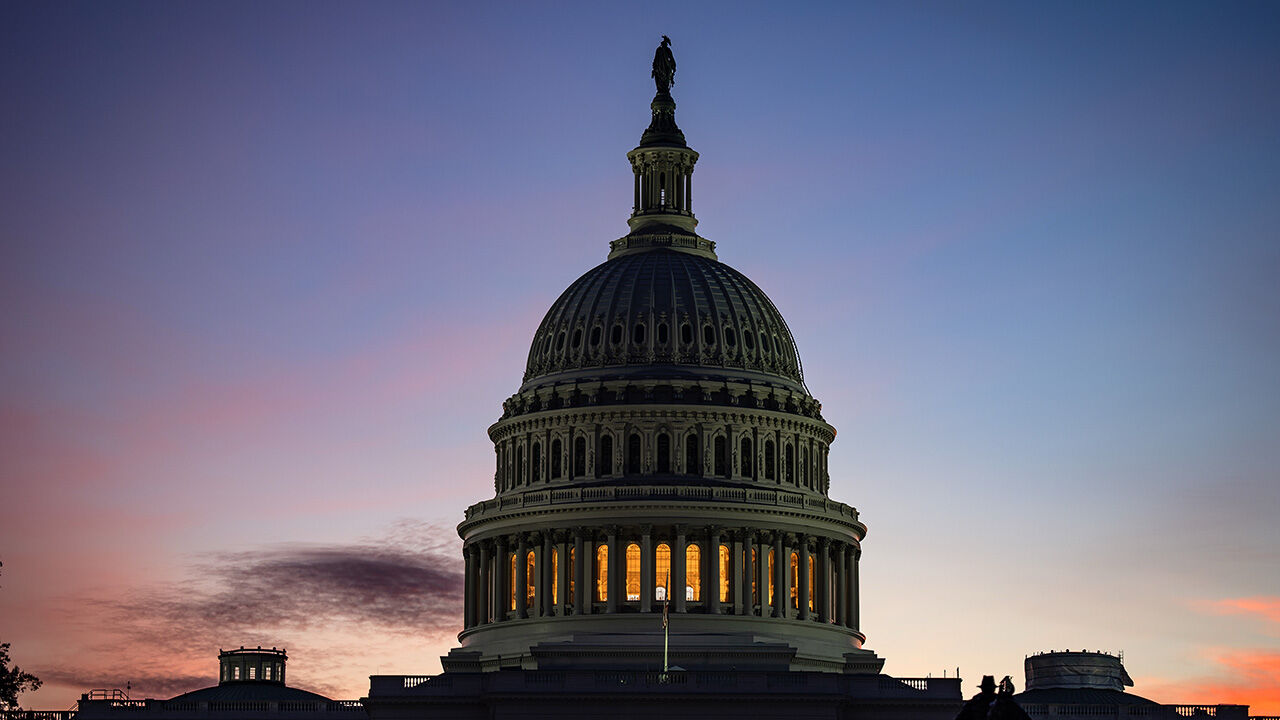
(Photo: US Capitol)
The US midterm elections, which will determine the congressional landscape for the latter half of US President Donald Trump's term, will be held locally on the 3rd.
Starting with parts of Vermont at 5 a.m. Eastern Time, voting will proceed sequentially across eastern US regions including New York, New Jersey, and Virginia starting at 6 a.m.
Poll opening times vary slightly by state.
Vote counting will begin as soon as polls close in each area.
Polls in Indiana and Kentucky will close earliest at 6 p.m.
The final ballots outside the mainland in western Alaska will be cast at 1 a.m. the following day.
The elections will contest 35 of the 100 seats in the US Senate with six-year terms, all 435 seats in the US House of Representatives with two-year terms, and governors and state legislatures in 36 states.
Held roughly midway through the four-year presidential cycle, midterm elections serve as an interim assessment of the current administration.
It is no exaggeration to say that President Trump's political fate hangs on the election results.
General assessments indicate that the current race for the House of Representatives leans toward the Democratic Party.
The Democrats are heavily favored to retake the majority, with projections suggesting they will secure 230 to 240 seats.
Simply retaking the House would allow Democrats to mount a much stronger check on the Trump administration.
They are poised to mobilize not only legislation but also congressional-level subpoena power and compelled testimony.
The possibility of Democrats also recapturing the Senate majority is being discussed.
Under the current composition (53 Republicans, 47 Democrats), Democrats need to secure at least 17 of the 35 seats up for election this cycle (22 Republican incumbents, 13 Democratic incumbents) to win a majority.
A key point to watch is how many seats Democrats can secure in Senate races across battleground states including Maine, Michigan, Ohio, Iowa, Kansas, Texas, and Alaska.
For Democrats, they must defend their incumbent Senate seat in Michigan while snatching as many seats as possible in the remaining states held by Republican incumbents.
Republicans hold the exact opposite stance.
While US media outlets and forecasting organizations differ slightly in their projections for battleground states, they largely agree that Democratic candidates hold a lead within or around the margin of error against Republican candidates in a significant number of battlegrounds.
However, given that major battlegrounds are traditionally Republican strongholds, opinions are divided on how closely the poll numbers will match actual voting results.
Arguments that polls typically underestimate Republican-leaning respondents are countered by opposing views that errors will not be significant because the midterms are not being held alongside a presidential election directly featuring President Trump.
Considering the Vice President serves as the President of the Senate and holds the "tie-breaker" power in votes, Republicans can maintain their majority status by securing just 50 seats.
In this scenario, President Trump would avoid the worst-case scenario.
He is expected to use the Senate as a "shield" to stick to the domestic and foreign unilateralism he has pursued since taking office last year.
Due to the bicameral structure, if Democrats take the House but fail to seize control of the Senate, major legislation is expected to face gridlock, making negotiations between the ruling and opposition parties inevitable over key administration personnel appointments, budgets, and bills.
If Democrats even recapture the Senate, President Trump could face the possibility of an "early lame duck."
This is because having effectively led candidate selection and campaigning, and weighed down by blame for issues like the Iran war and high inflation that shaped the election, he would find it hard to dodge accountability.
When asked in a media interview the previous day how he would respond if Democrats take control of Congress, he replied, "I guess I'll be 'Mr. Veto'."
This signifies his intent to actively exercise presidential veto power over bills.
Thus, a clash is anticipated between the Trump administration, with two years left in its term, and a Congress controlled by Democrats.
At the same time, US political circles are expected to gradually shift into a competitive mode for potential presidential contenders looking toward the 2028 election.
As the Senate election will have a multi-layered impact on policy decision-making as well as the future direction of US political power, and has been fiercer and more unusual than ever before, its results may not easily come into focus right away.
Winners of gubernatorial and congressional seats in areas where each party's dominance is clear are expected to be announced by major media outlets early in the vote count, but the outcomes for battleground candidates are not expected to be called one by one until late at night or midnight on the 3rd (2 p.m. KST).
Given that the race in battleground states is unpredictable, along with time needed for counting mail-in ballots and handling recount requests, US media outlets project that the outline of the Senate majority will emerge no earlier than the 4th.
In particular, battleground states Alaska and Maine use a unique "ranked-choice voting" system, meaning it could take several days until results in those regions are finalized.
The performance of Korean-American candidates running for the House of Representatives—such as Dave Min (Democrat, California), Marilyn Strickland (Democrat, Washington), Dan Koh (Democrat, Massachusetts), and Young Kim (Republican, California)—is also drawing attention.
Additionally, Democratic candidate Cindy Munson, running for Governor of Oklahoma, is bidding to become the first Korean-American governor in US history.
(Photo: AP, Yonhap News)
※ Please note: This article was translated by AI and may contain errors.


 Video News
 Video News
 Video News
 Video News
 Video News