
 KOR
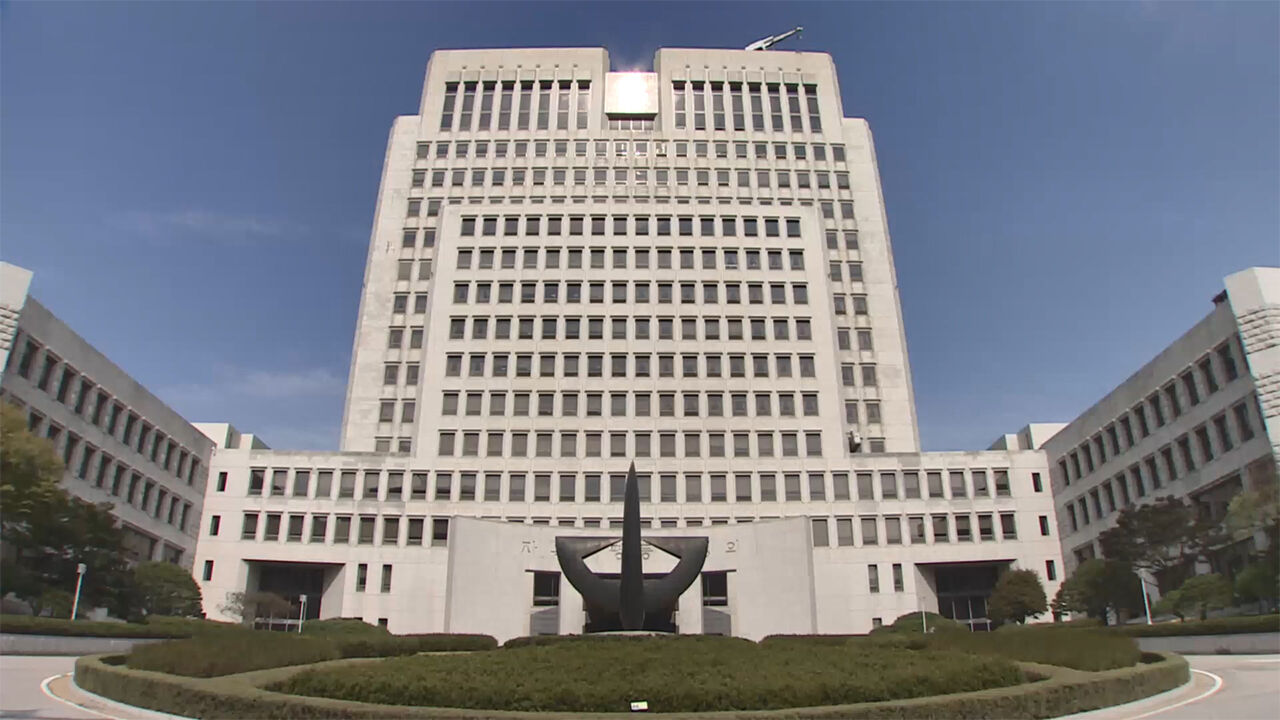
▲ Supreme Court of Korea
Comments expressing agreement are pouring in from fellow judges on an internal post by a sitting judge that compared recent judicial system reforms to George Orwell's novel Animal Farm.
As judges, who typically refrain from expressing personal opinions publicly, step forward one after another, observations are growing that the fallout could escalate.
According to the legal community today (Nov. 2), about 17 comments expressing agreement, such as "I agree," "I concur," and "I send my support," were left on a post titled "Regarding the Novel Animal Farm" uploaded to Courtnet, the court's internal network, on October 30 by Judge Sung Chan-yong (Judicial Research and Training Institute, 40th class) of the Bucheon Branch of the Incheon District Court.
Comments were left not only by junior judges, but also by district court senior presiding judges, district court chief judges, and a senior presiding judge of a high court.
In the post, Judge Sung compared recent judicial system reforms—including the abolition of the prosecution service and the expansion of Supreme Court justices—to Animal Farm, arguing that "we must stand tall and counter unjust attacks."
Cho Mi-yeon (27th class), Chief Judge of the Cheongju District Court, wrote in a comment, "How can we guarantee that we won't be dismantled like the prosecution while we stay quiet?" adding, "Now is the time to raise our voices."
"People who criticized the judiciary day in and day out and talked of impeachment are now pushing for a parliamentary investigation simply because rulings not to their liking were handed down," Chief Judge Cho said.
She continued, "Is there an underlying assumption that individual judges are subordinates under the command and supervision of the Chief Justice and judge according to those instructions? That is an insult to all judges, including myself."
Chief Judge Cho also remarked, "Seeing them drag things out until they get the conclusion they want, even though the special counsel on the martial law has already reached a conclusion, reminded me of 'Tajinyo' (a past online community demanding truth from a celebrity)." She added, "If they treat the head of the judiciary this way, who can guarantee they won't summon judges who reach conclusions different from their own to a parliamentary audit or put them in the dock under the crime of judicial distortion?"
Yoon Sang-do (24th class), Chief Judge of the Northern Seoul District Court, and Lim Hae-ji (28th class), Chief Judge of the Daegu Family Court, also left comments conveying agreement.
Judge Gook Yang-geun (41st class) of the Suncheon Branch of the Gwangju District Court left a comment stating, "Just by looking at when and under what circumstances the agendas bringing fundamental changes to the judicial system suddenly popped up, and how rapidly they were legislated to the point where deliberation was utterly nonexistent, it is clear at the very least that these were not 'developmental' changes made for 'all' citizens."
Mentioning the unprecedented parliamentary investigation into the Chief Justice, Judge Gook also said, "Has there ever been a time in constitutional history when political power so blatantly ignored the separation of powers and intimidated the head of the judiciary? When they are tearing down even the Chief Justice just because they don't like him, how can judges witnessing this preside over trials with conviction without looking to political power?"
He added, "I am only devastated and appalled by this reality where the independence of the judiciary and South Korea's rule of law system are collapsing," and wrote, "I wholeheartedly agree with Judge Sung's opinion."
Han Yoon-ok (35th class), Chief Judge of the Miryang Branch of the Changwon District Court, also posted a reply titled "The Value of the Separation of Powers and Article 1 of the Code of Judicial Ethics," emphasizing the principles of the separation of powers and safeguarding judicial independence.
She wrote, "The moment judicial independence and the separation of powers fail to have their independence respected due to the political interests of political power and are swallowed up and threatened by political power, the concept of democracy ceases to belong to the citizens and is reduced to a tool of governance for a massive political power that has also grasped the state's judicial power."
She continued, "Unfortunately, South Korea has already experienced such historical pain, and traces of thorough remorse and reflection on it remain intact in the Code of Judicial Ethics," quoting Article 1 of the Code: "A judge shall uphold the independence of the judiciary from all external influences."
On the other hand, a post virtually refuting Judge Sung's views also appeared.
Judge Park Byung-gon (41st class) of the Southern Seoul District Court wrote in a post yesterday titled "Questions That Must Be Answered Before Talking About Judicial Independence," saying, "While I respect Judge Sung's awareness of the issue and his sincerity, for those concerns to gain sufficient persuasiveness, we must first examine the process by which the judiciary lost the public's trust."
Judge Park noted that it remains questionable whether the court played its proper role after the December 3 martial law, and that the process of the Supreme Court ruling remanding the case of President Lee Jae-myung under the Public Official Election Act sparked considerable controversy. He added that conflicts arising during the process of nominating Supreme Court justices also raised questions about the appropriateness of the Chief Justice's exercise of authority.
As expressions of opinion by judges surrounding the judicial reform process and judicial independence continue, attention is focused on whether internal discussions will move beyond individual issue-raising to internal consensus-building within the court's internal network.
(Photo: Provided by Yonhap News TV, Yonhap News)
※ Please note: This article was translated by AI and may contain errors.


 Video News
 Video News
 Video News
 Video News
 Video News