
 KOR
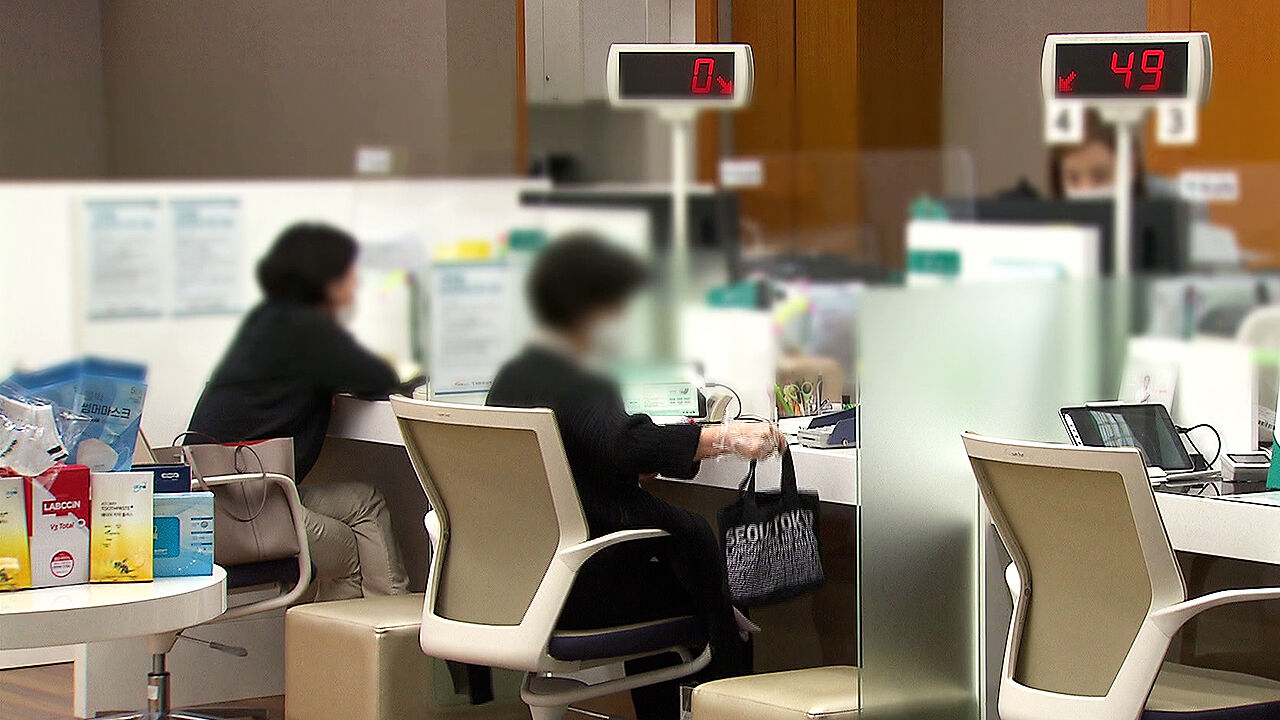
▲ Commercial banks (File Photo)
Concerns over troubled loans are growing as borrowers face heavier debt-servicing burdens amid a period of rising interest rates.
According to the financial sector on November 1, the total amount of substandard or below (substandard-and-below) loans at the five major commercial banks (KB Kookmin, Shinhan, Hana, Woori, and NH Nonghyup) reached 7.6133 trillion won at the end of the third quarter.
This represents an increase of about 1.3 trillion won compared to the same period last year (6.3285 trillion won) and about 200 billion won from the previous quarter (7.4328 trillion won), marking the largest volume in 8 years and 6 months since the end of the first quarter of 2018 (8.2143 trillion won).
The volume of substandard-and-below loans at the five major banks increased from 4.4943 trillion won at the end of 2023 to 5.5807 trillion won at the end of 2024, and 6.1787 trillion won at the end of last year, before climbing to the 7 trillion won range at the end of the second quarter of this year.
Financial companies' asset soundness is classified into five categories: normal, precautionary, substandard, doubtful, and estimated loss. Among these, substandard refers to loans overdue for three months or more, and substandard-and-below loans are categorized as non-performing loans (NPLs).
The ratio of non-performing loans among total loans is also on an upward trend, centered around corporate loans.
The simple average ratio of substandard-and-below loans to total won-denominated loans across the five major banks stood at 0.40% at the end of the third quarter.
This is similar to the previous quarter, but up 0.05 percentage points from the same period last year (0.35%).
For households, the ratio rose by 0.03 percentage points from 0.22% in the third quarter of last year to 0.25% in the third quarter of this year.
For large corporations, it rose by 0.08 percentage points from 0.24% to 0.32% over the same period, while small and medium-sized enterprises (SMEs) saw an increase of 0.04 percentage points from 0.55% to 0.59%.
Looking at figures for individual banks, Bank A's corporate non-performing loan ratio was 0.63%, the highest since the second quarter of 2019 (0.70%).
For large corporations, the ratio hit 0.64%, the highest since the second quarter of 2019 (0.70%), while SMEs recorded 0.66%, the highest level since the third quarter of 2019 (0.71%).
Among the non-performing loans of the five major banks, estimated loss loans—which are assessed as virtually unrecoverable—reached 1.0931 trillion won at the end of the third quarter, up 18.7% from 921 billion won in the same period last year.
The volume of "precautionary" loans, which represent potential troubled loans, is also on the rise.
Precautionary loans increased by 2.5% compared to the same period last year (10.2734 trillion won) and 3.0% from the previous quarter (10.2171 trillion won) to reach 10.5285 trillion won.
Precautionary loans generally refer to loans where principal and interest payments have been overdue for 1 to 90 days, raising concerns that banks may suffer losses.
Since these loans can be reclassified as substandard or below if the delinquency period exceeds 90 days, an increase in precautionary loans could lead to a future rise in non-performing loans.
Concerns are rising that as the Bank of Korea continues its tightening stance, the repayment burden on vulnerable borrowers will increase due to rising loan rates, potentially leading to a further increase in non-performing loans within the banking sector.
An official from a commercial bank said, "As the interest burden on borrowers grows due to rising rates used as benchmarks for loans, such as COFIX and bank bonds, delinquencies are gradually increasing," adding, "With soundness indicators in the banking sector showing noticeable deterioration recently, we are focusing on managing soundness."
※ Please note: This article was translated by AI and may contain errors.


 Video News
 Video News
 Video News
 Video News
 Video News