
 KOR
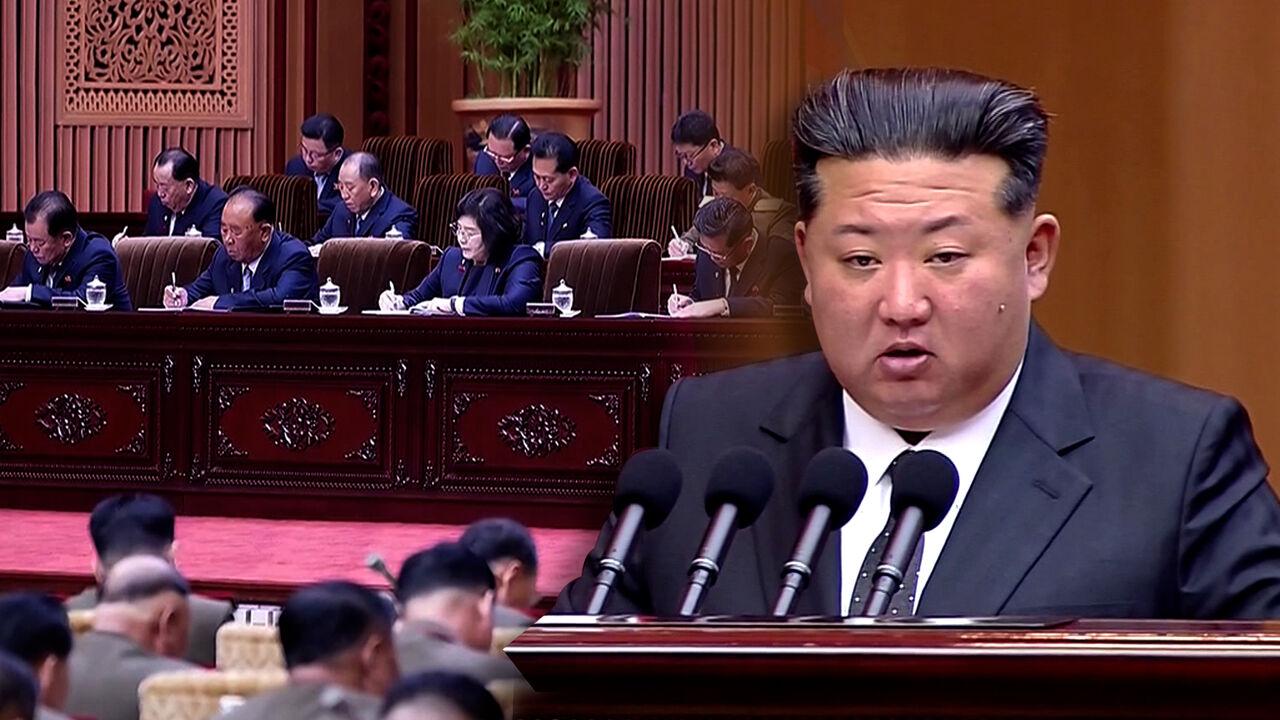
▲ Kim Jong-un delivering a policy speech at North Korea's Supreme People's Assembly.
North Korea has left key leadership positions vacant without completing follow-up appointments following disciplinary personnel reshuffles triggered by the exposure of corruption within its military this June.
Notably, positions such as the President of the Supreme People's Assembly—equivalent to South Korea's National Assembly Speaker—and the Director of the General Political Bureau, which oversees the military's ideological and political affairs, remain vacant. As State Affairs Commission Chairman Kim Jong-un reorganizes the internal control system centered around his close aides, attention is focused on the background behind the delays in follow-up appointments for major posts.
Synthesizing reports from North Korean state media on the 31st, North Korea held the 9th Workers' Party Congress and the Supreme People's Assembly back-to-back early this year, but has yet to finalize follow-up measures resulting from subsequent major personnel changes.
In particular, as the Supreme People's Assembly, which was expected to be held this autumn, did not take place, the vacant post of the President of the Supreme People's Assembly remains unfilled.
Previously, Chairman Kim Jong-un reappointed Jo Yong-won, who was then the President of the Supreme People's Assembly, as a Party Secretary and appointed him as the Director of the Organization and Guidance Department during the 2nd Plenary Meeting of the 9th Central Committee of the Workers' Party of Korea in June.
Consequently, North Korean media reported that the vacant position of Assembly President would be elected at a future Supreme People's Assembly session.
Jo Yong-won is a close confidant of Kim Jong-un, having led the Organization and Guidance Department—which oversees party organizations and cadre personnel—and played a central role in internal control.
Having risen in March during the Supreme People's Assembly to become the Supreme People's Assembly President, ranked second in the state apparatus hierarchy, he made an unusual return to the party after just three months.
Vacancies in key military posts also persist.
Through a military leadership reshuffle in August, North Korea appointed Kim Sung-gi, who was then the Director of the General Political Bureau, as the Minister of National Defense.
However, the successor to the Director of the General Political Bureau has not been separately announced.
The General Political Bureau is a core organization overseeing ideological and political affairs within the military. Attention is drawn to the fact that its top post remains vacant while North Korea is carrying out a massive campaign to tighten discipline in the wake of internal military corruption.
Previously, North Korea announced that Pak Hui-chol, the Deputy Director of the Organization Department of the General Political Bureau, would be handed over to judicial authorities over allegations of internal military corruption.
Following this, while conducting disciplinary personnel changes targeting the military leadership, North Korea reorganized its internal military control functions by transferring Yu Gwang-u, who had served as the Chief of the Security Bureau, to the position of First Deputy Director of the General Political Bureau.
Amid this process, Pak Jong-chon, who had stepped down to the sidelines during this year's 9th Party Congress by relinquishing his posts as a member of the Political Bureau of the Central Committee and Party Secretary, re-emerged as a Vice Chairman of the Central Committee of the Party, regarded as a powerhouse overseeing North Korean military policy.
Kim Jae-ryong, who was a member of the Presidium of the Political Bureau and a Party Secretary, was comprehensively dismissed from his duties through the plenary meeting in June.
At the time, North Korea added the explanation "due to a change in duties," leaving open the possibility of a reassignment. Kim Jae-ryong was subsequently identified as holding a post within the party when he was referred to as a First Vice Department Director in reports on October 25 regarding Chairman Kim Jong-un's visit to China.
However, since his affiliated department was not disclosed, it remains unclear what specific duties he is in charge of.
As replacements and vacancies in major posts continue, Chairman Kim is interpreted as focusing on redeploying trusted confidants to the frontline to heighten his grip on the party and military.
During a National Assembly Intelligence Committee audit briefing on the 29th, the National Intelligence Service evaluated regarding North Korea's recent internal discipline-tightening situation, "They are maintaining a loyalist system centered around key confidants—such as Kim Yo-jong, Department Director of the Workers' Party; Choe Son-hui, Minister of Foreign Affairs; Jo Yong-won, Party Secretary; and Pak Jong-chon, Vice Chairman of the Central Military Commission of the Party—and are stably managing the regime."
The NIS also reported that the military anti-corruption inspection work, which began following the massive corruption case in the General Political Bureau, has been expanded to the party, the cabinet, and officials across the board, continuing into its fourth month.
It analyzed that conducting lecture sessions for propaganda workers, holding company commander meetings, and preparing for the Party Cell Secretary Conference are also signs of a focus on strengthening internal discipline.
※ Please note: This article was translated by AI and may contain errors.


 Video News
 Video News
 Video News
 Video News
 Video News