
 KOR
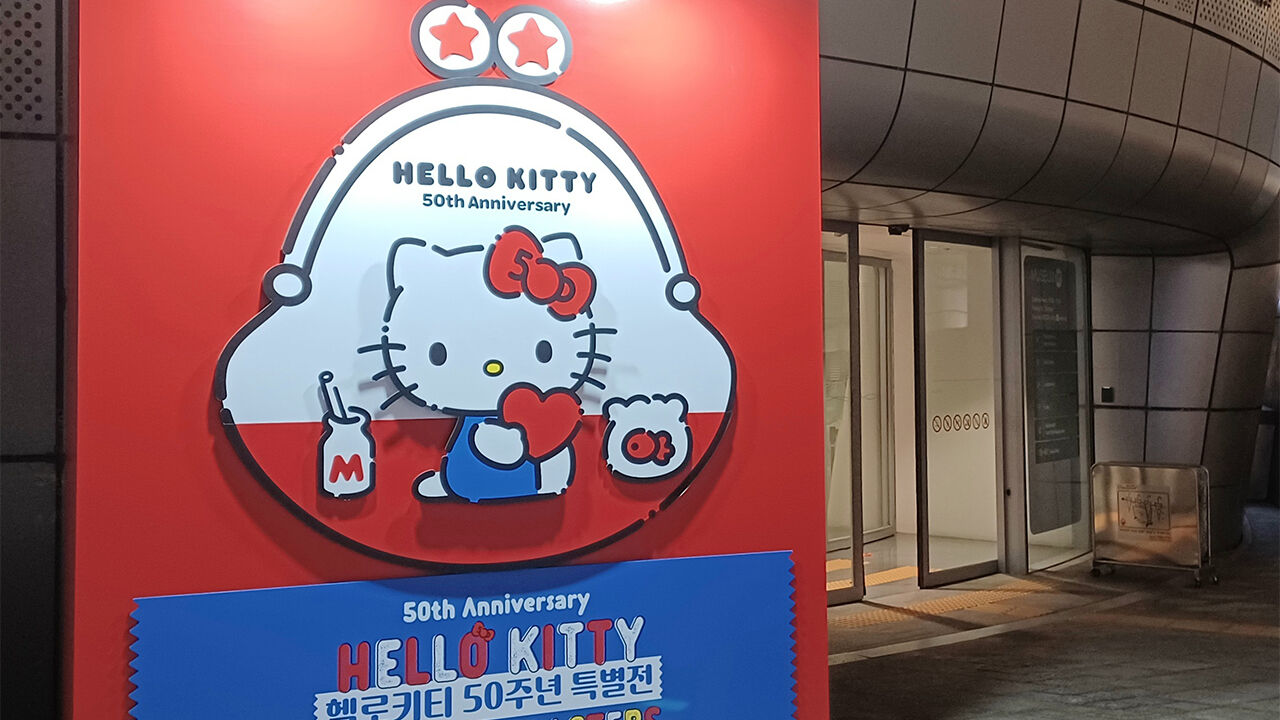
▲ Hello Kitty (File photo)
Sanrio, the Japanese character giant famous for Hello Kitty, has dropped plans to release collaborative merchandise with the Japanese TBS drama "VIVANT," which negatively depicts China.
Analysts suggest the decision was made in awareness of the backlash, criticism, and boycott movements from Chinese state media and internet users.
In a Chinese-language statement released last night (October 28) via the official Hello Kitty Weibo (China's equivalent of X) account, Sanrio stated, "We determined that this collaboration contained expressions that do not align with the Sanrio Group's philosophy, and accordingly, we have decided to suspend this collaboration as well as all subsequent projects and promotional activities."
The statement added, "Since its founding, Sanrio has consistently conveyed values such as care and connection through its characters, and has strived to practice the corporate philosophy of everyone living in harmony. Regarding this incident, we will earnestly listen to and value opinions from all walks of life, and further strengthen our screening mechanisms when conducting future collaboration projects."
This issue is linked to Season 2 of the drama "VIVANT," which is currently airing in Japan.
The drama revolves around secret agents belonging to "Vivant," a special unit whose existence is not acknowledged by the Japanese Ministry of Defense, as they eliminate overseas forces threatening Japan's security.
Unlike Season 1, which aired in 2023 and depicted terrorist groups based in the fictional Central Asian country of "Balka" as hostile forces, Season 2, which began in July, set a fictional Chinese intelligence agency, "Xinsi," as the antagonistic force.
While the drama was criticized in Japan for its strong nationalist undertones, it provoked even greater fury in China.
China's CCTV criticized the drama for intentionally stoking hostility, pointing out that it portrayed Chinese people as brutal aggressors—such as scenes depicting Chinese intelligence agents torturing a Japanese Vivant operative by cutting off his finger or stabbing him in the abdomen—which bear similarities to tortures committed by the Japanese military during its invasion of China.
On China's Weibo, a search term reading "Japanese drama VIVANT slandered China" ranked first on October 25.
Interpretations have also been raised that the drama reflects a growing trend of mutual animosity between the societies and political circles of the two countries, fueled by accumulated security conflicts compounded by Japanese Prime Minister Sanae Takaichi's remarks last year hinting at intervention in a contingency involving Taiwan.
Amid this backdrop, news of Sanrio's collaboration with VIVANT led Chinese state media and internet users to target Hello Kitty as a new focal point.
In a commentary published on October 29 titled "Hello Kitty Must Not Dance with the Japanese Right Wing," the Chinese state-run media outlet Global Times argued, "China is a very important overseas market for Sanrio. In the first half of 2026, Sanrio's sales in the Chinese market increased by 40 percent year-on-year to 781 million yuan (approx. 156 billion KRW). If you value the Chinese market, you must put respect for China into action."
The Global Times also cited a case where the Japanese streetwear brand WEGO attempted to release apparel merchandise in collaboration with the anime "My Hero Academia," only to face rejection in China.
"My Hero Academia," which was serialized in the Japanese manga magazine Weekly Shonen Jump, sparked controversy in China in 2020 for featuring a villain character who conducts human experiments named "Shiga Maruta."
This occurred because the name used for the character was "Maruta," a term historically used by Japan's wartime Unit 731 biological experimentation unit to refer to human subjects.
The Global Times added, "In recent years, there has been no shortage of pop culture and art works in Japanese society that package aggressive crimes into passionate stories. Sanrio is neither the first tainted case, nor will it be the last. Sanrio has the responsibility, and the need, to make its stance clear."
(Photo: Yonhap News)
※ Please note: This article was translated by AI and may contain errors.


 Video News
 Video News


 Video News