
 KOR
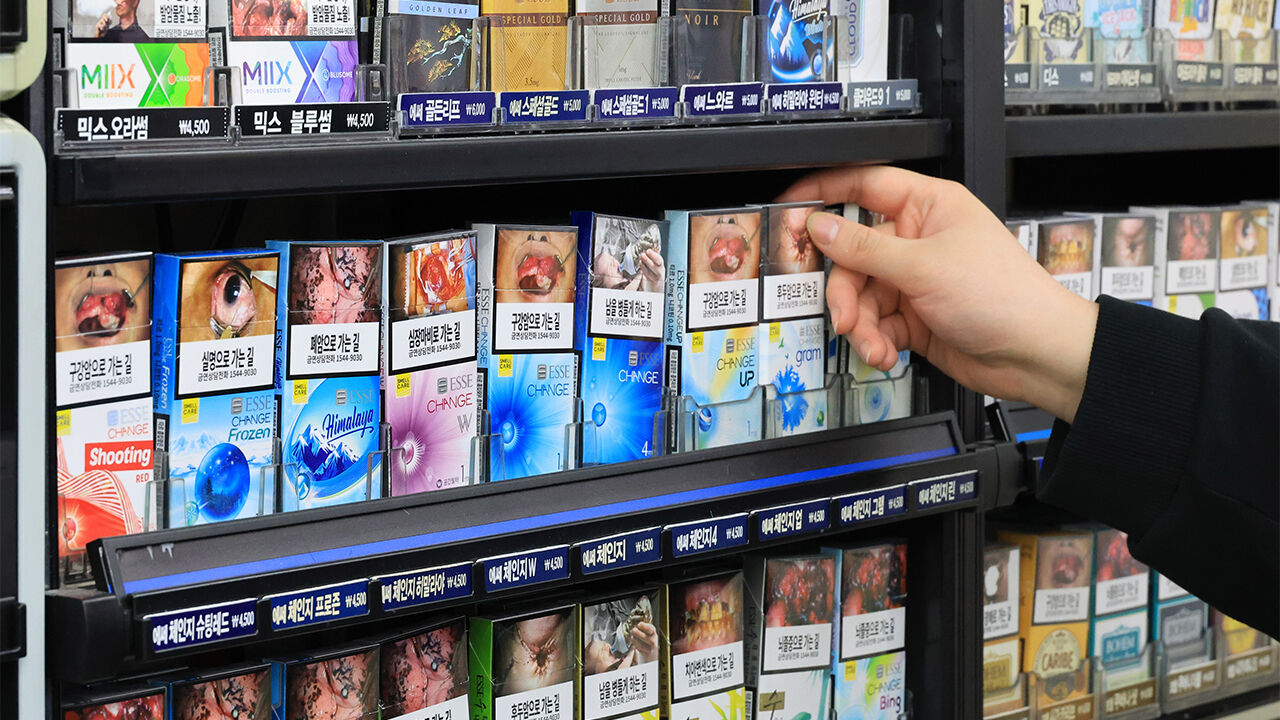
▲ File photo
The government's first-ever harmful substance testing of tobacco products has confirmed the presence of various Group 1 carcinogens, including formaldehyde, alongside nicotine and tar.
Most of these carcinogens were detected not only in conventional cigarettes and heated tobacco products, but also in liquid e-cigarettes.
The government released the results of harmful substance tests for 465 domestic manufactured and imported tobacco product items for the first time, following deliberations by the Tobacco Harm Management Policy Committee.
While conventional cigarette packs previously only displayed information on nicotine and tar content along with six carcinogenic substances such as nickel and cadmium, detailed information on tobacco harmful components has now been confirmed through this testing.
The Ministry of Food and Drug Safety tested 256 conventional cigarettes, 104 heated tobacco products, and 105 liquid e-cigarettes.
The tested substances totaled 44 components each for conventional cigarettes and heated tobacco products, and 20 components for liquid e-cigarettes, amounting to 46 distinct substances when excluding overlaps.
The ministry explained that for conventional cigarettes and heated tobacco products, emissions generated during smoking were captured to measure the content per stick, whereas for liquid e-cigarettes, the liquid itself was tested.
Nicotine and tar were detected in all products across both conventional cigarettes and heated tobacco products.
The detected amounts per stick for conventional cigarettes ranged from 0.8 to 2.6 mg for nicotine and 11.7 to 40.4 mg for tar.
In all conventional cigarette products, aside from nicotine and tar, formaldehyde, 1,3-butadiene, benzene, and cadmium—classified as human carcinogens by the International Agency for Research on Cancer (IARC)—were detected.
2-Aminonaphthalene, 4-aminobiphenyl, NNN, NNK, acrylonitrile, and benzopyrene were identified in most conventional cigarettes.
The detected amounts of nicotine and tar in heated tobacco products were somewhat lower than those in conventional cigarettes.
Nicotine per stick ranged from 0.1 to 1.2 mg, and tar ranged from 10.3 to 32.0 mg.
In addition, formaldehyde was detected in all heated tobacco products, and NNN, NNK, and benzopyrene were found in most products.
For liquid e-cigarettes, nicotine, propylene glycol, and glycerin were confirmed in all products.
The detected amount of nicotine ranged from 5.7 to 20.0 mg per 1 g of liquid.
Furthermore, formaldehyde was identified in 99 out of the 105 liquid e-cigarette products.
Regarding the survey results, the government emphasized that the measurements were taken under prescribed test conditions, and it cannot be concluded that a specific tobacco product is less harmful simply because the detected amount of a certain substance is low or below the quantitation limit.
It also warned that heated tobacco products and liquid e-cigarettes differ from conventional cigarettes in their raw materials, additives, and heating and vaporization methods, meaning new harmful substances may potentially exist.
The government urged that because measurement standards differ—per stick for conventional cigarettes and heated tobacco products versus by weight for liquid e-cigarettes—directly comparing figures across these types is inappropriate.
According to the World Health Organization (WHO) and other sources, tobacco is known to contain some 7,000 chemicals and about 70 carcinogens, making it harmful to physical health.
The Tobacco Harm Management Policy Committee stated that the test results should not be used as a criterion for choosing a "less harmful cigarette," stressing that quitting smoking is the most important measure above all.
Under the revised Tobacco Business Act implemented last April, the government plans to test and disclose harmful substances in synthetic nicotine cigarettes starting next year.
It also plans to explore harmful substances generated exclusively in heated tobacco products to develop testing methods, and devise testing methods that allow emissions testing for liquid e-cigarettes as well.
(Photo: Yonhap News)
※ Please note: This article was translated by AI and may contain errors.


 Video News
 Video News


