
 KOR
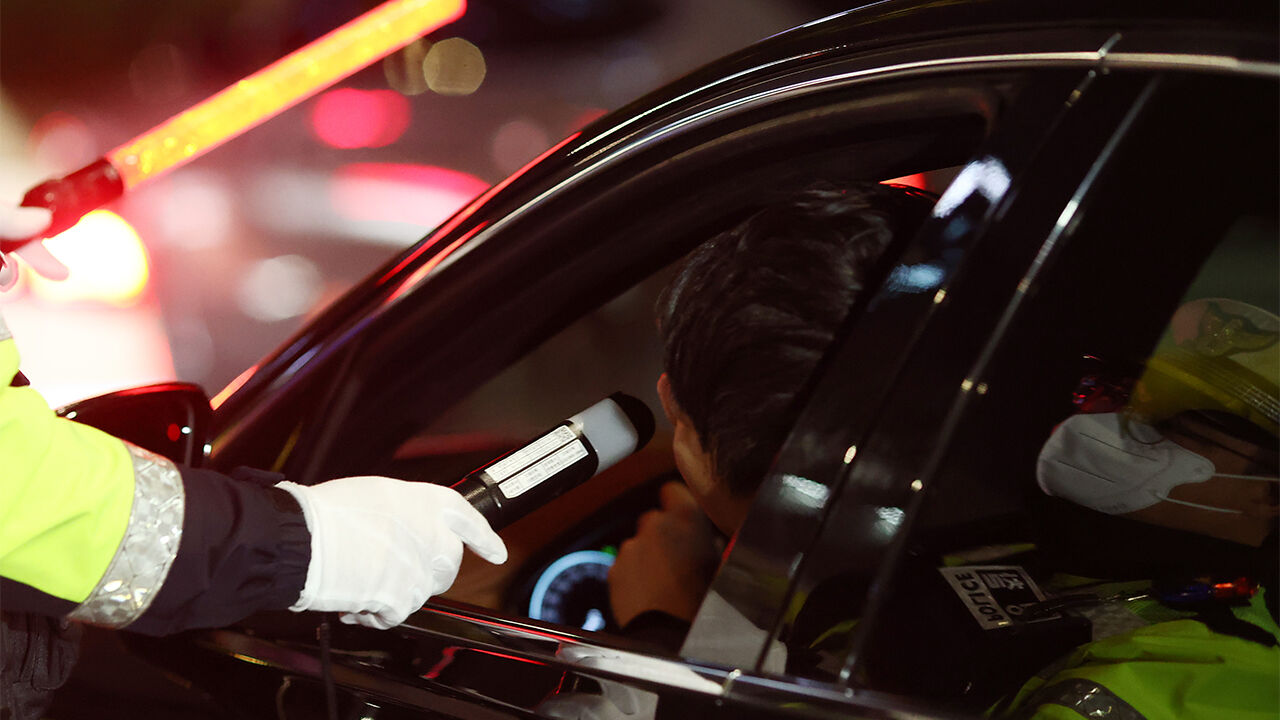
▲ DUI Crackdown
The Supreme Court has ruled that breathalyzer test results cannot be used as evidence of guilt if police failed to provide the driver with water to rinse their mouth prior to the test.
The Supreme Court's First Division (Presiding Justice Cheon Dae-yup) announced that it has overturned the lower court's ruling, which had sentenced a defendant identified as Mr. A to one year in prison suspended for two years on charges of violating the Road Traffic Act, and remanded the case to the Daejeon District Court.
Mr. A was indicted on charges of driving a truck while under the influence of alcohol on a road in Sejong City in December 2023.
Police were dispatched after receiving a report that a person was asleep in the driver's seat of a vehicle with its engine running in the middle of a road, and subsequently administered a breathalyzer test to Mr. A.
Mr. A's blood alcohol concentration measured at the time was 0.081 percent. However, police did not provide Mr. A with water to rinse his mouth during the testing process, nor did they provide water or request a retest for about an hour until he was released.
The prosecution applied charges of repeat drunk driving, noting that Mr. A had a prior record in 2019 where he received a finalized summary order of a 1 million won fine for drunk driving.
In response, Mr. A argued that because the police did not provide water to rinse his mouth, his blood alcohol concentration was measured higher than it actually was, making the test result unlawfully collected evidence.
The first instance court sentenced Mr. A to one year in prison suspended for two years, reasoning that providing water to rinse the mouth was merely a procedure under the National Police Agency's internal guidelines and that failing to follow it did not render the breathalyzer test illegal.
The court of first instance also considered it difficult to deem a mouth-rinsing measure necessary since the test was conducted more than 20 minutes after Mr. A had finished drinking.
The second instance court upheld the ruling of the first instance and dismissed the appeal.
The appellate court stated, "The defendant suddenly stood up and blew into the measuring device, which prevented the provision of drinking water, and the responsibility lies with the defendant," while also judging that the breathalyzer test result was generally accurate.
However, the Supreme Court reversed the lower court's decision, ruling that Mr. A's breathalyzer test result constituted unlawfully collected evidence.
The Supreme Court determined that as of July 2023, prior to when the breathalyzer test in this case was conducted, the procedure of providing water to rinse the mouth was explicitly stipulated in the Enforcement Rule of the Road Traffic Act, thereby carrying legal binding force.
Consequently, the Supreme Court explained that breathalyzer test results obtained without going through this procedure are, in principle, inadmissible as evidence and cannot be used to prove guilt.
The court further ruled that the case did not fall under exceptional circumstances where breathalyzer test results could be used as evidence of guilt.
The Supreme Court stated, "Research findings indicating that the influence of residual alcohol in the oral cavity disappears 20 minutes after finishing drinking are based on experiments that exclude factors such as burping or hiccups," adding, "It cannot be considered that the risk of blood alcohol concentration being measured higher than reality due to residual alcohol disappears in actual drunk driving enforcement sites."
(Photo: Yonhap News)
※ Please note: This article was translated by AI and may contain errors.


 Video News

 Video News
 Video News
