
 KOR
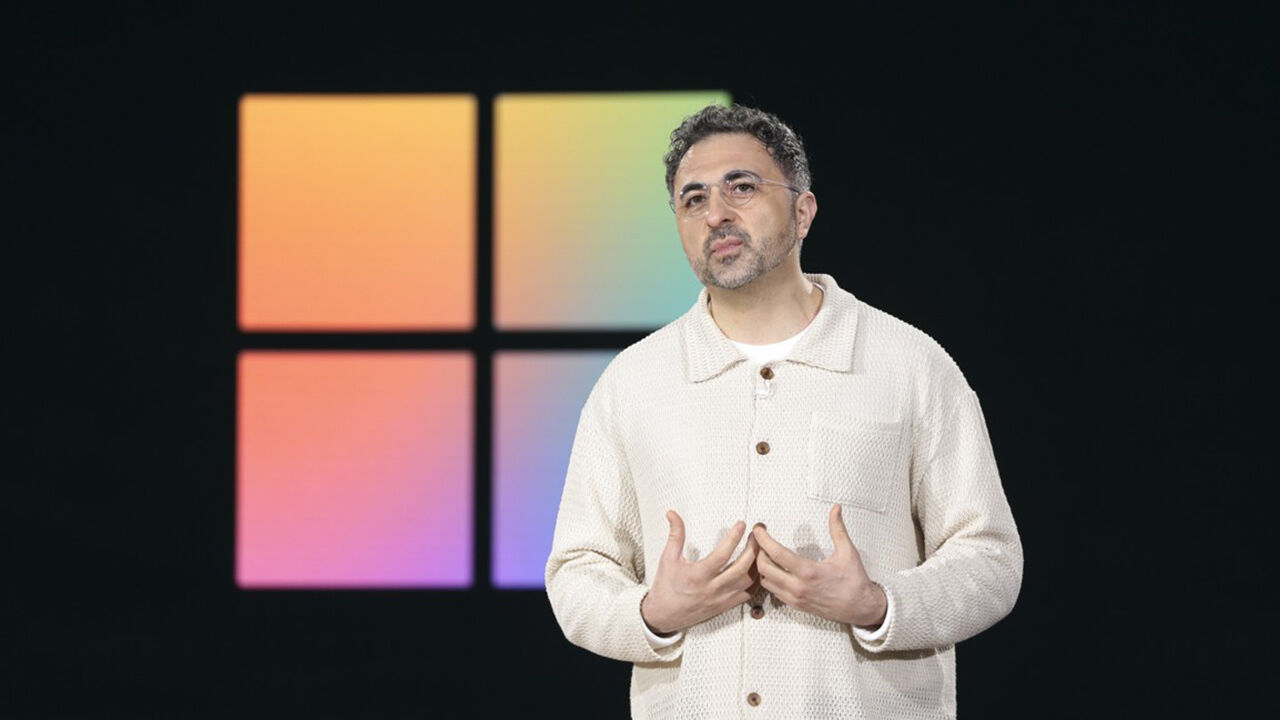
▲ Mustafa Suleyman, CEO of Microsoft AI
Microsoft has announced the development of an artificial intelligence (AI) diagnostic tool that demonstrated higher accuracy than human doctors in rare disease and emergency diagnosis scenarios.
According to research findings released by the company, the tool not only improves diagnostic accuracy but also significantly reduces testing costs compared to traditional methods.
The Microsoft AI (MAI) healthcare team unveiled "SDBench," an interactive sequential diagnostic evaluation benchmark, along with "MAI-DxO," a diagnostic tool operating on it, on October 22 local time.
Microsoft introduced MAI-DxO as a "diagnostic orchestrator" that helps medical staff navigate diagnoses step-by-step.
The company explained that the AI is designed to sequentially determine necessary tests during the diagnostic process, achieving high accuracy with fewer tests and lower costs.
MAI-DxO differs from conventional methods where a single AI model immediately produces an answer.
Instead, multiple AI models each provide diagnostic opinions, and through a process of testing, discussion, and validation, a final diagnosis is derived.
During this process, the expected diagnostic value and cost of each test are evaluated together to find the most efficient diagnostic path.
Microsoft stated that when validating MAI-DxO on 304 complex clinical cases published in the New England Journal of Medicine (NEJM), the tool achieved a diagnostic accuracy of 83%.
This is approximately 3.7 times higher than the 22% accuracy of general practitioners diagnosing without additional reference materials.
It was also more than 2.3 times higher compared to the 36% accuracy of doctors using textbooks and internet searches.
In validation using data from U.S. emergency room admissions, MAI-DxO recorded an accuracy rate of 80%, which is about 1.7 times higher than the 47% accuracy for doctors cited by Microsoft.
Microsoft also explained that utilizing MAI-DxO cuts estimated diagnostic costs to half or one-third of existing systems by reducing unnecessary tests.
Microsoft has decided to make SDBench's evaluation code and cost-estimation algorithms publicly available so that researchers can verify the evaluation results.
Additionally, to verify its practical applicability in real-world medical settings, Microsoft is collaborating with Beth Israel Deaconess Medical Center in Boston, U.S., to launch clinical studies involving actual patients in emergency room and hospital environments.
Building on this achievement, the company plans to consolidate health and medical research teams previously scattered across the company into the MAI organization to accelerate technology development.
Mustafa Suleyman, CEO of MAI, evaluated this achievement as "an important step toward medical superintelligence (SI)," according to U.S. tech media outlet TechCrunch.
The related research was also published in the international academic journal Science.
However, some point out that there are limitations to directly applying the research results to actual medical fields.
TechCrunch noted that the doctors who participated in the comparative evaluation were internists or general practitioners.
The point is that in actual hospitals, cases with high diagnostic difficulty are often handled by specialists or multidisciplinary collaboration teams, necessitating direct comparisons with them.
(Photo: AP, Yonhap News)
※ Please note: This article was translated by AI and may contain errors.




 Video News

