
 KOR
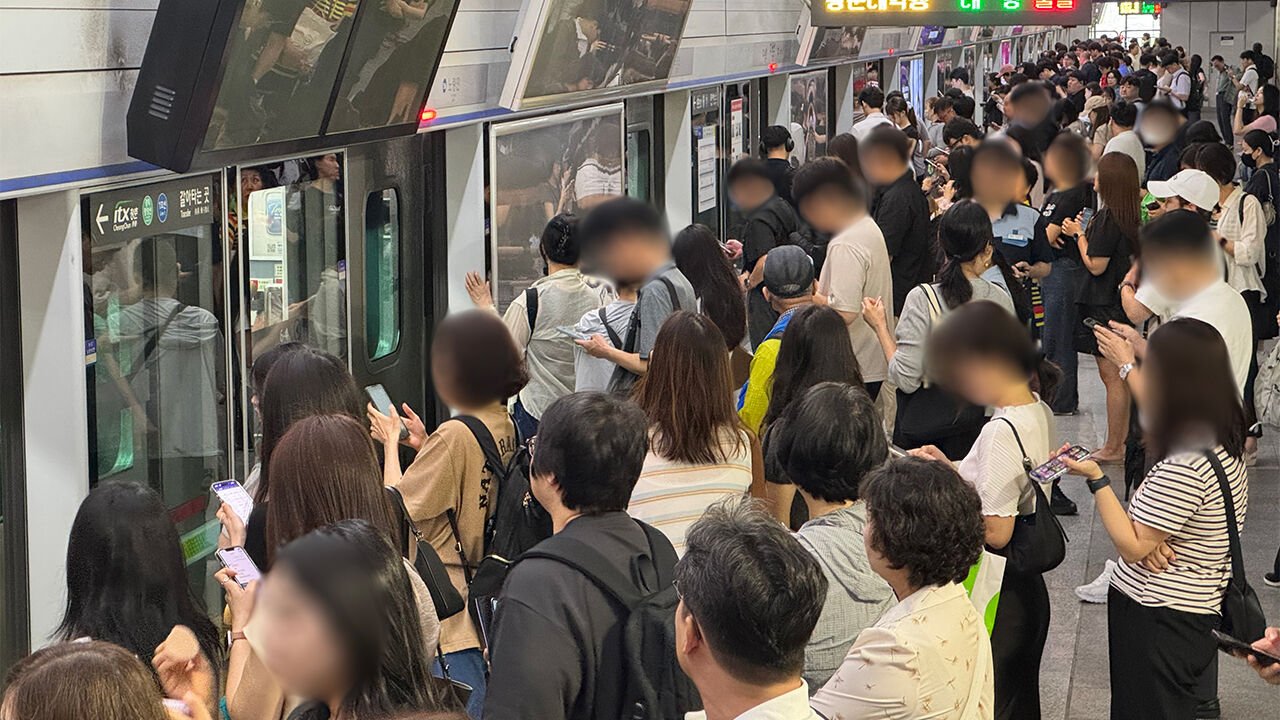
▲ Citizens use the Seoul subway.
Seoul's public transportation has received consecutive high praise from major overseas media outlets, gaining recognition for its safety, convenience, and cutting-edge service competitiveness.
The Seoul Metropolitan Government announced that in the "Best Public Transport Cities in the World 2026" list released by British urban culture and travel media outlet Time Out on October 13 (local time), Seoul ranked 5th.
In a survey of approximately 24,000 people worldwide, Seoul recorded a 91.1% positive evaluation for its public transportation, rising three spots from 8th place last year.
Seoul ranked 5th following Taipei (95.0%), Singapore (93.5%), Hong Kong (92.8%), and Edinburgh (92.4%), placing ahead of Zurich (6th) and Vienna (7th).
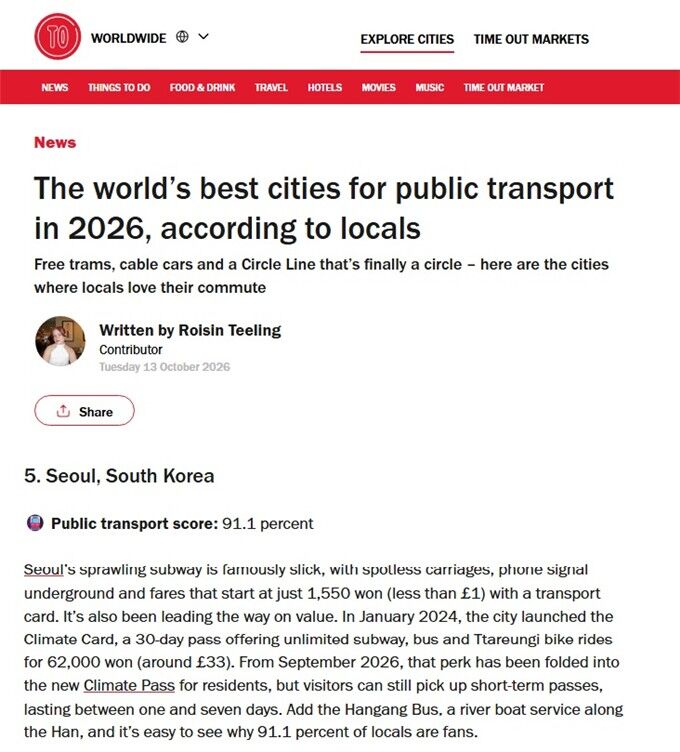
Time Out highlighted Seoul's strengths as its dense subway network, clean train cars, seamless mobile phone communication environment even underground, and reasonable fares.
It also introduced various transportation services such as the Climate Card and short-term passes for foreigners.
U.S. broadcaster CNN also separately spotlighted the Seoul subway.
CNN included Seoul in its list of "18 of the World's Best Subway Systems" released on October 17 (local time), praising its cleanliness, safety, and efficiency.
It also introduced as advantages the ability to use seamless mobile phone communication and the internet in stations and operating trains, as well as convenience facilities such as heating and cooling systems and heated seats.
The Seoul Metropolitan Government explained that this is the fruition of its ongoing efforts to enhance public transit safety and convenience facilities.
The Seoul Metropolitan Government completed the installation of platform screen doors across all 262 stations of Subway Lines 1 through 9 in 2009.
As a result, annual subway accident fatalities, which averaged 37.1 people between 2001 and 2009, dropped to an annual average of 0.4 people between 2010 and 2024.
Last year, there were zero related accident fatalities.
In addition, the city has expanded elevators in subway stations since 2007, securing a "one-station-one-route" system as of the end of last year where all 338 subway stations managed by the Seoul Metropolitan Government allow wheelchair travel from ground level to the platforms via elevators.
Recently, the city introduced automatic safety steps to prevent passengers from getting their feet stuck between platforms and trains, as well as a "tagless" service that automatically processes fares without having to tap transportation cards on terminals.
It is also expanding artificial intelligence (AI) real-time interpretation and overseas credit card payments for foreign tourists.
The Seoul subway route map, which was completely overhauled for the first time in about 40 years, was recognized for its readability and user convenience, winning the Red Dot Design Award in Germany in 2024.
Yeo Jang-kwon, head of the Seoul Metropolitan Government's Transportation Office, said, "The global acclaim for the Seoul subway is the result of continuous investment for citizen safety and travel convenience," adding, "Based on safety, consideration for transportation-vulnerable groups, and cutting-edge technology, we will further elevate the competitiveness of Seoul's public transportation."
(Photo provided by the Seoul Metropolitan Government, Yonhap News)
※ Please note: This article was translated by AI and may contain errors.


 Video News
 Video News
 Video News
 Video News
 Video News