
 KOR
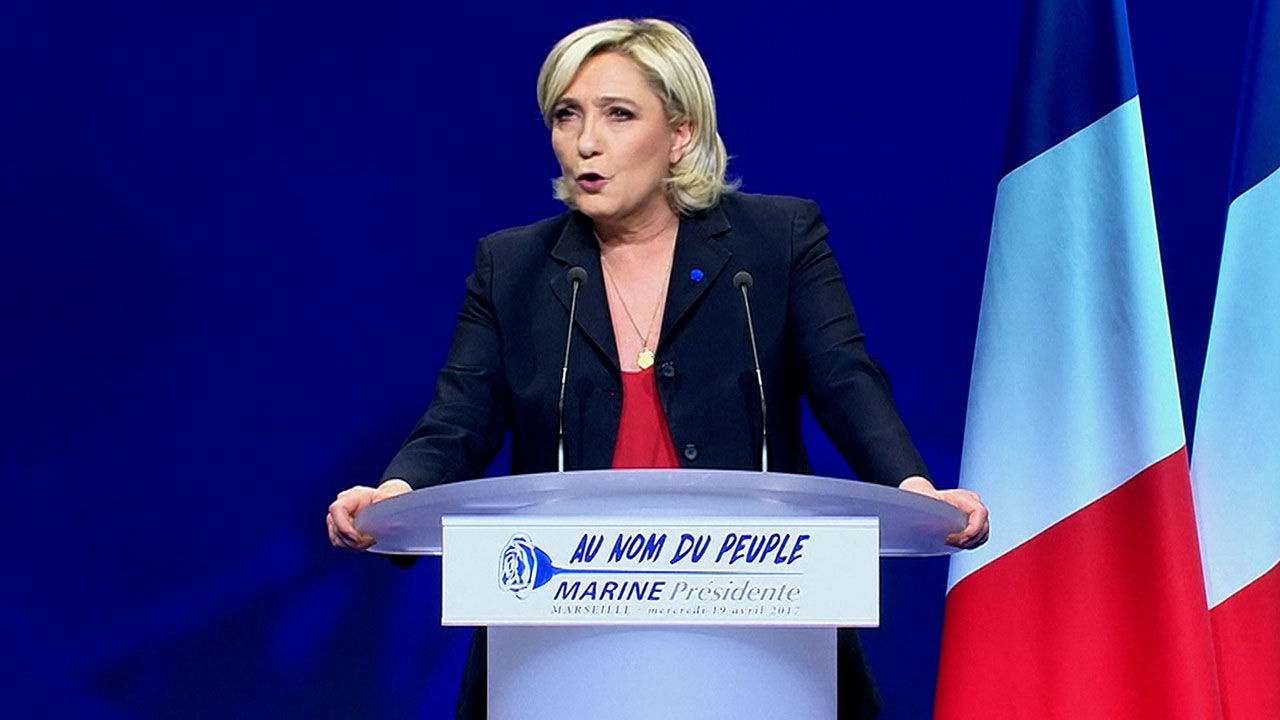
▲ Marine Le Pen
Amid growing political turmoil in France driven by violent unrest, observations continue to mount that Marine Le Pen, leader of the far-right National Rally (RN) and a leading presidential candidate for next year's election, stands to gain indirect benefits.
While previous chaos erupted into violence during the Yellow Vest movement in 2018 and the protests following the death of a 17-year-old of Algerian descent in 2023, the current crisis is unfolding just six months ahead of the end of President Emmanuel Macron's term and the presidential election, raising political tensions to new heights.
Reuters reported on the 19th (local time) that public frustration exploding over long-standing underinvestment in education and high living costs such as inflation, alongside authorities' failure to respond adequately, is fueling President Macron's "lame duck" status and analyzing it to work in favor of the far-right.
Jean-Baptiste Moreau, a former lawmaker and close ally of President Macron, said, "Le Pen no longer needs to spend a single penny on her campaign," adding, "It is not just about paving the way; a six-lane highway has been laid out for her."
Recent polls have shown that Le Pen would likely win against any presidential contender, and this situation has added a tailwind to her campaign.
According to a Cluster17 poll conducted before last weekend's protests and released on the 19th, Le Pen is projected to take first place in the first round of voting next April with at least 31 percent of the vote.
She is followed in a tie at 20 percent by Jean-Luc Melenchon of the far-left France Unbowed (LFI) and centrist Edouard Philippe.
On the 18th, President Macron drew criticism and disappointment from both inside and outside his party by failing to offer any substantial measures in a speech while merely appealing for restraint. Meanwhile, several hours earlier, Le Pen posted a separate televised address to the nation condemning the violence and pledging to restore law and order.
"I condemn the rioters who are exploiting this anger to sow chaos in French cities," Le Pen said, adding, "In six months, the French people will be able to choose a different path—the restoration of authority and security."
The New York Times (NYT) noted that Le Pen delivered her speech firmly clasping her hands against the backdrop of the French flag, projecting an image akin to a "president-elect," and analyzed that "this was a day of political opportunity for the RN, which has positioned itself as a party that expels illegal immigrants and defends law and order."
The RN has seized on the unrest to attack both the Macron government and far-left forces, portraying itself as the sole and "strong" party that will protect France.
The argument is that the government is incompetent and fails to guarantee public safety, while the far-left incites violence and chaos.
Jordan Bardella, leader of the RN, appeared in front of a police station in central Paris on the 18th to express support for police officers, telling reporters, "For decades, we have been lenient toward crime, authority has been weak, and we have been morally, psychologically, and practically disarmed regarding internal security. Now we are paying the price."
The NYT pointed out that the RN's approach to the violent incidents mirrors the strategy employed by far-right forces across Europe.
Following the incident in July when migrants breached the Spanish autonomous city of Ceuta in North Africa, Spain's far-right Vox party also made border security a new electoral issue and pursued a similar path.
While the racial and cultural backgrounds of those leading the current violence are largely unknown, across the Atlantic, U.S. President Donald Trump has framed the events as the work of individuals with migrant backgrounds, lending momentum to the anti-immigration far-right party RN.
Vincent Martigny, a professor of political science at the University of Nice, noted that the violence fits well into the RN's strategy of dividing France into "urban areas filled with student protesters and rioters" and "a quiet, good rural France."
He added that the long-term impact of these events on the RN depends on how long the protests persist.
※ Please note: This article was translated by AI and may contain errors.


 Video News
 Video News
 Video News
 Video News
 Video News