
 KOR
KOR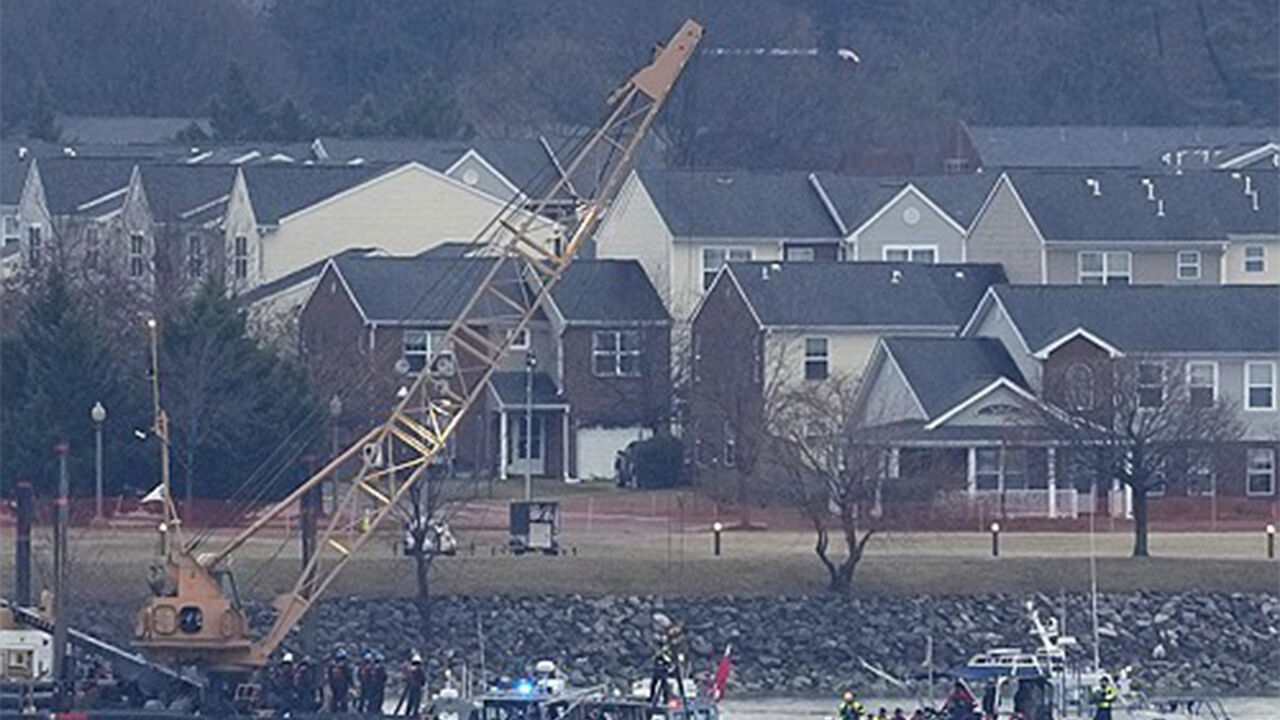
▲ A Coast Guard vessel equipped with a crane operates near the wreckage of a Black Hawk helicopter that crashed into the Potomac River near Ronald Reagan Washington National Airport in January 2025.
Regarding the mid-air collision between a passenger airliner and a military helicopter that claimed 67 lives near Washington, D.C., in January of last year, the U.S. Army reportedly knew that the accident helicopter's altimeter was prone to errors but failed to address the issue.
The Washington Post (WP) reported this on the 8th, local time, after obtaining a U.S. Army investigation report provided to the families of the crash victims.
On January 29 of last year, an American Airlines passenger plane and a U.S. Army Black Hawk helicopter collided in mid-air near Ronald Reagan Washington National Airport, resulting in the deaths of all 67 people on board.
The National Transportation Safety Board (NTSB) previously concluded that the primary responsibility for the accident lay with the Federal Aviation Administration (FAA), which had set the flight paths of the military helicopter and civilian airliner too close to each other.
The new Army report includes findings that structural flaws within the Army also acted as contributing factors to the background of the accident.
The Army was aware beforehand that altimeters on older models, including the accident-involved Black Hawk helicopter, could display inaccurate readings, yet it did not resolve the problem.
Furthermore, the Army failed to take measures to ensure that pilots were fully aware of these defects.
The investigation found that barometric altimeters installed on older Black Hawks could meet Army flight tolerance standards even with an error margin of up to 140 feet (approximately 43 meters).
In fact, at the time of the crash, the Black Hawk's altimeter displayed 200 feet (approximately 61 meters), while its actual flight altitude was 278 feet (approximately 85 meters) above the Potomac River.
It was also determined that an auxiliary fuel tank mounted on the accident helicopter could affect altimeter readings.
Following the accident, the Army notified the entire force of the possibility of altimeter errors, but the full incorporation of related information into operational manuals is scheduled for 2027, according to WP.
The Army has also yet to complete a comprehensive investigation across all helicopters to understand the impact of changing weather conditions or flight environments on altimeter accuracy, the report showed.
The report pointed out multiple problems within the Army's risk management system as well.
Army leadership had systematically failed to collect near-miss collision incidents between aircraft over the years and had inadequately trained pilots regarding the specific hazards of the airspace over the congested Washington, D.C., area.
It was also raised that the helicopter crew may have failed to properly identify the lights of the approaching passenger plane due to surrounding city lights while using night vision goggles at the time of the crash.
Investigators concluded that the helicopter crew likely focused their attention on another aircraft rather than the passenger plane they actually collided with.
Additionally, the report noted that the collision could have been prevented if air traffic controllers had informed the helicopter pilots of the approaching airliner's heading and distance.
The Army acknowledged in the report that its own risk management measures had failed, but the document did not contain any details regarding disciplinary actions against military leadership, WP reported.
(Photo: AP, Yonhap News)
※ Please note: This article was translated by AI and may contain errors.


 Video News
 Video News
 Video News
 Video News
 Video News