
 KOR
KOR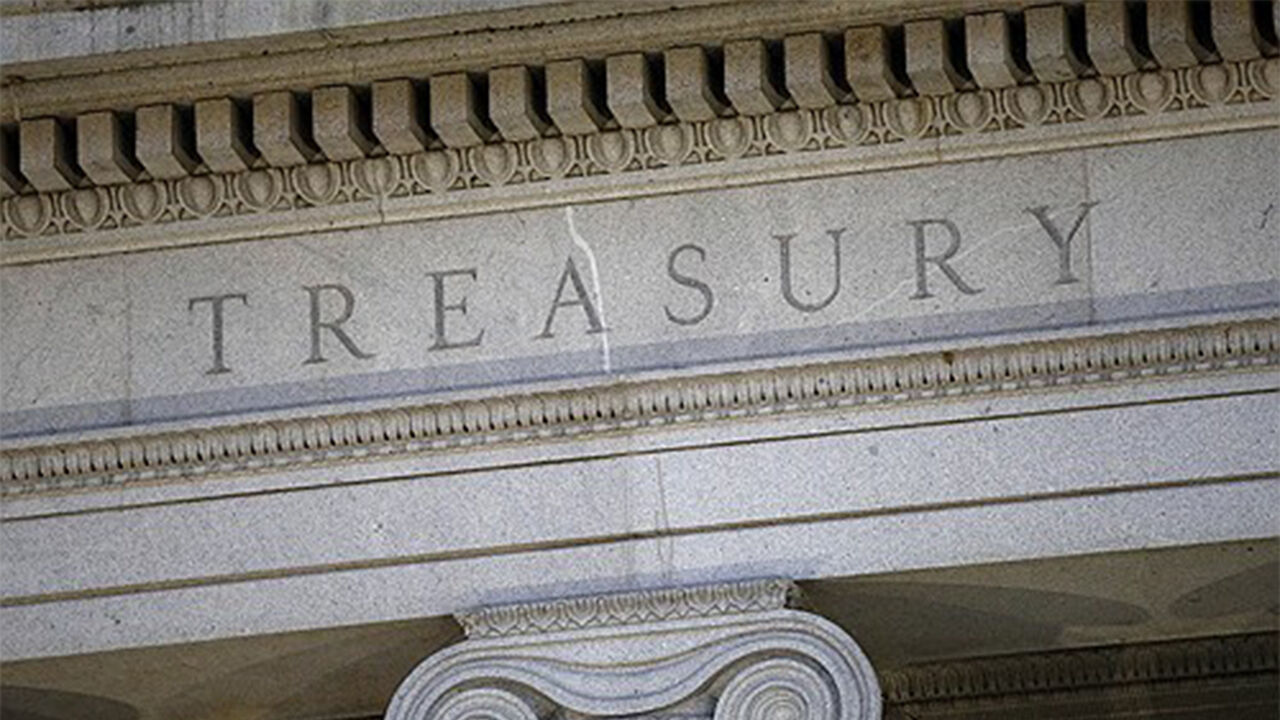
▲ U.S. Department of the Treasury
Wall Street forecasts are diverging over the future direction of soaring U.S. Treasury yields.
While some expect yields to decline by the end of the year, others warn that yields could rise further, pointing to the resilient growth of the U.S. economy and the possibility of a higher long-term neutral interest rate.
According to Bloomberg on the 7th (local time), the market is struggling to find stability as predictions regarding the direction of yields remain divided.
On this day, the yield on the 10-year U.S. Treasury note surpassed 5.3% intraday, breaking its highest level since 2002.
The 30-year yield also climbed to 5.73%, marking its highest level in 24 years.
Bank of America (BofA) stated in an official report that it expects the 10-year Treasury yield to decline to 5% by the end of the year.
This reflects economists' projections that the Federal Reserve will implement consecutive interest rate hikes in October and December, guiding the economy into a "balanced state."
However, Mark Cabana, head of global rates strategy at Bank of America, leaned toward the possibility of further yield increases.
"While our official baseline forecast is for lower rates than where we are today, given the balance of risks, the risks are skewed to yields going higher rather than lower," Cabana said.
William Marshall, head of U.S. rates strategy at Goldman Sachs, forecasted that the 10-year yield would drop to 4.75% by the end of the year.
This is about 60 basis points (1 bp = 0.01 percentage point) lower than the peak recorded on the 7th.
"It still makes sense to maintain a positive medium-term outlook," Marshall evaluated, noting that underlying inflation pressures are fairly well contained.
His assessment is that temporary factors, such as tariffs and the Iran war, are largely acting behind the persistence of high inflation levels currently.
He projected that these factors will eventually subside, leaving only structural inflation factors over the long term.
On the other hand, Anshul Pradhan, head of U.S. rates research at Barclays Capital, raised his 10-year Treasury yield forecast for the third quarter of next year from 5% to 5.25%.
The assessment is that as long as the U.S. economy maintains its robust momentum, there is no clear reason for yields to fall below 5%.
Pradhan particularly drew attention to the potential for improved productivity in the U.S., pointing out that while the market currently prices in a long-term neutral rate of about 3.5%, if productivity turns out higher than expected, the long-term interest rate level itself could be repriced.
Accordingly, he also raised the possibility that the 30-year Treasury yield could rise to 6%, or at least see its fair value increase to the 6% level.
Michael Chang, global markets rates derivatives strategist at Citigroup, stands in the middle.
He expressed considerable confidence in the forecast that the 10-year Treasury yield will fall to 5% by the end of the year.
At the same time, he viewed a decline in the 30-year yield to 5.3% as a fully plausible scenario.
However, he pointed out that in the short term, yields could deviate significantly from their fair value.
Chang diagnosed the current market as being in a sort of "mini-buyer strike" state.
This means there are not enough investors willing to buy government bonds, making it difficult for yields to trade at appropriate levels.
He forecasted that such supply-and-demand imbalances would cause extreme yield dislocations and that this situation could persist longer than usual.
Nevertheless, he expected that in the medium term, yields will eventually approach their fair value, which will be lower than current levels.
(Photo: Yonhap News)
※ Please note: This article was translated by AI and may contain errors.


 Video News

 Video News
 Video News
 Video News