
 KOR
KOR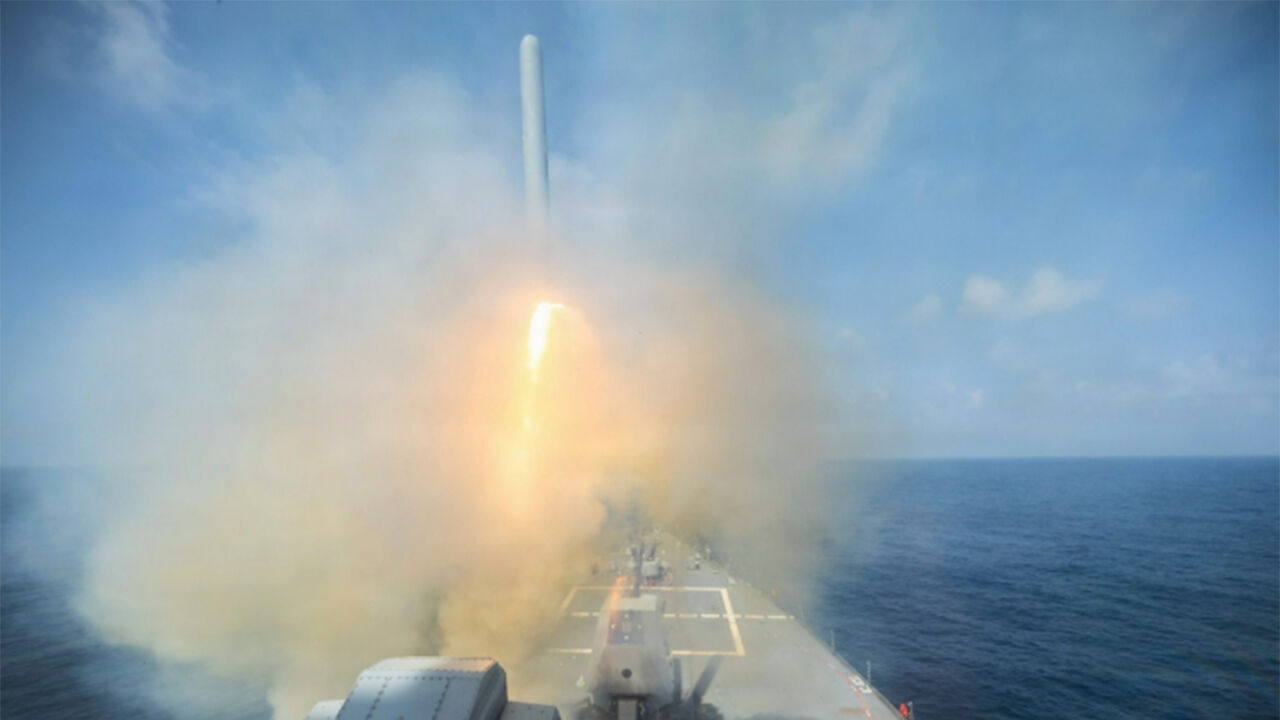
▲ A Tomahawk missile is launched from a U.S. Navy destroyer.
The Wall Street Journal (WSJ) reported on September 27 (local time) that while overlapping wars in Ukraine and Iran have led to a severe shortage of U.S. missile stockpiles, the situation is unlikely to improve anytime soon.
According to the report, major U.S. defense contractors such as Lockheed Martin and RTX are operating production lines around the clock and investing billions of dollars to build new factories and expand production, but this has not translated into substantial production increases.
The WSJ projected that during the war with Iran, the stockpiles of key weapons held by the U.S. and its allies have dwindled, and most of the new missiles will not be available for potential conflicts in the coming years.
Rob Bauer, a retired Dutch Navy admiral who served as the chair of the NATO Military Committee until last year, told the WSJ, "Defense ministers walk into the shop with pockets full of money, but the shelves are empty and they are frustrated."
When Russia invaded Ukraine in 2022, the U.S. government vowed to boost weapon production, but was reluctant to place stable, large-scale orders that would allow defense companies to invest in expanding production lines.
Consequently, the ratio of capital expenditures to sales for major U.S. defense companies remained virtually unchanged from 2021 to 2025.
While this ratio is expected to rise further this year, order backlogs are growing at an even faster pace, leaving missiles and ammunition still in short supply.
According to the American Enterprise Institute (AEI), the share of defense budgets allocated to missiles and ammunition averaged about 7.5% annually from 1999 to 2025, falling behind aircraft (23%) and warships (10%).
Following the war in Ukraine, the U.S. Army Science Board investigated whether the defense industry had the capacity to increase ammunition production and concluded that the industrial base had weakened.
For example, in the case of the Tomahawk long-range cruise missile, favored by the U.S. and many allies, order volumes had been so low in recent years that production lines nearly faced closure.
The U.S. Navy placed a $23 billion, seven-year order for Tomahawk missiles only in August.
However, this order still requires congressional budget approval to become a final contract.
A spokesperson for RTX, which manufactures the Tomahawk, said, "We will continue to invest with the long-term goal of producing 1,000 units annually."
The U.S. military is known to have fired more than 1,000 Tomahawk missiles during the first two months of the war with Iran.
This accounts for one-third of the U.S. military's inventory prior to the war with Iran.
Although belatedly, the U.S. government's move into large-scale, long-term contracts has brought a boom to defense contractors, according to the WSJ.
The RTX plant in Tucson, Arizona, is recruiting specialized personnel in fields such as electricity, explosives, and chemistry, and is preparing to operate new equipment that shortens component testing times.
However, skilled labor shortages persist in critical areas, and supply chain disruptions resulting from the war with Iran make it difficult to easily secure essential elements for missile production, such as rare earth elements and microelectronics.
Furthermore, for munitions like the Tomahawk that involve thousands of parts and sophisticated designs, there are limits to automating production lines, making it difficult to drastically scale up production.
Ben Reynolds, the U.S. Navy's deputy assistant secretary for budget, referring to RTX's Raytheon business unit last April, said, "Now we have to invest at a very, very large scale, and we need that and we expect that."
(Photo: Provided by U.S. Central Command, AP, Yonhap News)
※ Please note: This article was translated by AI and may contain errors.


 Video News
 Video News


 Video News