
 KOR
KOR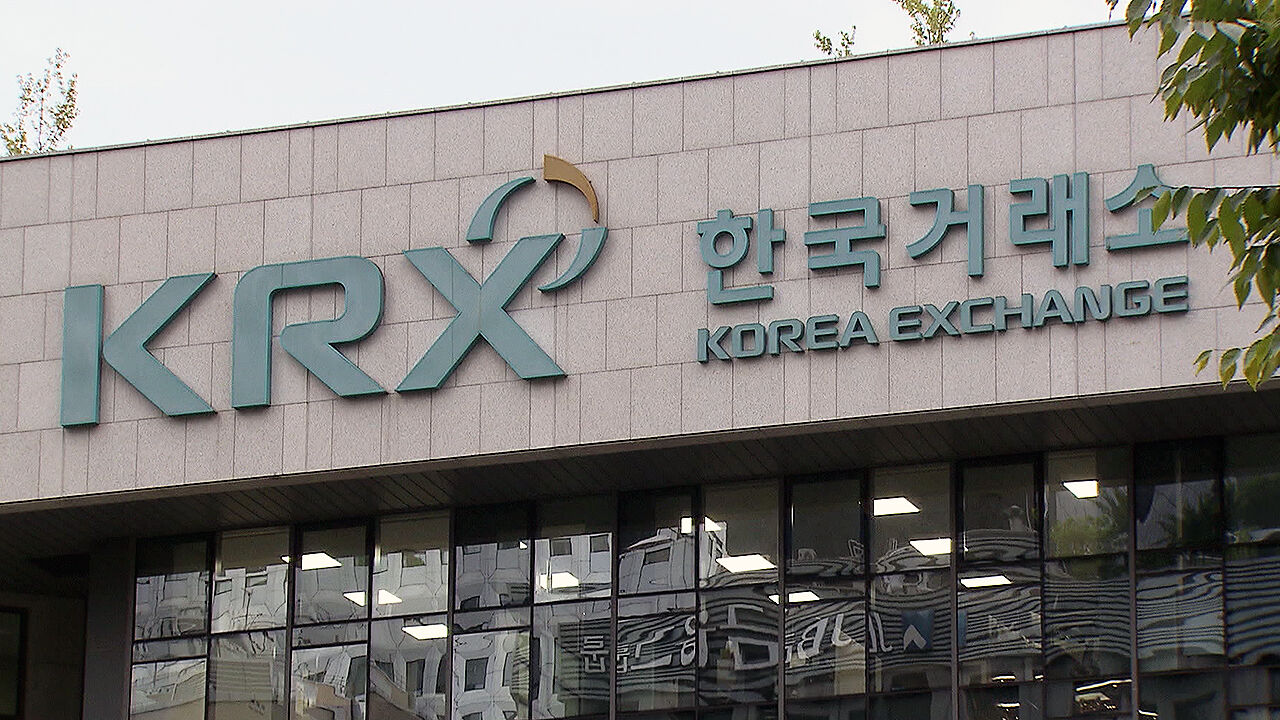
▲ Korea Exchange
Data showed that eight companies have been slated for expulsion from the KOSDAQ market over the past three months for failing to meet the market capitalization requirements for continued listing, implemented by authorities as part of efforts to boost the value of the domestic stock market.
The requirements were tightened once again in July with higher thresholds, raising the possibility that more than a dozen listed companies with market caps below 20 billion won will either disappear from the stock market or be transferred to KONEX by mid-next month.
The eight KOSDAQ-listed companies decided to be delisted this year due to falling short of market capitalization requirements are Koiz, Wonpung Mulsan, Shilla SG, KM Pharmaceutical, Gold&S, Suseong Webtoon, AFW, and Sejin TS.
While there were no delistings on the KOSDAQ due to low market caps in the first half of the year, the number has grown since the second half as the domestic stock market went through extreme volatility and a heavy concentration in large-cap stocks.
Authorities raised the market capitalization threshold for continued listing on KOSDAQ from 4 billion won to 15 billion won starting early this year, and all of these companies failed to meet it.
As the threshold was raised again to 20 billion won starting in July, listed companies with market caps between 15 billion won and 20 billion won are also expected to face the risk of delisting starting in mid-next month.
Under the regulations, if a company's market cap falls below 20 billion won for 30 consecutive trading days, it is designated as an administrative issue.
If it fails to exceed the market cap threshold for 45 trading days out of the subsequent 90 trading days, a delisting decision is made, and the point to evaluate whether these 45 consecutive trading days are met arrives for the first time in mid-next month.
A total of 17 KOSDAQ-listed companies have been designated as administrative issues due to low market caps from August 12, which marked the 30th consecutive trading day below the tightened requirements, until recently.
The Korea Exchange expects around 50 companies to be delisted from the KOSDAQ alone due to the tightened market cap criteria in the second half of this year.
On the KOSPI, Iljeong Silup was delisted in the first half due to a low market cap, and SHD was slated for delisting on the 23rd.
Thirteen listed companies have been designated as administrative issues following the requirement tightening.
Gold&S and KM Pharmaceutical, which received delisting decisions, along with JUYEON and CS, which were recently designated as administrative issues, have applied for injunctions to suspend the effect of the administrative issue designation and are in legal disputes with the exchange in court.
Regulations to expel penny stocks—whose share prices are below 1,000 won—were also implemented together in July, leaving 15 KOSPI-listed companies and 30 KOSDAQ-listed companies designated as administrative issues.
These listed companies will also face delisting decisions in mid-next month if they fail to maintain 1,000 won or higher for 45 consecutive trading days.
Previously, if delisting was finalized solely due to low market caps on the KOSPI or KOSDAQ, companies were immediately expelled from the stock market. However, earlier this month, financial authorities allowed listed companies meeting certain conditions to transfer to KONEX without liquidation trading.
This supplementary measure came in response to criticism over profitable companies being delisted simply due to low market caps.
Transfer to the KONEX market is permitted if a company recorded operating profits in two out of the past three fiscal years, or if it posted an operating profit in one fiscal year and has equity capital of 20 billion won or more.
Except for Koiz and Wonpung Mulsan, which have already finished liquidation trading and disappeared on September 14 and 21 among the KOSDAQ-listed companies confirmed for delisting, the rest are expected to review KONEX transfer procedures depending on whether they meet the conditions.
Shilla SG already stated in a public disclosure on September 11 that it "decided to transfer and list on KONEX and plans to submit a preliminary application for new listing to the KONEX market department," making it highly likely to become the first case of a transfer listing to KONEX.
However, voices also point out that transferring listing to KONEX may not be a sufficient alternative when considering actual fundraising effects.
※ Please note: This article was translated by AI and may contain errors.



 Video News
 Video News
 Video News
 Video News