
 KOR
KOR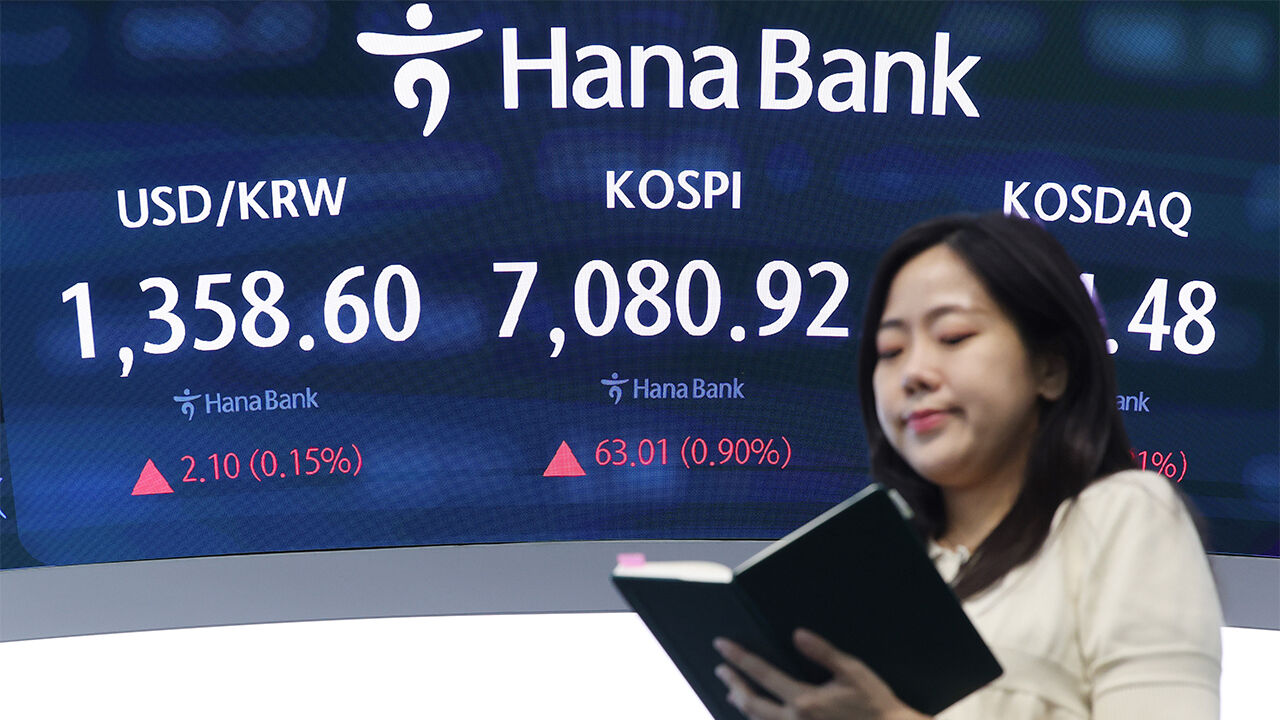
▲ The KOSPI, won-dollar exchange rate, and other market indicators are displayed on the electronic board at the Hana Bank dealing room in Seoul on the 23rd. On this day, the KOSPI closed up 63.01 points (0.90%) at 7,080.92, while the Kosdaq index closed up 10.10 points (1.21%) at 844.48.
As the domestic stock market recently showed signs of recovery centered on large-cap semiconductor stocks, investor deposits, which serve as waiting funds for the stock market, surpassed 100 trillion won again in five trading days.
According to the Korea Financial Investment Association today (the 23rd), investor deposits were tallied at 100 trillion 982.6 billion won.
This is the first time in five trading days that deposits have climbed back above the 100 trillion won threshold since reaching 105 trillion 327.5 billion won on the 15th.
Investor deposits had declined for two consecutive days, dropping to 99 trillion 57.5 billion won on the 16th and 97 trillion 4,911 billion won on the 17th, and remained in the 98 trillion won range on the 18th (98 trillion 334.6 billion won) and the 21st (98 trillion 138.6 billion won).
Market watchers interpret that investment sentiment has revived and deposits increased as the KOSPI broke back above the 7,000 mark on the 21st (7,007.92) for the first time in seven trading days since the 10th (7,033.92), and maintained its upward momentum through today.
On this day, the KOSPI closed up 0.90% from the previous session at 7,080.92.
Credit transaction financing balances, an indicator of debt-financed investing ("bit-too"), stood at 32 trillion 819.2 billion won, down slightly from the previous day (33 trillion 55.5 billion won).
After hitting an all-time high of 38 trillion 632.8 billion won on June 24, the credit balance shrank to 27 trillion 40.38 billion won on August 4, but has gradually increased since then, fluctuating in the 32 trillion to 33 trillion won range.
Brokerage margin receivables, a form of ultra-short-term debt-financed investing, amounted to 853.7 billion won, down from 872.2 billion won the previous trading day.
The scale of forced liquidation resulting from unpaid receivables was tallied at 3.7 billion won, accounting for 0.4% of the total receivables.
(Photo: Yonhap News)
※ Please note: This article was translated by AI and may contain errors.


 Video News
 Video News

 Video News
