KOR
KOR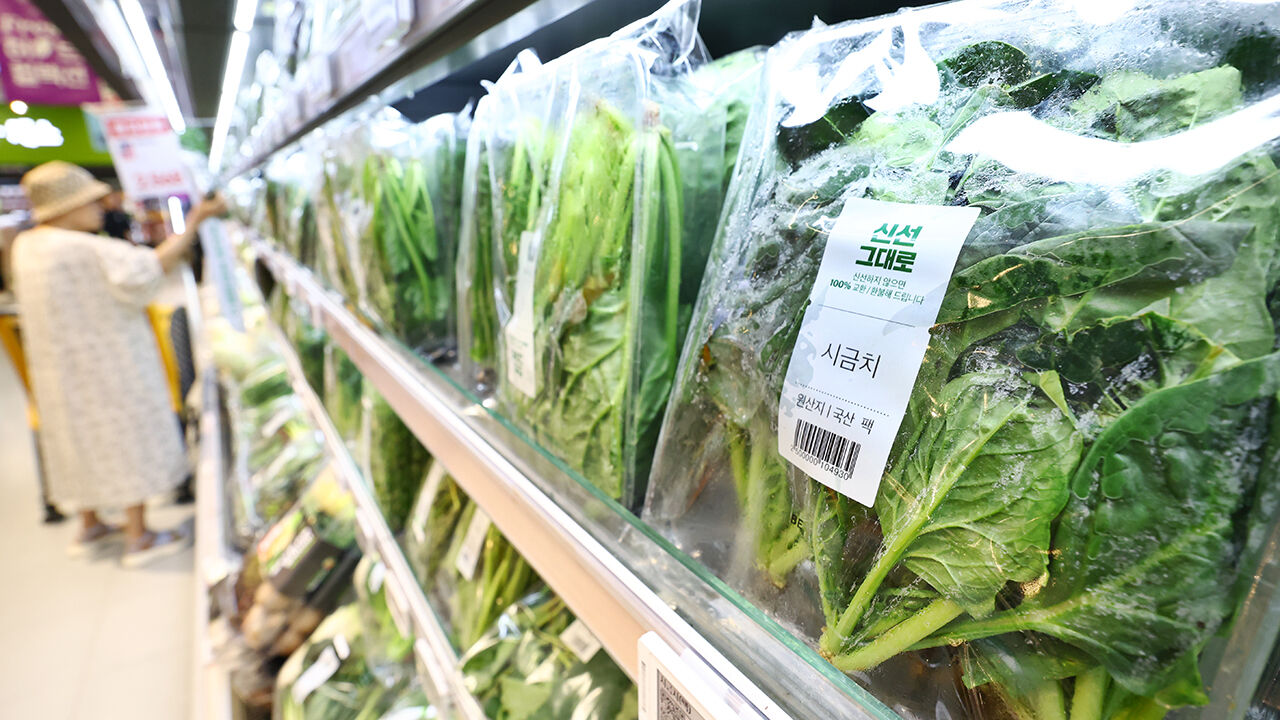
▲ Spinach on sale at a large supermarket in Seoul
South Korea's producer prices rebounded in one month, driven by factors such as a severe heatwave and rising oil prices last month.
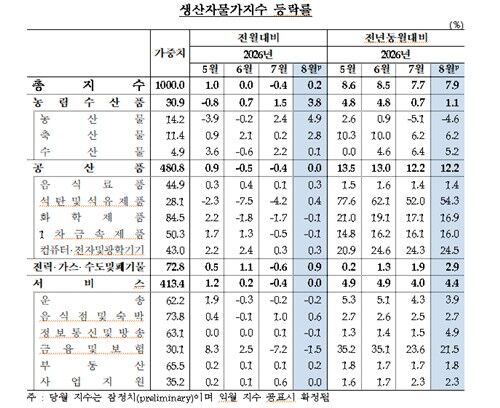
According to the Bank of Korea today (September 18), the producer price index for August stood at 129.64, up 0.2 percent from the previous month (129.43).
The increase was attributed to rising prices for agricultural, forestry, and marine products affected by the heatwave, as well as increases in electricity, gas, water, and waste services driven by higher international oil prices.
Producer prices had risen for nine consecutive months starting September of last year before showing a flat trend in June.
After declining in July (-0.4 percent) for the first time in 11 months, prices rebounded last month.
Compared to the same month last year, prices rose 7.9 percent.
Looking at the month-on-month fluctuation rates by item, agricultural, forestry, and marine products rose 3.8 percent, led by agricultural products (4.9 percent) and livestock products (2.8 percent) due to the heatwave.
Spinach surged 51.9 percent due to poor crop conditions, and pork prices also went up by 5.4 percent.
Electricity, gas, water, and waste services rose 0.9 percent, pushed up by a 11.0 percent increase in industrial city gas.
Manufactured goods showed a flat trend as electrical equipment (-0.7 percent) and others declined, offsetting increases in coal and petroleum products (0.4 percent).
Service prices also remained flat.
While dining out and accommodation services (0.6 percent) rose, financial and insurance services dropped 1.5 percent for the second consecutive month due to a decrease in stock brokerage commissions.
The domestic supply price index, which measures price fluctuations including imported goods, stood at 134.72, down 1.3 percent from the previous month.
This marks the second consecutive month of decline following July (-1.8 percent).
The drop was affected by decreases across intermediate goods (-1.0 percent), raw materials (-4.6 percent), and final goods (-0.9 percent).
Intermediate goods fell mainly due to imports (-5.9 percent), while raw materials saw a decline in imports (-6.4 percent) despite a rise in domestic shipments (2.8 percent).
Final goods saw an increase in domestic shipments (0.3 percent), but imports decreased (-5.8 percent).
The Bank of Korea explained that customs-cleared import prices fell as the exchange rate dropped and international oil prices declined in July.
The total output price index for August, which adds export goods to domestic shipments, stood at 141.13, falling 1.2 percent.
Agricultural, forestry, and marine products rose 3.5 percent as domestic shipments (3.8 percent) increased despite a drop in exports (-4.7 percent), whereas manufactured goods fell 2.0 percent, centered on exports of chemical products and computers (-4.6 percent).
Lee Heung-hoo, head of the Price Statistics Team at the Bank of Korea, said regarding the September outlook, "As the conflict in the Middle East resumed, international oil prices from September 1 to 16 rose 29 percent compared to the August average, and wholesale rates for industrial city gas were also raised by 6.6 percent." He added, "These points are expected to act as upward pressure on producer prices."
(Photo: Yonhap News)
※ Please note: This article was translated by AI and may contain errors.


![72 Billion Won Worth of Seoul Love Gift Certificates Available on First-Come Basis... 5% Discount and 2% Refund [Friendly Economy]](http://img.sbs.co.kr/newimg/news/20260918/202223577_300.jpg) Video News
Video News
 Video News
 Video News
 Video News