
 KOR
KOR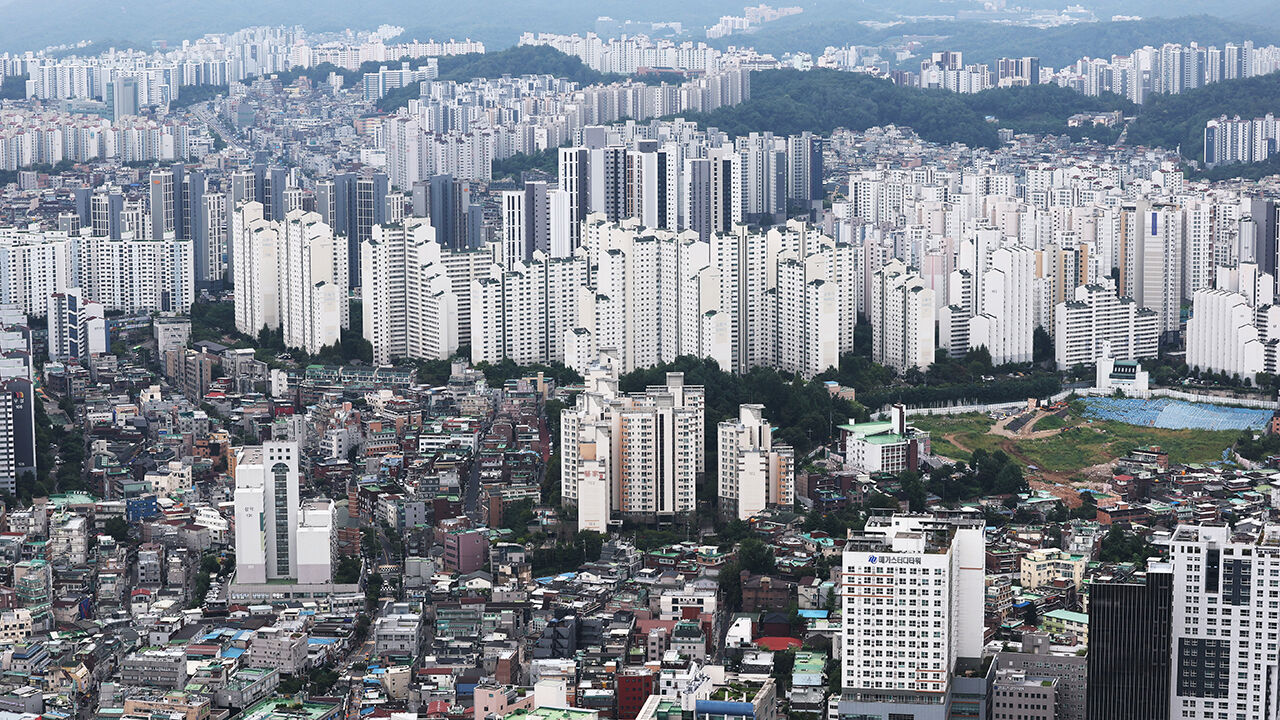
(File Photo: Yonhap News)
Apartment sales prices in Seoul have risen for the 84th consecutive week, bringing them extremely close to the all-time record for the longest upward streak.
While the Gangnam area is showing weakness, a "decoupling" trend continues as mid-to-lower tier districts maintain strong upward trajectories.
According to the weekly apartment price trend data released by the Korea Real Estate Board on the 17th (based on data as of September 14), apartment sales prices in Seoul rose by an average of 0.16% compared to the previous week.
The gain has narrowed for three consecutive weeks starting from the fifth week of August (0.22%).
The Korea Real Estate Board stated, "Downward adjustment listings have led to some declining transactions locally, but overall Seoul prices rose as upward contracts were signed mainly in preferred areas with solid demand, such as newly built, large complex, and small-to-medium-sized apartments."
The Gangnam 3 districts (Seocho, Gangnam, and Songpa districts), where tax burdens are expected to increase significantly if future tax revisions are implemented, continued their weak trend due to the emergence of price-adjusted listings caused by policy factors.
Gangnam District (-0.36%) and Seocho District (-0.26%) fell for the sixth consecutive week, while Songpa District (-0.12%), which turned weak the previous week, widened its decline by 0.1 percentage points to fall for the second consecutive week.
Nam Hyuk-woo, a real estate analyst at Woori Bank, said, "Tax revisions focused on actual residency, such as reducing the long-term holding special deduction rate and establishing a cap on the long-term residency income deduction, continue to act as key factors pressuring sales by significantly impacting capital gains tax hikes on high-priced homes."
On the other hand, mid-to-lower tier districts showed strong upward momentum, including Jungnang District (0.51%), Dobong District (0.47%), Seodaemun District (0.47%), Seongbuk District (0.43%), Gwanak District (0.37%), and Dongdaemun District (0.36%).
Based on Korea Real Estate Board data, Seoul's overall fluctuation rate has risen for the 84th consecutive week starting from the first week of February last year.
The all-time longest rising period was from the second week of June 2020 to the third week of January 2022 (85 weeks).
If the upward trend is maintained next week, it will tie the record for the longest streak.
In Gyeonggi Province (0.18%), Yeongtong-gu in Suwon (0.61%), Dongan-gu in Anyang (0.45%), and Gwonseon-gu in Suwon (0.42%) showed strong gains, while Incheon rose by 0.02%.
The greater Seoul area as a whole rose by 0.15%.
While non-metropolitan areas (0.00%) remained flat, the four major metropolitan cities (0.01%) and Jeonnam-Gwangju (0.05%) rose, while Sejong City (-0.13%) declined.
The seven provincial regions (0.00%) were flat.
Nationwide apartment sales prices rose by an average of 0.08%.
Nationwide apartment jeonse (lump-sum lease) prices rose by 0.10% compared to the previous week.
Seoul (0.17%) saw its increase narrow by 0.02 percentage points compared to the previous week.
Seocho District (-0.26%) recorded its largest drop in 175 weeks since the fourth week of April 2023 (-0.28%), falling mainly around Jamwon and Banpo-dong due to the impact of new supply.
Gangnam District (-0.17%) declined mainly around Daechi and Suseo-dong.
In contrast, mid-to-lower tier districts such as Nowon District (0.45%), Jungnang District (0.40%), Dongdaemun District (0.34%), Yeongdeungpo District (0.29%), Eunpyeong District (0.27%), and Geumcheon District (0.27%) showed high growth rates centered around subway station areas and large complexes.
In Gyeonggi Province (0.15%), jeonse prices rose sharply in areas such as Dongtan-gu in Hwaseong (0.36%), Byeongjeom-gu in Hwaseong (0.31%), and Giheung-gu in Yongin (0.29%), while Incheon rose by 0.16%.
The greater Seoul area as a whole rose by 0.16%.
In non-metropolitan areas (0.04%), the four major metropolitan cities rose by 0.05%, Sejong City by 0.08%, Jeonnam-Gwangju by 0.02%, and the seven provinces by 0.04%.
(Photo: Yonhap News)
※ Please note: This article was translated by AI and may contain errors.



 Video News
 Video News

 Video News