
 KOR
KOR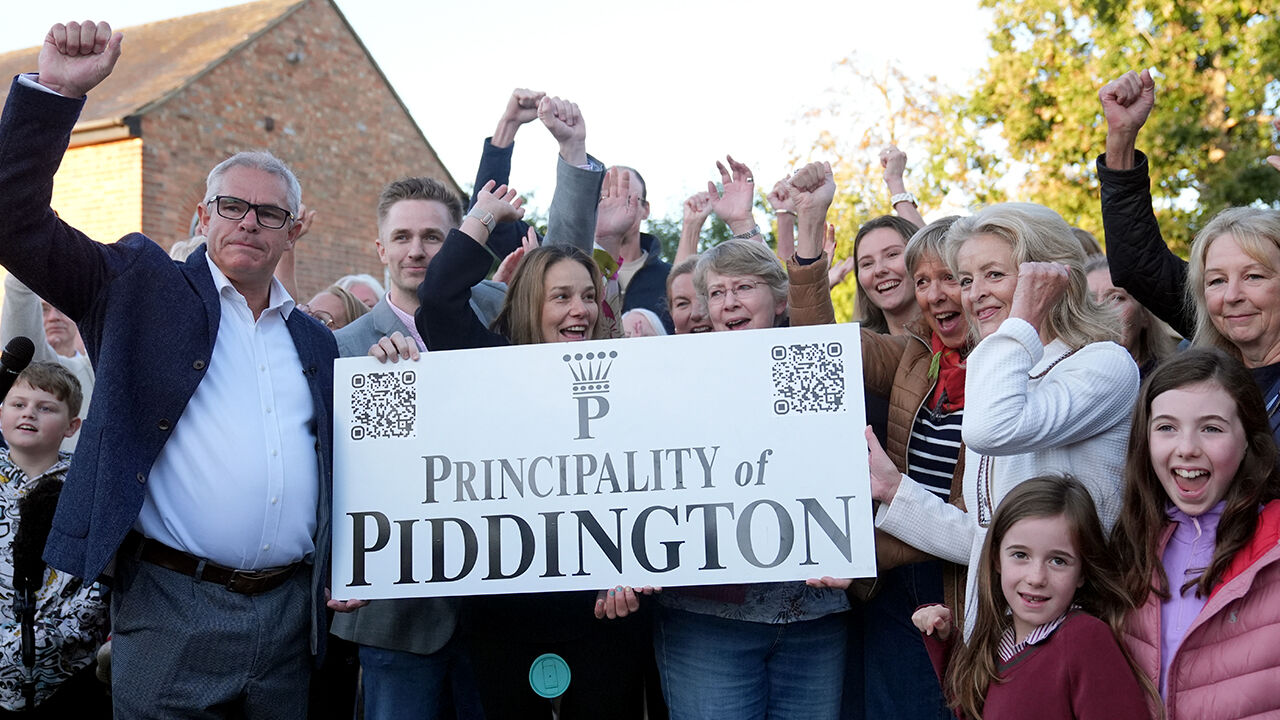
▲ Residents holding a sign for the "Principality of Piddington"
A small British village with a population of about 350 has voted to declare independence and establish its own sovereign state.
The move comes in protest of a government plan to accommodate immigrants nearly four times the current population nearby.
According to the British broadcaster BBC and AFP news agency, residents of Piddington in Oxfordshire, England, decided in a vote on the 15th to secede from the United Kingdom and pursue their "right to self-determination," with 285 voting in favor and 26 against.
While the vote, led by the local parish council, carries no legal weight, a sign reading "Principality of Piddington" has already been erected at the village border.
Tim McNally, chairman of the parish council, described the voting outcome as an example of democracy in action, adding, "We have sent a message to the entire world."
Council member Joe Marshall suggested that the newly formed principality could elect its own leader and issue its own identification cards.
He noted that they drew inspiration from the Principality of Sealand, a micro-nation in the North Sea that declared independence in 1967, adding that the future of Piddington's independence movement depends on how much the government listens to the village.

Piddington is a small village located about 25 kilometers northeast of the university city of Oxford.
The referendum took place after the British government decided to build a refugee center capable of accommodating up to 1,256 asylum seekers at a former military base nearby.
Residents feel increasingly anxious because single male refugees are scheduled to stay for at least 10 years, and they also worry that far-right groups might flock to the village to stage protests.
Ian Darby, 63, told AFP, "All we have in our village is a village hall, a 12th-century church, and a playing field. This is practically an occupation of our village. It is four times our population. They will be wandering around and causing serious problems."
Herbert Owen, 73, said, "I voted to leave the UK," expressing his view that the government seems indifferent to the village.
Christina Gower, 26, said it is unfortunate that they had to resort to extreme and desperate actions to get the government's attention, adding that she would welcome Prime Minister Andy Burnham if he came over for a cup of tea.
Protests opposing the housing of refugees in hotels and other locations frequently occur across the UK.
The Labour government is pursuing a plan to utilize former military bases instead of hotels.
Culture Secretary Lisa Nandy stated that since Labour came to power in 2024, the asylum screening process has accelerated, which will reduce the demand for temporary accommodation, adding, "While we clean up the mess, we have to put people somewhere."
(Photo: AP, Yonhap News)
※ Please note: This article was translated by AI and may contain errors.


 Video News
 Video News
 Video News

