
 KOR
KOR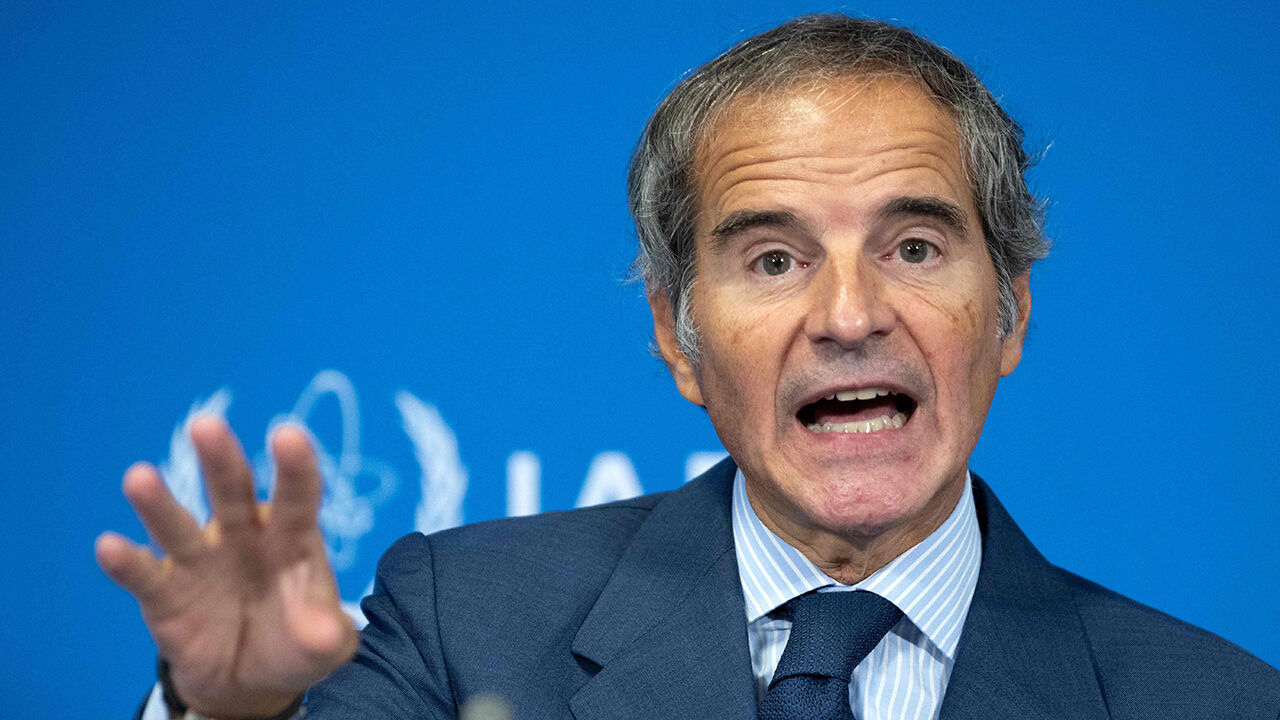
▲ IAEA Director General Rafael Mariano Grossi
The nuclear reactor built by Syria's ousted former President Bashar al-Assad with North Korea's support was intended for manufacturing nuclear weapons and reached a stage very close to completion, the International Atomic Energy Agency (IAEA) assessed on September 7 (local time).
According to AP and AFP reports, IAEA Director General Rafael Mariano Grossi explained the results of last month's IAEA visit to the Al-Kibar reactor site in Syria's eastern Deir ez-Zor Governorate during a press conference held at the IAEA headquarters in Vienna, Austria.
Director General Grossi said, "It is clear that the former Syrian government pursued various clandestine activities," adding, "Considering the technical characteristics and structure of the reactor, it was built with the purpose of producing fissile material that could be used directly for manufacturing nuclear weapons."
Grossi added that the reactor was nearly finished and that the Assad regime likely carried out an explosion to block any inspection of the facility.
Through last month's visit to Syria, the IAEA also toured a plant that manufactured nuclear fuel for reactors, as well as storage sites containing nuclear fuel, uranium-bearing materials, and waste.
Following the visit, the IAEA stated in a report that it discovered approximately 73 tons of natural uranium metal.
Director General Grossi expressed appreciation for the courageous decision of the current Syrian government in declaring these undeclared facilities.
Since the overthrow of former President Assad by rebel offensives in late 2024, the Syrian government has actively cooperated with the IAEA to escape international isolation.
Former President Assad ruled Syria with an iron fist from 2000 to 2024 and is the individual responsible for triggering the Syrian civil war, which claimed 500,000 to 600,000 lives.
He was dubbed the "Butcher of Syria" for commanding government forces and loyalists in the civil war that began in 2011, killing some 200,000 civilians.
U.S. intelligence agencies and others detected signs that North Korea helped Syria build a reactor closely resembling the one at its Yongbyon nuclear facility between roughly 2000 and 2007.
The international community has expressed grave concern over the signs that a nuclear program was implanted in Syria, a country enduring intense turmoil intertwined with a dictatorial regime and various extremist militant groups.
Israel destroyed the near-completion reactor in a 2007 airstrike, and the Assad regime concealed remaining radioactive materials and research and development equipment in other locations.
However, the potential for nuclear development in Syria, where the security situation is even more volatile within the Middle East, continued to raise alarm internationally.
Notably, among the materials hidden by the Assad regime was uranium concentrate, which can be used by terrorist groups to build a "dirty bomb," a radiological dispersal weapon.
Under these circumstances, expectations for resolving the issue have grown as Syria's new government declared its nuclear facilities at the request of the United States and granted access to the IAEA.
Director General Grossi responded that the method for handling the discovered uranium material is a matter for the Syrian government to decide.
He added, "For us, it is important to know where this material is at all times."
The IAEA stated in 2011 that there was a very high probability a reactor had been built in Deir ez-Zor, and after analyzing intelligence it acquired independently, concluded that the Assad regime received support from North Korea to build the reactor.
Director General Grossi stated that, for now, the agency has not been given an additional investigative mandate to probe the reactor's ties to North Korea.
On this day, Grossi also revealed that the South Korean government has notified the IAEA of its intention to begin discussions to conclude an agreement for the introduction of nuclear-powered submarines, and that North Korea's new uranium enrichment facility in Yongbyon may already be operational or on the verge of operation.
(Photo: Getty Images)
※ Please note: This article was translated by AI and may contain errors.



 Video News
 Video News
 Video News
 Video News
 Video News