
 KOR
KOR
⚡ Key Takeaways
Anthropic is targeting a $100 billion fundraising haul through an initial public offering (IPO), raising expectations for a historic valuation that could surpass even SpaceX.
While the company has seen explosive performance gains by expanding its corporate client base and hiring key talent like Andrej Karpathy, low sales for its top-tier model and rising public backlash against data centers pose major risks.
The limits of cost-inefficient top-tier models and the rising market share of cheaper open models suggest Anthropic's business model may undergo significant shifts in the future.
Following SpaceX, buzz is now building around an IPO for Anthropic. A massive amount of capital flooded into SpaceX's recent public debut, and talk is circulating that Anthropic could smash even that record. What is driving such confidence? Today on OhGraph, we dive into the story behind Anthropic's potential IPO. Through various data and charts, let's look at the strengths fueling its listing push, as well as the critical vulnerabilities worth watching closely.
Surpassing SpaceX? Is an Earth-Shattering IPO on the Horizon?
On June 1, Anthropic took its first step toward going public by submitting a confidential draft filing to the U.S. Securities and Exchange Commission (SEC). Recently, a string of reports have emerged suggesting an IPO is imminent. The New York Times reported that the investment banks underwriting Anthropic's public offering recently held preliminary meetings with prospective investors.

Anthropic has submitted its registration filing, but without making it public yet, it is currently meeting with prospective investors. Word has emerged that during these preliminary pitches, Anthropic floated a fundraising target of around $100 billion through the IPO. Let's look at the chart to see just how extraordinary this figure is.

Plotting Anthropic's target against this landscape makes the comparison clear: a $100 billion fundraising target would instantly eclipse SpaceX's record. If the offering proceeds as targeted, Anthropic's valuation is projected to reach $2 trillion, matching SpaceX.

Looking at coverage of these rounds, each successive stage also reveals the company's valuation, as investors state what value they place on the firm when investing. Anthropic has massively expanded both its fundraising scale and corporate valuation, especially through rounds held since 2025.

Emboldened by these metrics, Anthropic is reportedly preparing to project its total addressable market (TAM) at more than $30 trillion. Converted to Korean currency, $30 trillion exceeds 40 quadrillion won. Ahead of an IPO, tech startups frequently calculate and pitch their TAM to investors, representing the theoretical annual revenue a company could generate if it captured 100% of its market. Anthropic's calculation treats the AI domain not merely as a software market, but as a technology capable of handling most human work.

Yet there is a clear rationale behind Anthropic's aggressive market projection: its recent earnings growth has been extraordinarily steep. Let's explore that aspect in more detail.
Generating Over 7 Trillion Won a Month... Backing It Up with Revenue
Anthropic's greatest source of confidence lies in its current revenue and operating performance. The recent numbers disclosed to key investors are remarkably strong. Here is the third chart from OhGraph.

How can Anthropic make this much money? The answer lies in its firm grip on token-heavy corporate clients and software developers rather than general consumers. Anthropic has pursued a strategy of securing enterprise customers through the technological capabilities of Claude Code. In February of this year, around 500 enterprises spent more than $1 million annually with Anthropic; by April, that figure doubled to 1,000. Real-world data clearly demonstrates how successfully Anthropic is capturing enterprise clients. Let's look at this chart tracking spending by U.S. enterprises on services and tokens from leading AI firms.

Sustaining this momentum naturally requires deep technological capabilities. That is why Anthropic remains fully committed to talent acquisition and technical investment. Among these moves, the recruitment of Andrej Karpathy stands out as particularly noteworthy.
Who holds the greatest influence in the AI tech market today? Sam Altman? Dario Amodei? Elon Musk? Demis Hassabis? While these tech leaders certainly wield enormous influence, Andrej Karpathy arguably ranks first when it comes to communicating, explaining, and evangelizing AI technology to developers and the broader public.

The phrase "vibe coding" originated from Karpathy. The concept of an "LLM Wiki"—archiving personal knowledge for AI models to draw upon—became a trend among developers after Karpathy mentioned it. The term "AutoResearch," describing AI agents running autonomously through the night without human intervention, followed the same path. In short, Anthropic recruited a figure who wields immense sway in shaping the culture and lexicon of AI developers today.


Among major frontier AI rivals, Anthropic was notably absent from the in-house chip race. Google has aggressively pushed model development using its TPUs, while OpenAI's custom-designed chip "Jalapeño" recently demonstrated superior speed and efficiency over Nvidia chips in inference workloads. Bringing Amir Salek on board allows Anthropic to address this long-standing vulnerability.
Hurdles Ahead for Anthropic: Data Centers Less Welcomed Than Coal Plants
With surging revenue and plugged gaps, does investing right after the IPO guarantee instant wealth? That conclusion is premature. While Anthropic boasts stunning numbers today, assuming an effortless path forward would be naive. Currently, Anthropic's biggest dilemma is that its most advanced model, developed at immense expense and effort, simply is not selling well.

Until now, Anthropic's business model operated on a familiar cycle: invest massive sums to develop more powerful models. When a new model launched, customers rushed in to use the expensive, high-performing flagship. Reaping profits from that top-tier model allowed Anthropic to recoup its R&D investments and fund the creation of even larger models.
With Fable 5, however, the premise that "if capability improves, customers will follow" broke down. It proved too costly. Moreover, users found that previous models could comfortably handle most workloads, removing any compelling incentive to upgrade. Unless exceptional capabilities are required, cutting-edge frontier models may no longer feel necessary. Users can achieve ample productivity with cheaper older models or substantially less expensive Chinese alternatives.
If this dynamic persists, Anthropic's investors will inevitably grow concerned. Compute costs will continue to escalate while revenue from flagship model sales stagnates. What happens if open models close the gap with frontier models even faster? Adoption of cheap, highly efficient open-weight models is already becoming the dominant trend.


Negative perceptions of AI in the United States are increasingly entering the mainstream. Communities are showing greater reluctance toward AI data centers than toward nuclear or coal-fired power plants. In fact, survey responses favoring coal-fired power plants over data centers were double those supporting data centers.
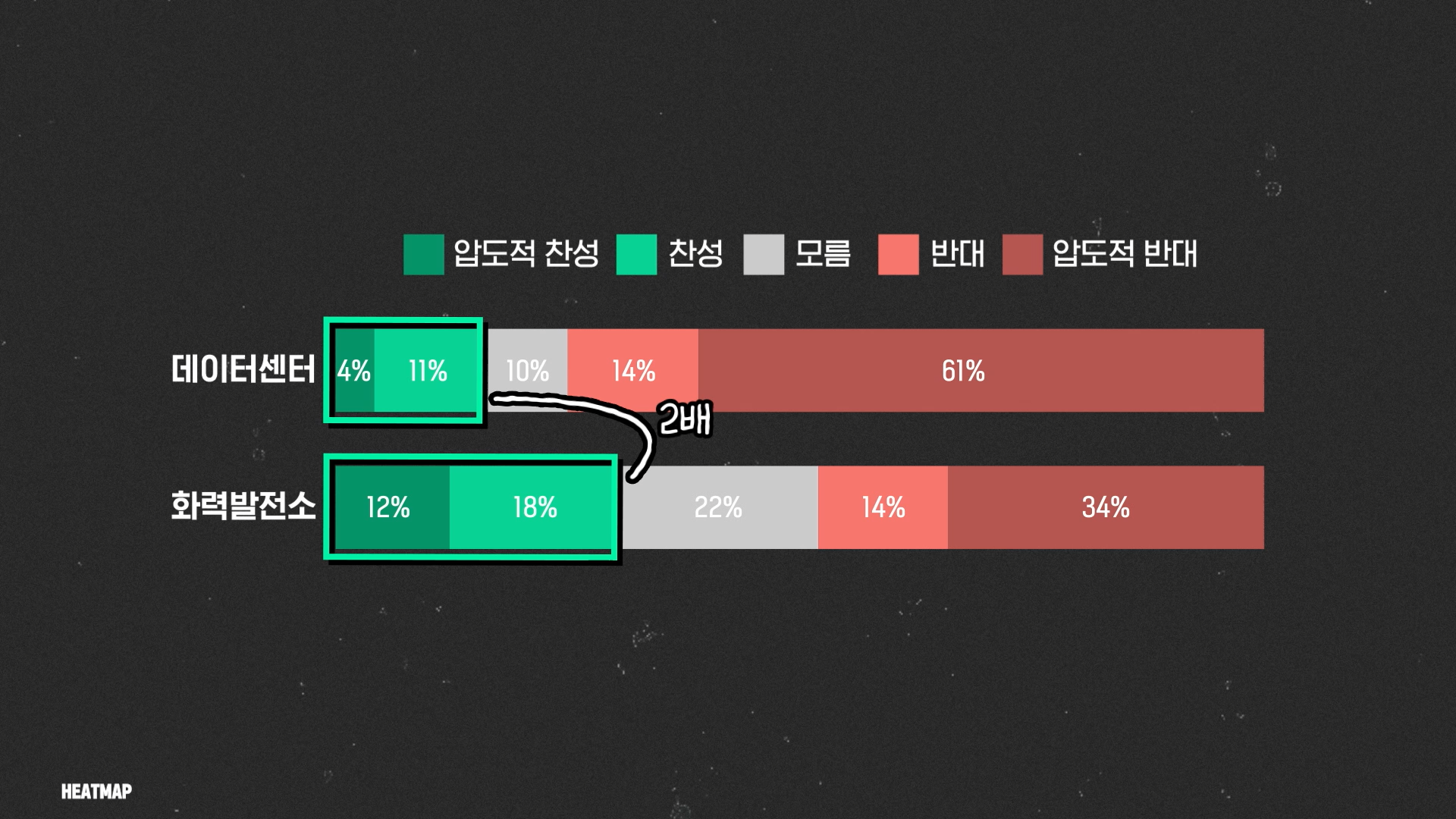
Electricity bills pose an additional problem. Because data centers consume tremendous amounts of power, regional grids must construct extra transmission infrastructure. Under U.S. regulatory frameworks, infrastructure expansion costs are shared across all local utility subscribers. Residents end up paying higher electric bills for power they never used. As backlash mounts, tech companies are scrambling for solutions; Microsoft pledged earlier this year not to pass additional data-center-driven electricity costs onto local residents.
Political circles are also shifting their stance rapidly. Both major parties previously dismissed opposition to data centers as the rhetoric of radical outliers. Yet as public discontent swells, politicians on both sides of the aisle are competing to propose stricter regulations and development caps.
Judged purely by its financial metrics, Anthropic's IPO looks set to be a blockbuster debut. Yet the paradox of its most powerful model failing to become its biggest seller, combined with mounting public pushback against AI infrastructure, leaves Anthropic facing substantial challenges. Will Anthropic's public debut lead down a path of triumph or one of tribulation? That concludes today's edition of OhGraph. Thank you very much for watching this video to the end.
References
- Anthropic | YouTube
- Andrej Karpathy(@karpathy) | X
- Anthropic confidentially submits draft registration statement for proposed initial public offering | Anthropic
- August 2026 Ramp AI Index: Cracks in the AI Thesis | Ramp Economics Lab
- AI Model Leaderboards: Open vs. Closed Token Volume | Vercel AI Gateway
- Americans' Openness to Data Centers Has Kept Declining | Heatmap Pro·Embold Research
- Institutions of Democracy Survey: Opposition to Local Data Centers | University of Pennsylvania Annenberg Public Policy Center
- Anthropic Bankers Pitch $100 Billion I.P.O. at Roughly $2 Trillion Valuation | The New York Times
- Jalapeño's first results show industry-leading speed and efficiency in AI inference | OpenAI
Text: An Hyemin Design: Ahn Jun-seok Intern: Shin Yeon-seong
※ Please note: This article was translated by AI and may contain errors.



 Video News

 Video News
 Video News
 Video News