
 KOR
KOR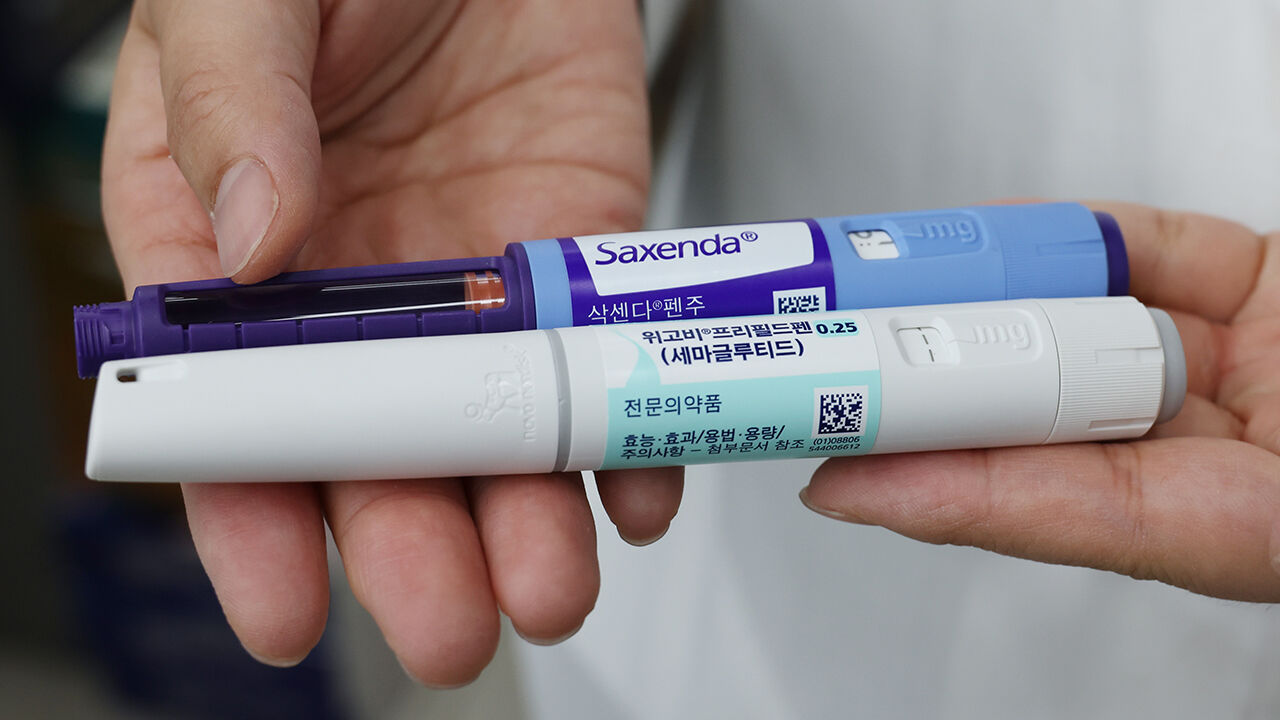
▲ Wegovy and Saxenda
A domestic research team has released findings showing that people who used the obesity treatment Wegovy for weight loss faced a higher risk of mental health issues, such as depression and anxiety, as well as gastrointestinal abnormalities compared to those who did not use the drug.
According to the latest issue of the international journal Diabetes, Obesity and Metabolism on the 8th, a joint research team led by Professor Shin Ju-young of Sungkyunkwan University's College of Pharmacy and Professor Park Rae-woong of Ajou University School of Medicine analyzed the safety of adults who used GLP-1 (glucagon-like peptide-1) receptor agonists for weight loss using electronic medical records from 13 hospitals nationwide.
The drugs investigated in the study were semaglutide, the main active ingredient in Wegovy, and liraglutide, the main ingredient in Saxenda.
The data utilized electronic medical records from secondary and tertiary medical institutions in South Korea collected from March 2018 to September 2025.
For semaglutide, considering its later market launch in South Korea, data from only 5 hospitals were used from October 2024 to September 2025.
The analysis compared 2,357 semaglutide users with 22,601 non-users, and 6,953 liraglutide users with 68,001 non-users, respectively.
The results showed that the overall risk of psychiatric disorders was 2.02 times higher in semaglutide users than in non-users.
Specifically, the risk of anxiety disorders was 2.39 times higher, and the risk of depressive disorders was 3.42 times higher.
The risk of gastrointestinal motility disorders and obstruction—conditions where the movement of the stomach and intestines slows down or becomes blocked—was also found to be 3.91 times higher.
To determine whether the results varied based on specific analytical methods, the research team re-analyzed the data through various approaches, such as exclusively analyzing individuals who met obesity-related criteria, excluding the effects of other weight-loss medications, or restricting the subjects to those prescribed semaglutide twice or more.
These analyses consistently maintained the observed trends of increased risks for psychiatric disorders, anxiety and depressive disorders, and gastrointestinal motility disorders and obstruction.
Similar mental health signals were also observed with Saxenda.
Liraglutide users were estimated to have a 1.66 times higher overall risk of psychiatric disorders, a 1.68 times higher risk of anxiety disorders, and a 1.51 times higher risk of depressive disorders compared to non-users.
The risk of pancreatic and biliary diseases was 1.33 times higher, while the combined risk of pancreatitis, cholangitis, and cholelithiasis stood at 1.40 times.
Mental health issues drew particular attention in this study.
Until now, research findings regarding the link between GLP-1 receptor agonist obesity treatments and mental health issues such as depression have been mixed.
While some observational studies using real-world clinical data showed an increased risk of psychiatric disorders, randomized clinical trials did not find clear evidence of an increase in psychiatric adverse events compared to placebos.
The research team explained that unlike clinical trials, real-world clinical settings include patients with diverse characteristics, such as those vulnerable to mental health issues, which may have allowed problems not fully apparent in previous clinical trials to be captured.
They also suggested the possibility that GLP-1 receptors are widely distributed in the central nervous system, including the brain, and may influence mood and behavior.
However, the study did not find evidence that self-harm or suicidal ideation increased among semaglutide users.
Gastrointestinal abnormalities are closely tied to the mechanism of action of GLP-1 drugs.
GLP-1 drugs slow down the rate at which food empties from the stomach to maintain a prolonged sense of fullness, and this process also affects gastrointestinal motility.
The research team noted that these characteristics could explain the increased risk of gastrointestinal motility disorders and obstruction observed in semaglutide users.
Similarly, the pancreatic and biliary diseases observed with liraglutide are analyzed to be potentially influenced by GLP-1 drugs delaying gallbladder emptying and the rapid weight loss process contributing to gallstone formation.
Nevertheless, the research team drew the line, stating that these results should not be interpreted to mean that Wegovy or Saxenda directly cause depression or intestinal obstruction.
"GLP-1 receptor agonists remain effective weight-loss treatments," the research team assessed, adding, "These findings highlight the need to carefully select patients and monitor adverse reactions more closely throughout the treatment process."
They further emphasized, "Additional research is needed to reconfirm these observational findings, evaluate the direct impact of weight changes themselves, and identify which patient characteristics make individuals more vulnerable to side effects."
(Photo: Yonhap News)
※ Please note: This article was translated by AI and may contain errors.



 Video News
 Video News
 Video News
 Video News
 Video News