KOR
KOR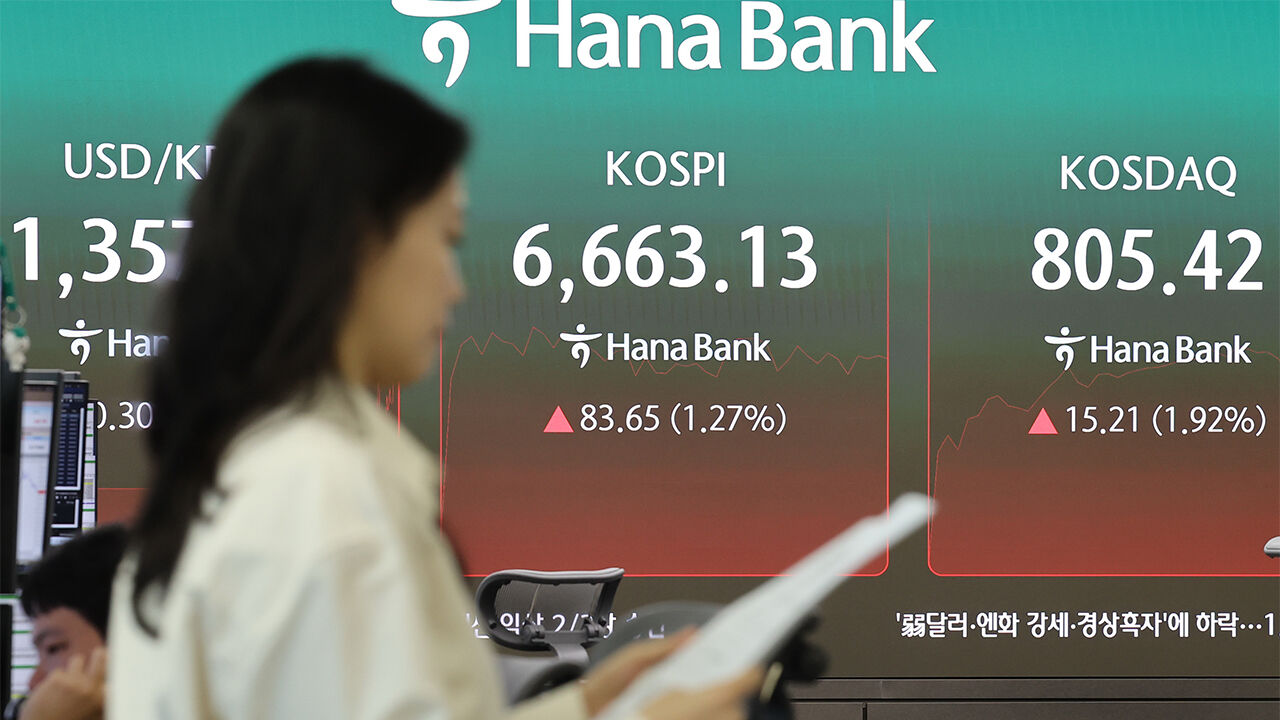
▲ Employees work at the dealing room of Hana Bank headquarters in Jung-gu, Seoul, on the 4th.
The Kospi 200 Volatility Index (VKOSPI), often referred to as South Korea's " fear index," dropped below the 40 threshold intraday today (the 4th), marking its lowest level in about half a year.
As of 1:56 p.m. today (the 4th), the VKOSPI stood at 39.32, plunging 3.10 points from the previous session.
This is the first time the VKOSPI has fallen below the 40 mark intraday in about six months, since it hit 39.32 during trading on February 12 this year.
The VKOSPI, which indicates the stock market volatility expected by the options market over the next month, has averaged around 20 since 2010. However, its peak surged sharply from the beginning of this year. In May, when the Kospi broke through the 7,000 milestone for the first time in history driven by a super-boom in global semiconductors, the index soared to an average of around 68.78.
Afterward, as the index broke the 8,000 mark on the 15th of the same month and climbed to the "9,000-pi" summit on June 18, the VKOSPI jumped as high as 97.99 intraday on June 29.
Key causes cited include extreme investment overheating, severe market concentration where Samsung Electronics and SK Hynix account for more than half of the total market capitalization of the securities market, and amplified volatility following the launch of single-stock leverage and inverse products using the two stocks as underlying assets.
Subsequently, as a global semiconductor correction began, the Kospi plummeted by more than 20% in the month of July alone. While the VKOSPI continued its high-altitude march above the 80 level, it began to drop sharply only after financial authorities implemented complementary measures on single-stock leverage and inverse products at the end of last July.
The authorities raised the basic deposit requirement for single-stock leverage and inverse products from 10 million won to 30 million won, and ensured that proceeds from sales are recognized as deposits only on the day cash is actually deposited following settlement completion.
Consequently, the daily trading value of single-stock leverage and inverse products, which had once surged to 19.4429 trillion won on June 24, plummeted to around 500 billion won by the end of last month.
The wrap-up of the global semiconductor correction and the emergence of sector rotation may have also influenced the mitigation of volatility in the domestic stock market.
Experts also point to the background that, despite successive negative factors such as the reignited armed conflict between the U.S. and Iran and a sharp surge in major countries' government bond yields, other corporations have continued net purchases worth over 1 trillion won every day driven by the impact of treasury stock purchases by Samsung Electronics and SK Hynix, solidly supporting the bottom of the domestic stock market.
(Photo: Yonhap News)
※ Please note: This article was translated by AI and may contain errors.