
 KOR
KOR
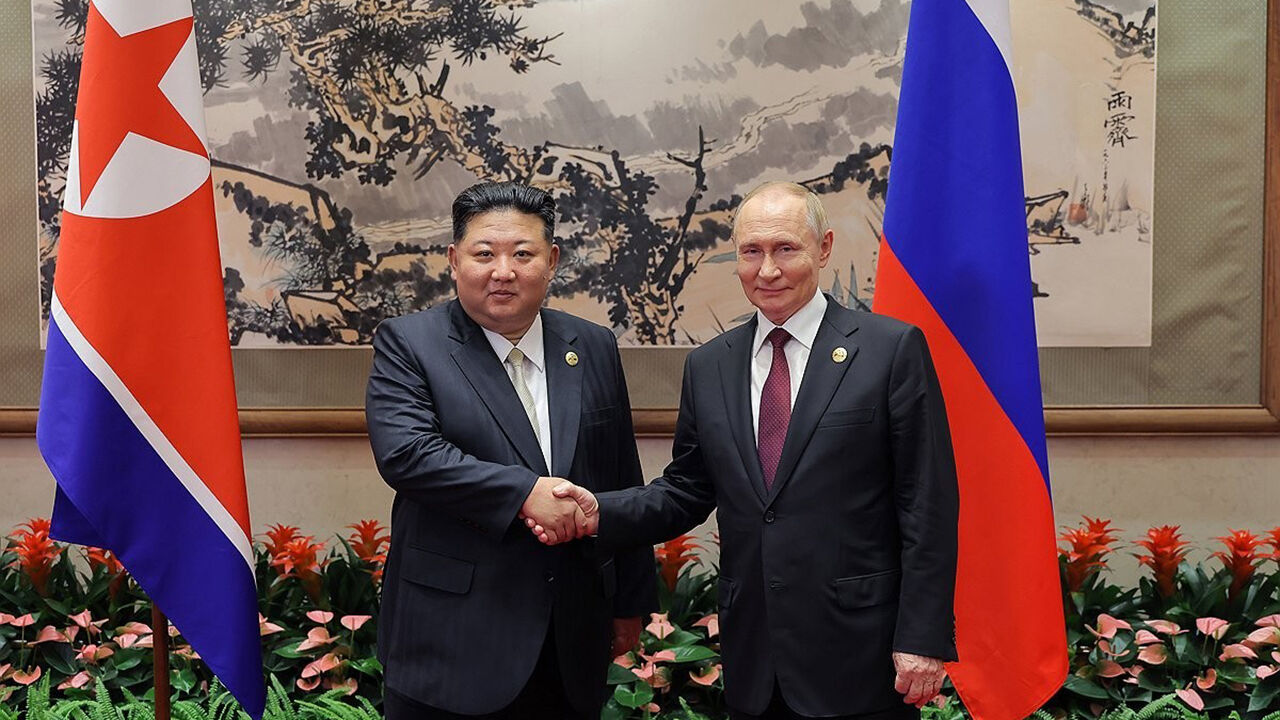
▲ Russian President Vladimir Putin (left) and Ukrainian President Volodymyr Zelenskyy
The war between Russia and Ukraine is intensifying once again, marked by the use of North Korean ballistic missiles and a fierce battle for control over the Black Sea.
Synthesizing foreign media reports on Thursday, August 13 (local time), Russia is heavily targeting gaps in Ukraine's air defense network with ballistic missiles as Kyiv suffers from a shortage of U.S.-made Patriot interceptor missiles.
On August 11, Russia launched a barrage of North Korean-supplied ballistic missiles at the southeastern city of Zaporizhzhia.
Ukrainian President Volodymyr Zelenskyy previously claimed that North Korea could potentially dispatch an additional 50,000 troops to support Russia's war effort.
Foreign Policy, an American security publication, noted that Russia's utilization of North Korean missiles and the potential deployment of North Korean troops highlight deepening military cooperation between the two nations.
The publication pointed out that the prospect of North Korean troop deployments reveals the growing difficulties Russia faces in securing manpower.
The UK's Telegraph commented that as Russian President Vladimir Putin finds himself cornered by Ukrainian drone offensives, North Korean leader Kim Jong Un is throwing him a lifeline.
In response to Russian attacks, Ukrainian forces carried out a nighttime surprise raid targeting Russia's Novorossiysk naval base, located about 320 kilometers away from the frontline on the eastern edge of the Black Sea.
The attack, which President Zelenskyy hailed as an "independent and special operation," mobilized long-range jet-propelled "Palianytsia" drones, Neptune cruise missiles, and uncrewed surface vessels.
Novorossiysk serves as a major hub for the Russian Black Sea Fleet after its retreat from the Crimean Peninsula.
Reports indicated that the Ukrainian strike caused fires at a major oil terminal and resulted in civilian casualties.
Russia claimed to have attacked a Ukrainian cargo ship in the Black Sea, while the Romanian military announced it had destroyed two Russian drones found near its largest offshore gas field.
Situated between Eastern Europe and Western Asia, the Black Sea is a vital trade route through which agricultural products from regional breadbaskets and energy resources such as oil and natural gas flow out to the open ocean.
Foreign Policy analyzed that mutual blockades of Black Sea trade routes by Russia and Ukraine could disrupt the majority of Russian crude oil exports and Ukrainian agricultural shipments.
Such offensives by Russia and Ukraine are expanding the scope of the war beyond the deadlocked frontlines, leading to an increasing number of civilian casualties in the process.
The Financial Times (FT) reported that Ukraine decided to refrain from attacking oil tankers following concerns expressed by U.S. Vice President JD Vance that such strikes could destabilize the international oil market and harm American companies.
Peace negotiations between Russia and Ukraine, spearheaded by U.S. President Donald Trump, show no signs of even a glimmer of resumed dialogue.
While Ukraine stated it has delivered a proposal for ending the war to the U.S. side, it remains uncertain whether it contains terms acceptable to President Vladimir Putin.
Experts believe that Russia is sticking to its original war objectives, which include securing territory in eastern Ukraine and ousting Kyiv's pro-Western regime.
Against this backdrop, observations suggest that Russia is looking for an opportunity to significantly escalate the intensity of its offensive.
The Institute for the Study of War (ISW), a U.S. think tank, diagnosed that "Ukraine's shortage of Patriot missiles will provide Russia with an opportunity to deal a devastating blow to Ukraine this coming winter."
The ISW predicted that "this will serve as a factor delaying meaningful peace talks and further prolonging the war."
Europe, which provides military support to Ukraine, believes Russia could expand its military actions into Europe and is consequently stepping up its readiness and sanctions against Moscow.
Amid these developments, President Putin, while directing naval drills in Russia's Far East, issued a strong warning to Europe.
Putin branded the European nations' seizure of Russian cargo ships suspected of belonging to a "shadow fleet" as "plunder."
He emphasized, "Russia will be forced to retaliate in the same manner, and the response will take place wherever we deem necessary."
(Photo: Pyongyang's Korean Central News Agency, Yonhap News)
※ Please note: This article was translated by AI and may contain errors.





 Video News
