
 KOR
KOR
▲ Attendees pose for a commemorative photo during the Hana Bank K League 2 2026 Opening Media Day held at the Swiss Grand Hotel in Seodaemun-gu, Seoul, on February 25.
Professional football K League city and provincial citizen clubs, operated with citizens' taxes, are being shaken by successive wastes of taxpayers' money and poor management.
Amid a reality where belts must be tightened, club leaderships have gone on luxury, sightseeing-like overseas business trips using citizens' tax money, and loose internal controls have even led to billions of won in public funds leaking out, heightening criticism over club operation practices.
Out of a total of 29 clubs in K League 1 and 2 for the 2026 season, citizen clubs account for more than half at 17 (58.6%), including Gangwon FC, Incheon United, FC Anyang, Bucheon FC, and Gwangju FC.
Budgets are funneled into these clubs every year under the guise of local government subsidies.
According to data released by the Korea Institute for Local Finance in February, the total local government budget allocated to K League citizen clubs this year amounts to 151.1 billion won.
This translates to an average of about 8.8 billion won in taxes going into each club.
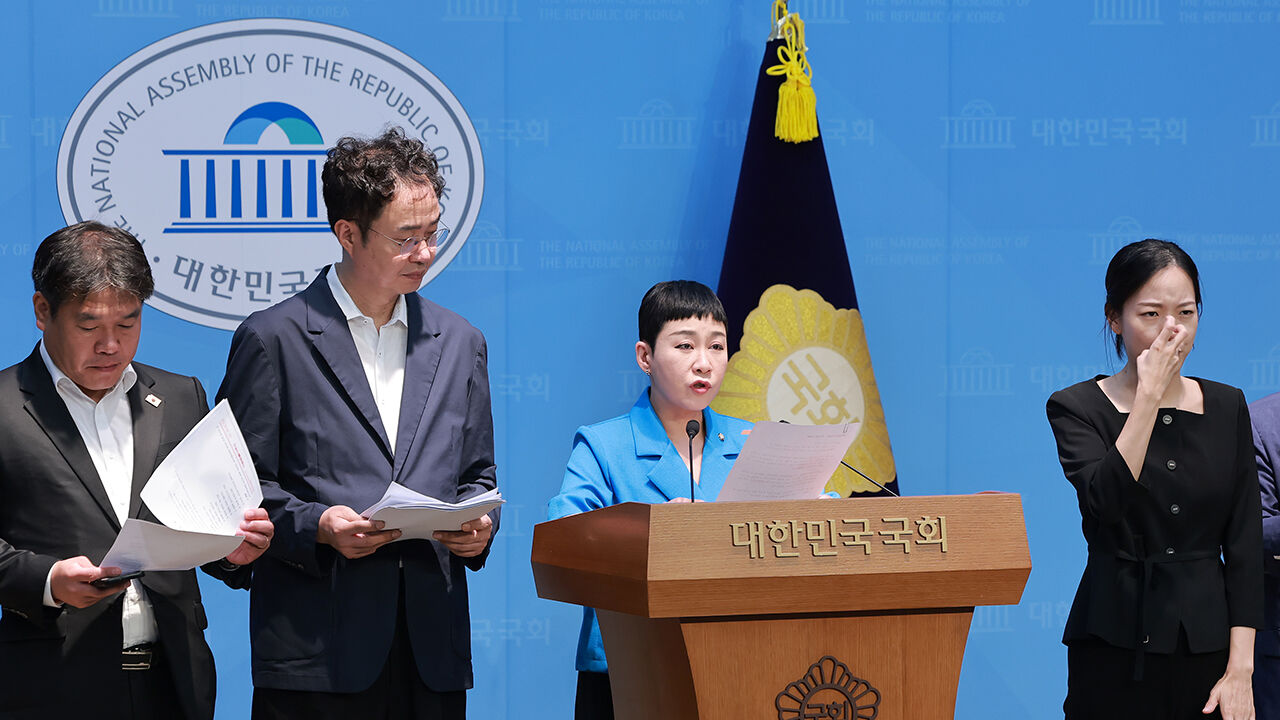
▲ Press conference filing complaints regarding allegations of local government pro football club Cancun resort trip
Despite operating on such reliance on citizens' tax money, the spending habits of club leadership were lavish.
The day before yesterday (the 4th), civic groups including the Civil Society Institute for Livelihood Economy recently filed complaints with the police against the representatives of nine city and provincial citizen clubs who went on sightseeing-oriented overseas trips to resort areas such as Cancun, Mexico, last June.
Despite attending events hosted by the Korea Professional Football League, which clearly included sightseeing-oriented schedules, they insisted on business-class seats instead of economy.
In particular, it was revealed that despite an advance notice official letter from the league stating, "choosing economy class can save about 6 million won," they executed business-class expenses amounting to 15.924 million won per person using each club's budget.
The vault doors were also wide open.
At Gimpo FC, an internal employee embezzled public funds totaling around 8 billion won over several years, exposing the bare face of a lax management system.
The monitoring system failed to operate at all while the employee misappropriated massive sums through false reports.
In the end, the CEO resigned to take moral responsibility, and amid a turbulent atmosphere, the squad has fallen into a swamp of winless streaks over their last 6 matches.
A significant number of city and provincial citizen clubs have been unable to break out of a structure that depends on local government support due to weak self-sustaining revenue foundations.
Even without a budget, asking the city council for extra supplementary budgets to recruit players during the summer transfer window is common practice.
There are no few cases where the very existence of a club is shaken depending on the results of local elections or changes in local government policy directions.
Even now, a considerable number of clubs are facing pressure to freeze or cut budgets in the wake of tax revenue shortages of local governments.
FC Anyang has frozen its annual operating budget this year at the 10 billion won level, the same as last year, and entered austerity management.
Seongnam FC has been placed in a situation where budget cuts are inevitable as supplementary budget compilation became unclear, and Ansan Greeners continues operations with a budget of 5.5 billion won, the lowest in K League 2 (second division), failing to escape sluggish performance for years.
Local governments' standards regarding the injection of citizens' tax money have also become much stricter.
Although it is an example from another sport, Ulsan Mayor Kim Sang-wook recently drew a firm line toward the local professional baseball citizen club, stating, "Without citizens' consent, we can no longer support municipal funds," which carries significant implications for K League city and provincial citizen clubs as well.
If the structure of relying solely on public financial resources without self-sustainability to generate its own revenue and value continues, it is hard to avoid criticism that they are no different from "corporate-backed corporate teams" rather than "professional" ones.
K League city and provincial citizen clubs are citizen clubs in name only, featuring a structure where citizens' opinions are rarely reflected in operations.
They were established as corporations under local governments, rather than as "cooperatives" where citizens and fans become owners.
Although legal forms vary—such as stock companies, foundations, or incorporated associations—the structure in which the head of the local government appoints operators remains the same.
The head of the local government is practically the "club owner."
Building on this foundation, failing to secure self-sustainability, the reality facing city and provincial citizen clubs is that they have no choice but to be swayed left and right by political influences.
When election season arrives, noises never cease at K League stadiums.
Ahead of the National Assembly member elections in April 2024, a citizen club sparked controversy by playing home matches wearing red uniforms instead of their original blue uniforms.
The owner of this club belonged to the People Power Party.
Recently, the secretary-general of a citizen club was suspected of posting promotional materials for a specific candidate during this year's local election period in the staff group chat room.
During the impeachment phase of former President Yoon Suk Yeol, an unfunny incident occurred at a citizen club's business meeting in the metropolitan area where they seriously discussed "how we can help the President."
As such incidents repeat, voices are growing louder that rather than blindfolding fans and taxpayers with the term citizen club, they should be called "city or provincial-established clubs" or "local government clubs" to match their actual nature.
Criticism is also growing that the current structure, where citizen clubs account for 58.6%, is ultimately a factor hindering the overall competitiveness and development of the K League.
Particularly in the case of K League 2, where four new clubs have joined over the past two years following Hwaseong FC last year, and Gimhae FC, Yongin FC, and Paju Frontier this year, 13 out of 17 teams are citizen clubs, making up 76.5%.
An official well-versed in K League administration pointed out, "Instead of focusing solely on expanding external scale, we must first look back at whether we have equipped ourselves with commensurate operational capabilities and management systems," adding, "As the number of clubs increases, the personnel, budget, and administrative burden to manage them grow together."
They noted, "If we continue to increase only the number of clubs hastily founded under local government leadership without preparation to handle this, it could ultimately result in degrading the competitiveness of the league as a whole."
On the other hand, there are also steadfast grievances from the field that such criticism is excessively harsh.
A working-level official well-versed in K League administration pointed out, "Because some of the rapidly increasing city and provincial citizen clubs have inadequate operations, criticism tends to focus on them, but there are definitely unique values of citizen clubs that cannot be converted into monetary amounts." They added, "In an era of regional extinction, the local promotional effects through clubs, as well as contributions to revitalizing the local economy through the influx of away fans, cannot be ignored."
They explained, "There are many other cases receiving local government support, such as in the culture and arts fields or unpopular sports," and "Because concepts like citizen clubs are unfamiliar to other sports like professional baseball or overseas leagues, they face relatively sharper scrutiny due to distinct comparison groups."
Gangwon FC CEO Kim Byung-ji (Vice President of the Korea Football Association) also recently emphasized the positive functions of citizen clubs through his social media (SNS).
CEO Kim stressed, "Gangwon FC has played an excellent PR and marketing role in promoting Gangwon Special Self-Governing Province nationwide over the past year," and "It is analyzed to have generated a promotional effect worth about 70 billion won, which is roughly five times the province's investment."
(Photo provided by Korea Professional Football League, Yonhap News)
※ Please note: This article was translated by AI and may contain errors.





 Video News
