
 KOR
KOR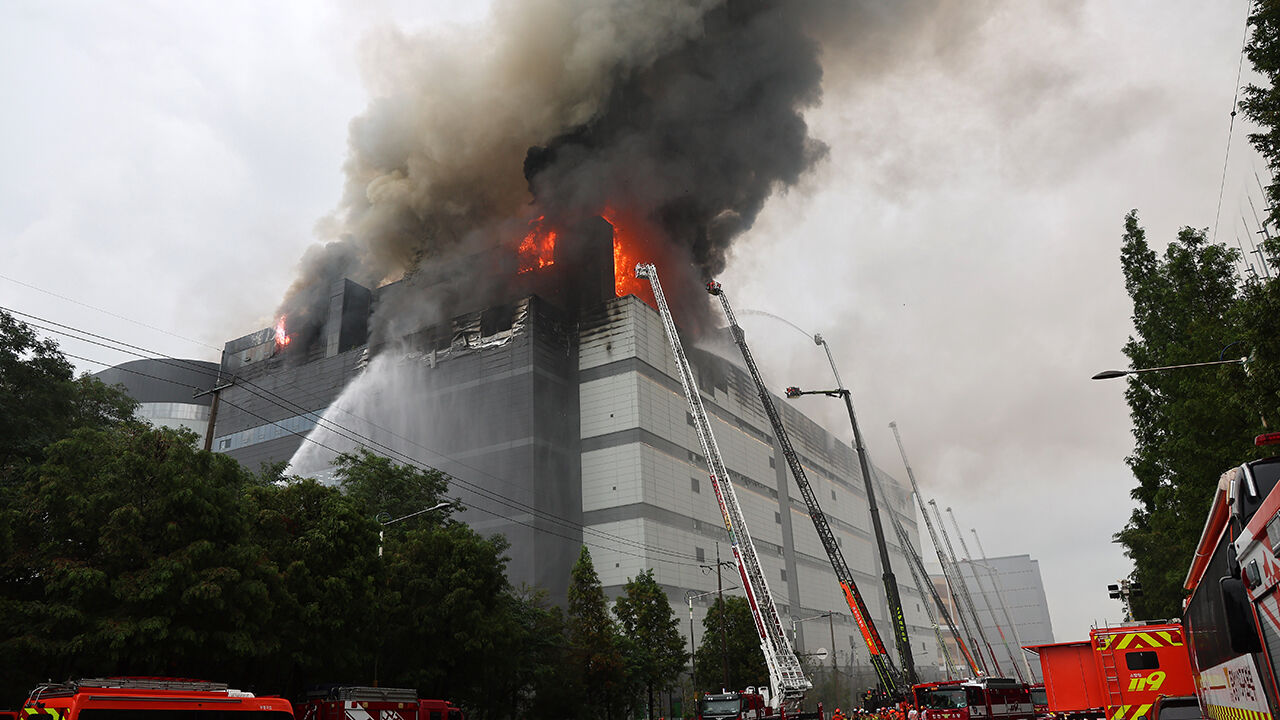
▲ Firefighters are conducting extinguishing operations at the Coupang logistics center in Seognam-dong, Seo-gu, Incheon, where a fire has been burning for three days as of the 20th.
A major fire has broken out at a Coupang logistics center, marking the second such incident in five years for the company, which had been strengthening its fire safety investments and response systems following the 2021 fire at the Deokpyeong Logistics Center in Gyeonggi Province.
Attention is now expected to focus on whether the safety measures implemented in the wake of the Deokpyeong fire actually functioned during this latest incident.
The fire, which began on the morning of the 18th at the Coupang Incheon 32 Logistics Center, has not yet been brought under control despite three days of firefighting efforts.
While it is reported that all 121 employees evacuated immediately after the fire started, resulting in no casualties, the massive amount of stored goods and the unique internal structure of the logistics center have hindered firefighting efforts, leading to the issuance of a national firefighting mobilization order.
The Incheon 32 Logistics Center, located in Seognam-dong, Seo-gu, Incheon, is a room-temperature logistics facility with a total floor area of approximately 299,000 square meters and eight floors above ground.
It serves as a key logistics hub for Rocket Delivery in the metropolitan area, primarily handling room-temperature products such as daily necessities.
The center, which began operations in January of last year, is a relatively new facility and functions as a complex logistics hub sharing the same building as the 31, 41, 42, and 43 centers.
This incident is the second major logistics center fire at Coupang since the June 2021 fire at the Deokpyeong Logistics Center in Gyeonggi Province, which took six days to fully extinguish.
The Deokpyeong fire caused long-term disruptions to logistics operations as most of the building was destroyed, and the death of a firefighter during rescue operations brought the issue of warehouse fire safety to the forefront of social discourse.
Following the Deokpyeong fire, Coupang announced that it had begun strengthening fire safety at its logistics centers.
At the end of 2021, the company explained that it had established an integrated fire safety management system by partnering with a domestic telecommunications company, allowing for the remote monitoring and management of fire receiver information at logistics centers nationwide.
The initiative was intended to monitor fire facilities at each center, prevent fires, and minimize human and material damage in the event of an accident.
It was reported that some logistics centers even introduced fire safety facilities that exceeded legal requirements.
The Daegu 3 Center, the largest among Coupang's logistics centers, significantly expanded its fire safety facilities, including nearly 2,000 specialized fire detectors, approximately 50,000 sprinklers, and over 570 fire hydrants.
The company also operated a self-defense firefighting team consisting of dozens of members and conducted surprise evacuation drills twice per quarter.
Coupang explained that it had also implemented devices to assist worker evacuation, such as color-coding emergency exits and fire hydrants to improve visibility during a fire.
Furthermore, the Yangsan Logistics Center strengthened its fire prevention equipment by introducing photoluminescent evacuation guidance systems, thermal imaging cameras, and power outlets equipped with fire-extinguishing patches.
However, with another major fire occurring despite these safety investments, investigations are expected to focus on whether such safety management systems were applied and whether they functioned properly during the actual fire.
Coupang has not provided specific details regarding what safety equipment was installed at the Incheon 32 Logistics Center or whether that equipment operated normally at the time of the fire.
Logistics center fires are known to be more difficult to extinguish than those in general buildings due to high ceilings and dense arrangements of shelves and stored goods.
The presence of large amounts of combustible materials, such as cardboard boxes and plastic, causes flames to spread rapidly, and smoke accumulation inside makes it difficult for firefighters to gain access.
Experts suggest that, beyond fire prevention equipment, it is necessary to monitor investigation results regarding how the logistics center's storage methods, mezzanine structures, and fire compartment operations influenced the actual spread of the fire.
The Ministry of Land, Infrastructure and Transport is holding an emergency meeting this afternoon with executives from logistics companies to discuss mezzanine structures in logistics centers.
While logistics centers are built with mezzanine structures in accordance with legal grounds, the meeting is interpreted as an effort to discuss countermeasures with the logistics industry following criticism that these structures are vulnerable to fire.
Coupang stated, "We will prioritize the safety of firefighters, actively support firefighting activities, and fully cooperate with the investigations by relevant authorities."
(Photo: Yonhap News)
※ Please note: This article was translated by AI and may contain errors.


 Video News
 Video News
 Video News
 Video News
 Video News