
 KOR
KOR
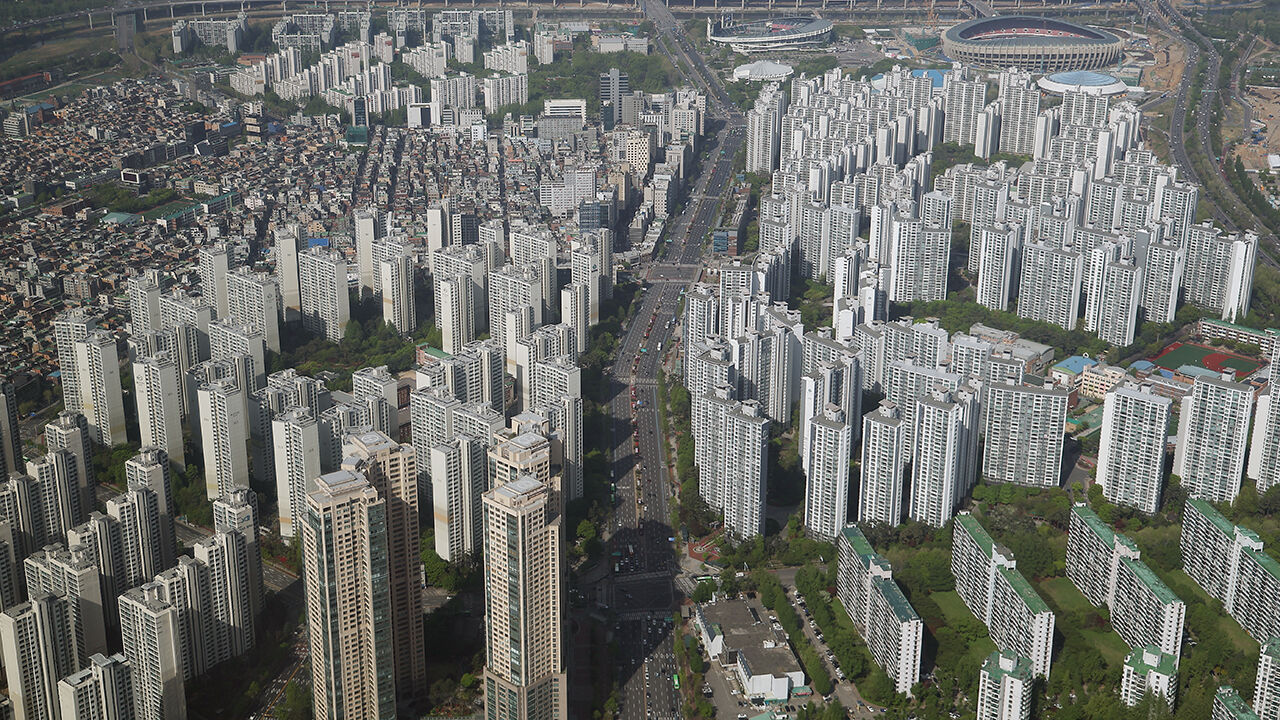
In June, Seoul experienced a triple surge in housing costs, with the growth rates for sales, jeonse (long-term deposit-based rent), and monthly rent all exceeding the levels seen in the previous month.
With the rise in jeonse prices continuing to outpace the growth in sales prices, and monthly rent increases repeatedly hitting record highs, stabilizing the rental market has emerged as an urgent task.
According to the June nationwide housing price trend survey released by the Korea Real Estate Board on the 15th, the average sales price of comprehensive housing (apartments, row houses, and detached houses) in Seoul rose by 1.03 percent compared to the previous month.
The growth rate expanded by 0.13 percentage points from the previous month, marking the highest level recorded this year.
Seongbuk-gu (1.39%) saw high growth, led by large apartment complexes in Gireum-dong and Jongam-dong, while Guro-gu (1.31%) saw increases centered around areas near subway stations in Gaebong-dong and Guro-dong.
Gwangjin-gu (1.31%), Dongdaemun-gu (1.28%), and Seongdong-gu (1.23%) also saw significant increases.
Gyeonggi-do (0.59%) saw its growth rate expand by 0.28 percentage points compared to the previous month, driven by a rapid upward trend in areas supporting the semiconductor belt.
Hwaseong-si's Dongtan-gu, which saw the sharpest rise in home prices, increased by 6.81 percent during the month of June.
Incheon rose by 0.11 percent, turning to an upward trend, while the Seoul metropolitan area as a whole rose by 0.67 percent, an expansion of 0.21 percentage points.
Non-metropolitan areas rose by 0.01 percent, rebounding from a decline to an upward trend for the first time in a month.
The five major metropolitan cities fell by 0.05 percent, Sejong City fell by 0.19 percent, and the eight provinces rose by 0.04 percent.
The nationwide comprehensive housing sales price growth rate was recorded at 0.33 percent.
Apartment sales prices in Seoul rose by 1.21 percent compared to the previous month, increasing the growth rate by 0.15 percentage points in a single month.
Gyeonggi-do (0.76%, up from 0.41%) and Incheon (0.16%, up from 0.02%) also saw their growth rates expand, bringing the total growth rate for the Seoul metropolitan area to 0.81 percent.
Apartment sales prices in non-metropolitan areas rose by 0.01 percent, and the nationwide figure rose by 0.40 percent.
In Seoul, row houses such as villas also recorded a high growth rate of 0.86 percent.
The Korea Real Estate Board stated, "While a wait-and-see approach to trading appeared in some areas, demand for major preferred complexes and those with development expectations continued, particularly in Seoul and the metropolitan area, leading to an overall upward trend."
The upward trend in jeonse prices in Seoul and the metropolitan area is also accelerating.
In June, the nationwide comprehensive housing jeonse price rose by 0.38 percent compared to the previous month, continuing to outpace the growth rate of sales prices.
Seoul rose by 1.08 percent, with growth expanding by 0.17 percentage points from the previous month as rental inquiries continued, centered on large complexes and areas near subway stations in Seongdong-gu (2.08%), Nowon-gu (1.78%), Dobong-gu (1.56%), and Songpa-gu (1.53%).
Gyeonggi-do rose by 0.58 percent, with high growth rates in Hwaseong-si's Dongtan-gu (2.31%), Gwangmyeong-si (1.43%), and Guri-si (1.16%).
Incheon rose by 0.29 percent, and the Seoul metropolitan area as a whole rose by 0.71 percent.
Non-metropolitan areas rose by 0.08 percent, with the five major metropolitan cities rising by 0.12 percent, the eight provinces by 0.04 percent, and Sejong City by 0.31 percent.
The apartment jeonse growth rate was 1.37 percent in Seoul and 0.89 percent in the metropolitan area, both higher than the sales price growth rates.
The comprehensive housing jeonse growth rate in Seoul is at its highest since September 2011 (1.56%), and the apartment jeonse growth rate is at its highest since October 2013 (1.57%).
Along with jeonse, the upward trend in monthly rent has also expanded.
The nationwide comprehensive housing monthly rent growth rate was 0.38 percent, an increase of 0.03 percentage points from the previous month.
Seoul (0.96%) saw its growth rate expand by 0.15 percentage points from the previous month, rising mainly in large complexes and major complexes in Seongdong-gu (1.77%), Nowon-gu (1.55%), and Songpa-gu (1.48%).
Gyeonggi-do rose by 0.49 percent, Incheon by 0.29 percent, and the Seoul metropolitan area as a whole by 0.62 percent.
In non-metropolitan areas (0.15%), monthly rent rose by 0.16 percent in the five major metropolitan cities, 0.14 percent in the eight provinces, and 0.22 percent in Sejong City.
Apartment monthly rent rose by 1.15 percent in Seoul and 0.74 percent in the metropolitan area.
The monthly rent growth rate in Seoul for both comprehensive housing and apartments reached its highest level since the statistics began in June 2015, breaking the record again following last month.
(Photo: Yonhap News)
※ Please note: This article was translated by AI and may contain errors.
Seoul Housing Market Sees Triple Surge in June as Sales, Jeonse, and Monthly Rent Prices Rise

Copyright Ⓒ SBS & SBSi. All rights reserved.
Copying, redistribution, and unauthorized use in AI training are strictly prohibited.
Copying, redistribution, and unauthorized use in AI training are strictly prohibited.

Trending Now
-

Motel Murderer Kim So-young Claims She Cannot Repay Damages to Victims' Families
-
Man in His 20s Acquitted of Illegally Filming Ex-Girlfriend... "Unverified Video Copy Inadmissible as Evidence"
-
Go Young-wook Draws Criticism from Japanese Media After Mentioning Potential Career as AV Actor
-
Video News
Owner's Outrage Leads to Sudden Change: 70 Million Won 'Bug-Infested EV' Replaced
-
Video News
Date of Birth Example Set to '20140416'… CEO of Developer Explains How It Happened


 Video News
 Video News