
 KOR
KOR
The harsh reality of education has been laid bare.
The SBS program "Unanswered Questions," which aired yesterday (July 11), tracked the current state of the educational field in 2026.
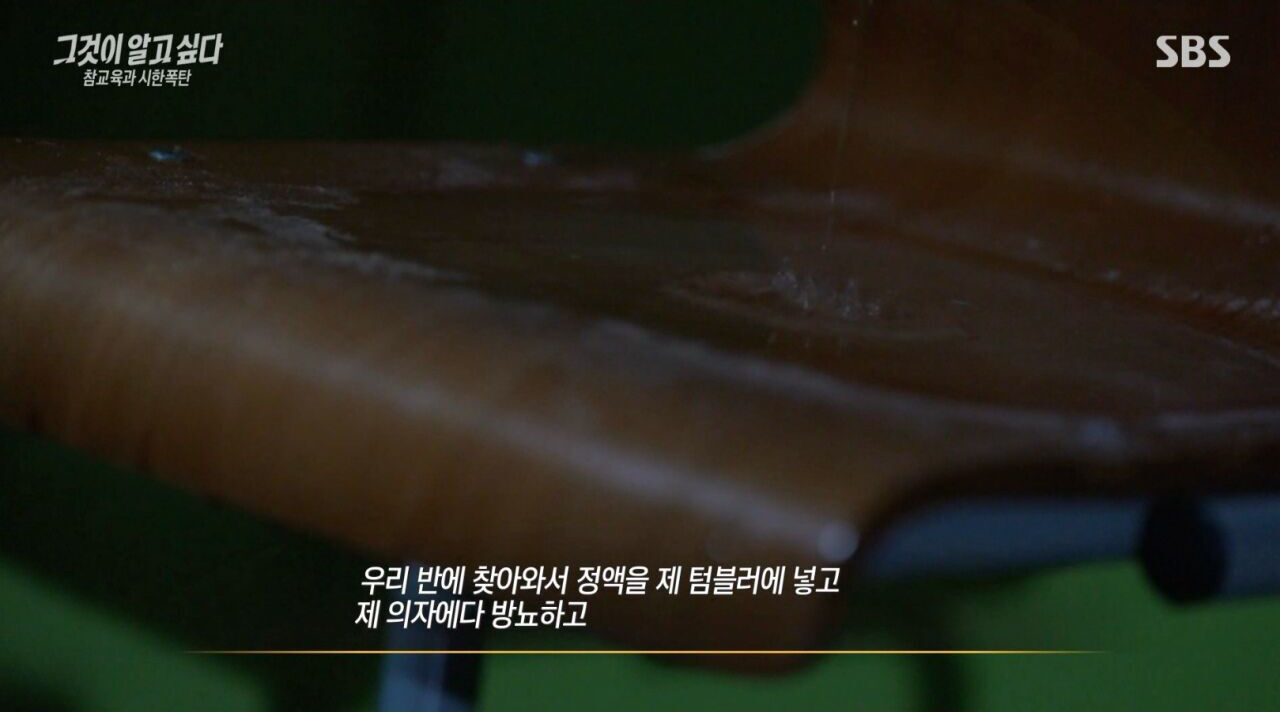
In April, a teacher at an elementary school in Jeju was horrified to find a sticky, foul-smelling liquid in a tumbler that had been thoroughly cleaned the previous day. An investigation revealed the substance to be human semen.
The teacher, overwhelmed by anxiety and fear, took sick leave. However, two months later, while a substitute teacher was conducting class in the same room, someone intruded again. This time, traces of urine were left on the teacher's chair.
The investigation identified the culprit as a first-year male student at a nearby high school. He denied intentional wrongdoing, claiming he had entered the elementary school because he needed to use the restroom. However, the victim was left trembling in fear, wondering why she had been targeted twice. Because the perpetrator was a minor under the age of 16, his identity, face, and true motives remained unknown, further deepening the victim's distress.
Schools today are witnessing events darker and more cruel than those in dramas. Last year, a middle school teacher in Gimhae, South Gyeongsang Province, was sued for alleged child abuse.
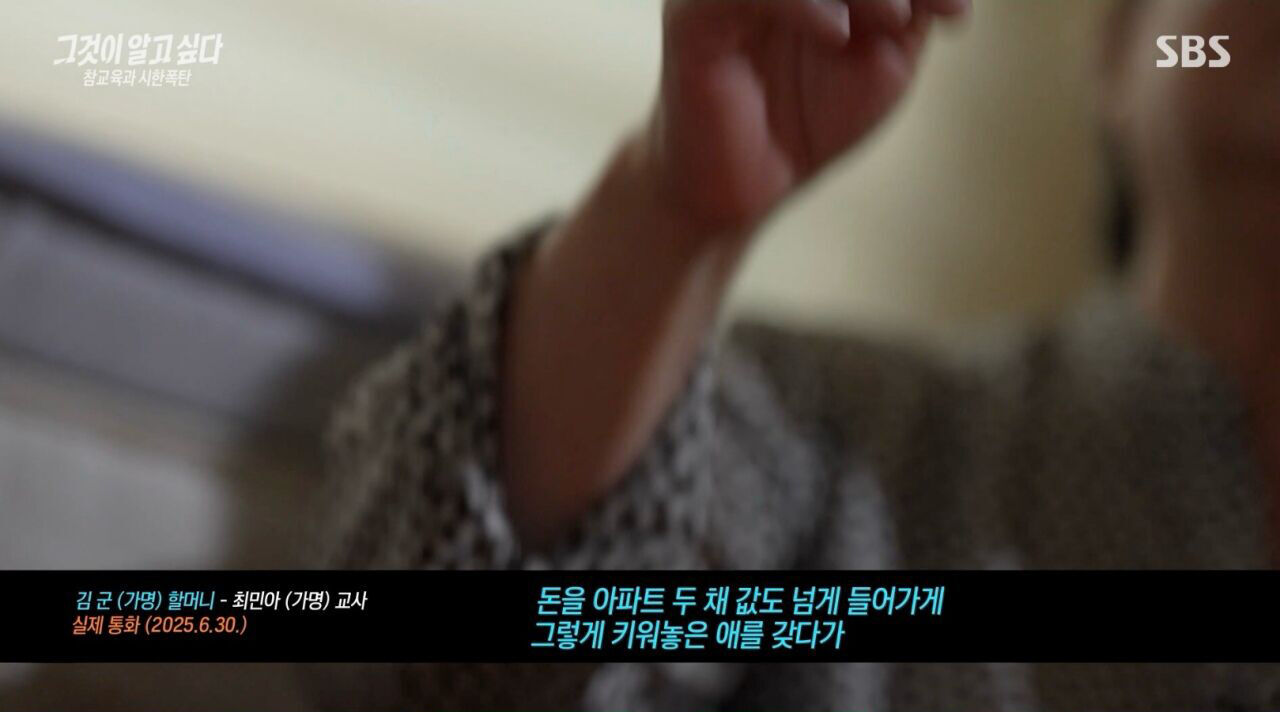
The child's grandmother initially called the teacher, expressing her anger by saying, "I cannot let you treat a child I raised with more money than the cost of two apartments so carelessly." The following day, the child's parents filed a formal complaint, alleging that the teacher had forced the child to perform physical exercises in the heat and dragged the student by the ear to the second-floor faculty office.
However, this account was entirely different from the teacher's recollection. The teacher met with the parents the next day, hoping to clarify the facts. Instead, the parents became agitated and interrogated the teacher, shouting and demanding that the teacher answer only "yes" or "no" to their questions, much like an interrogation.
The parents demanded CCTV footage and eventually sued the teacher, presenting the footage and witnesses. Despite police explanations that the CCTV footage did not constitute abuse, the parents refused to back down. In November of last year, the court ruled that there was no evidence of child abuse.
However, the parents subsequently filed an application for judicial review, and after that was dismissed, they filed a second lawsuit in April for charges including assault and insult. The parents have continued to subject the teachers to secondary victimization. Furthermore, they even filed a petition regarding the teacher's conduct with the National Assembly through an acquaintance who is a parliamentary aide.
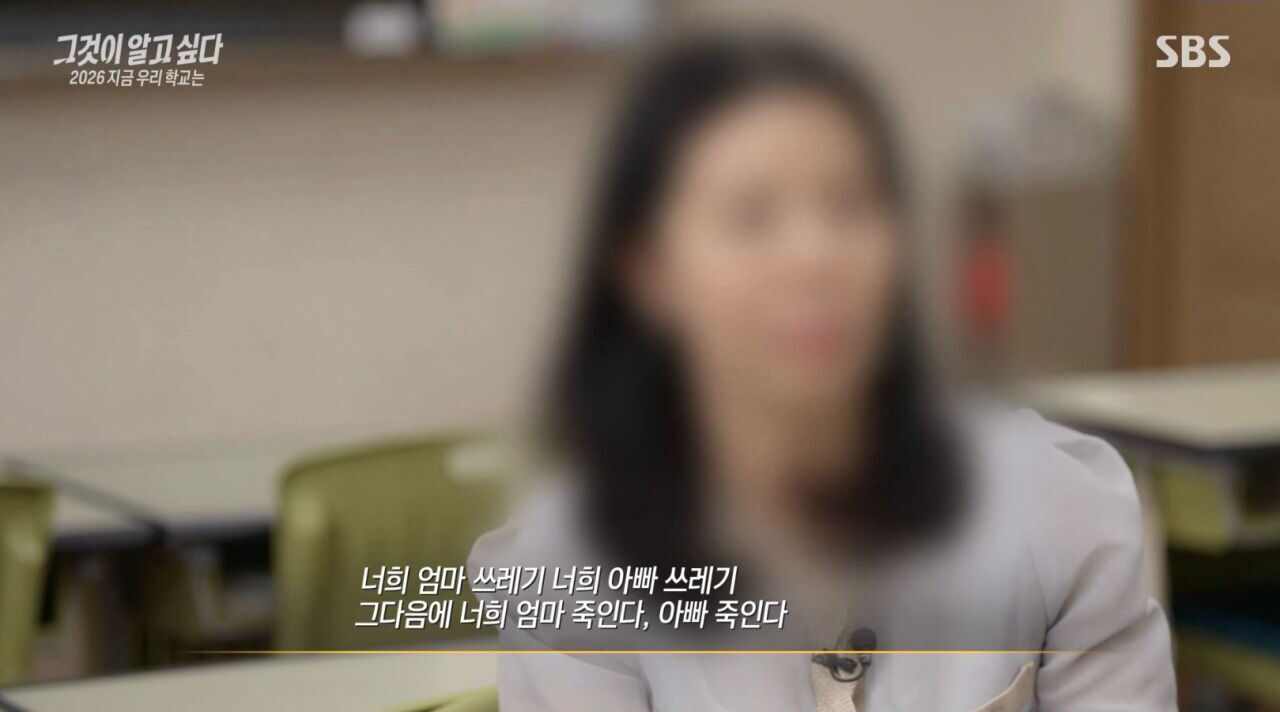
At an elementary school in Busan, a student was involved in incidents of sexual harassment and physical assault against classmates. The student also used profanity and made derogatory remarks about the families of both peers and teachers. In response, the teacher notified the parents of the problematic behavior multiple times, requesting guidance at home.
The parents claimed they would discipline their child properly, while also questioning whether the teacher held a bias against their child.
As similar incidents continued, the Office of Education's deliberation committee was convened, and a mandatory transfer for the student was ordered after two months. The parents, who had previously asked for the school violence committee to be opened to ensure the child received proper guidance, changed their tune. They challenged the mandatory transfer, reported the teacher for child abuse, and portrayed the other students in the class as if they were the perpetrators. This has led to a legal battle that has been ongoing for two years.
The parents, who have continued to pursue repeated litigation, shocked viewers by revealing their true feelings, stating they were also under great stress and had suffered, adding, "I don't know if I should say this, but I want to destroy the teacher."
With child abuse reports by parents reaching an average of 700 per year, and instances of teacher misconduct occurring out of sight, it is a tragic reality that child abuse lawsuits have become a tool for parental harassment.
Incumbent school principals stated, "The moment the law entered, the school collapsed." Experts pointed out, "Parents are not looking for problem resolution; they want an apology, which is why they respond emotionally. The current situation makes it easy to file complaints, and if they set their minds to it, they can harass teachers as much as they want."
They added, "Even if the emotional wounds are addressed and cared for, they do not stop. Emotions are transferred to the parents, who then fight a proxy war. When they claim the teacher is wrong, parents find comfort in the belief that they have done the right thing. They are abusing the system."

Hyun Seung-jun, a teacher who passed away last year, was a passionate science teacher and head of student affairs at a middle school in Jeju.
However, in May of last year, he took his own life at the school where he had worked for 20 years. In the four suicide notes he left behind, he expressed his frustration, stating, "I did not lie."
Since the beginning of last year, Hyun had been in conflict with a student, referred to as Choi, who was frequently late or absent. Upon receiving reports that Choi, who rarely attended school, was smoking, Hyun determined he could not overlook it as the head of student affairs. Choi promised to stop smoking and attend school regularly. However, Choi did not show up the next day, and his parents filed a complaint.
Choi's family claimed that Hyun had falsely accused the student of smoking, preventing him from attending school, and that Hyun had used abusive language during the process. They bombarded Hyun with unreasonable demands, threatening to report him to the Office of Education.
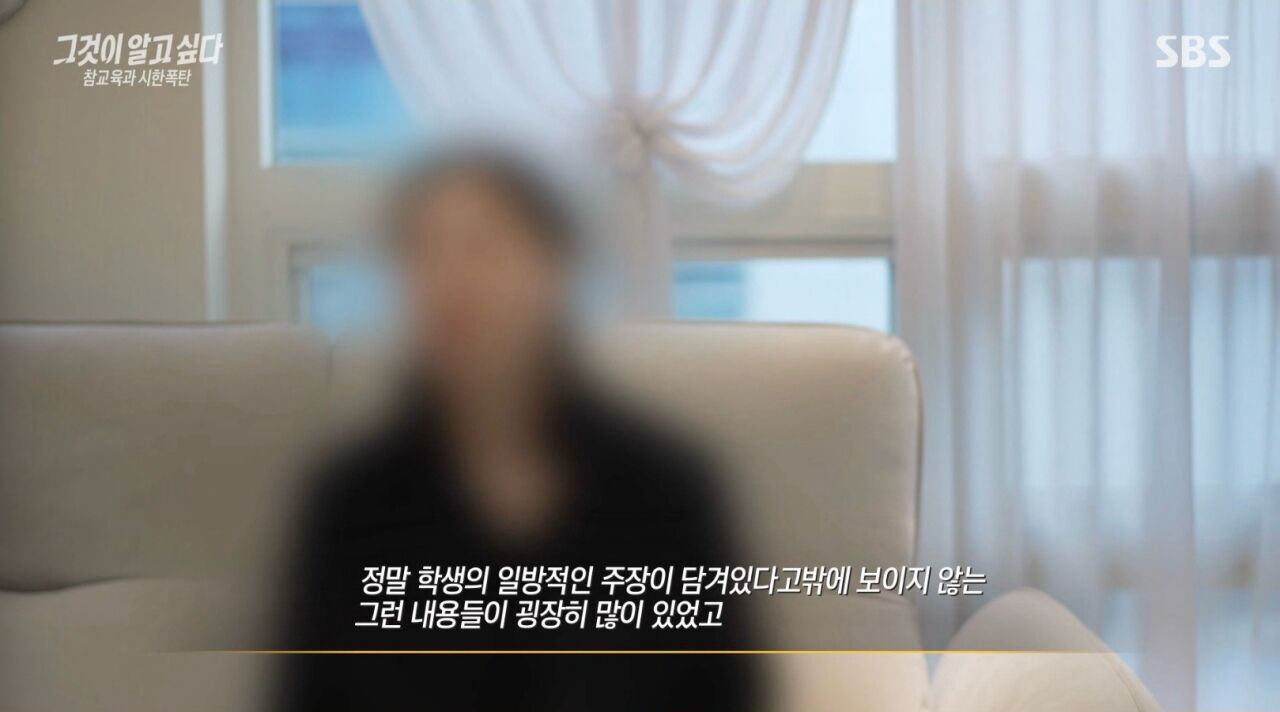
Perhaps due to the pressure of the complaints, Hyun suffered from severe headaches before his death. He applied for sick leave, but it was not granted.
Instead, he contacted the student's family to resolve the complaints and scheduled a meeting. However, no one from Choi's family appeared on the day of the appointment. Ultimately, he took his own life.
Experts drew attention by pointing out that what is more urgent than new institutions or systems is the more active utilization of the authority that is already in place.
(Produced by Kim Hyo-jung)
※ Please note: This article was translated by AI and may contain errors.


 Video News
 Video News
 Video News
 Video News
 Video News