
 KOR
KOR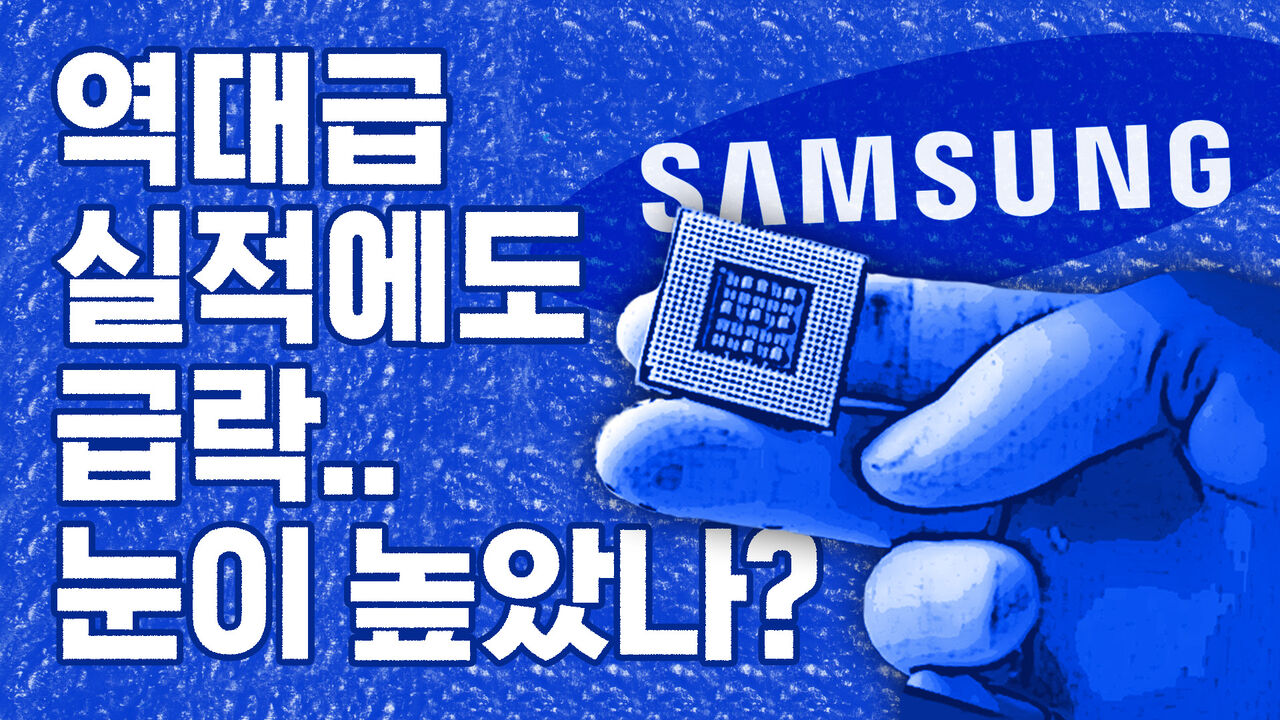
Market participants are facing growing dilemmas. Although the record-breaking performances of South Korea's top two semiconductor giants are said to have been priced in, worrying about a "peak-out" in the semiconductor industry seems premature given that demand remains solid through next year due to long-term contracts. Yet, those concerns are surfacing all too quickly. Ultimately, this summer is expected to be a testing ground—following profit-taking from short-term surges and a period of stock price correction—to see whether the market will enter a second rally in the second half of the year, triggered by the earnings reports of big tech companies running from mid-July to August.
Three Years of Profit Earned at Once, But an Unexpected 'Sell-on'
In fact, while the first-quarter earnings were also an "earning surprise," the stock price fell on the day of the announcement. Analysts first point to a "sell-on-news" phenomenon, where selling occurs despite positive news. Because the stock price had already risen on expectations of strong earnings, profit-taking sentiment driven by the perception that the "catalyst has expired" was strong, particularly among foreign investors. Indeed, some in the securities industry noted, "While the announced figure was slightly better than forecasts, the psychological surprise effect was halved due to vague, high expectations for a 100 trillion won performance." Some also suggest that concerns over the relative sluggishness of the non-memory semiconductor and mobile (DX) divisions, given Samsung Electronics' revenue structure as an integrated IT company, were reflected. Nonetheless, the view that shifting market dynamics surrounding the semiconductor industry are starting to exert a major influence is gaining traction, given the sharp drop in stock prices. This is driven by the relentless selling by foreign investors.
Approaching the Peak? Signs of Pushback Against DRAM Dominance
Another piece of news involved Meta. As reports emerged that the hyperscaler, which has been going all-in on AI infrastructure investment, is preparing a strategy to sell some of its data center "computing" resources to external parties, concerns arose that AI infrastructure investment—previously perceived as being in absolute shortage—might actually be in oversupply. Although this was not an official policy announced by Meta, the Bloomberg report caused a larger-than-expected stir. If Meta's AI computing capacity is indeed in surplus as feared, Meta would not need to purchase more AI accelerator chips like Nvidia's GPUs, which would also impact the demand for the semiconductors that go into them. However, reality seems quite different from these concerns.
Leasing data centers is a business that Amazon, Google, and Microsoft are already engaged in. Because massive infrastructure investments constantly prompt questions from shareholders and the market about when these investments will turn a profit, companies use completed facilities to generate revenue through cloud services, thereby mitigating risks. Unlike other hyperscalers, Meta has been building computing infrastructure (data centers) without offering its own cloud services, so this can be seen as a strategy to enter the cloud services market and dispel profitability concerns. Ultimately, the Meta issue, which acted as a major negative factor for the market, appears to be more of a temporary episode. Looking back, Apple's move to purchase Chinese semiconductors may be a warning shot to replace expensive South Korean semiconductor supplies, but it also underscores just how tight the supply of essential semiconductors is, raising questions about whether it is truly a negative development.
Hynix's U.S. Listing on July 10 Is Another Hurdle
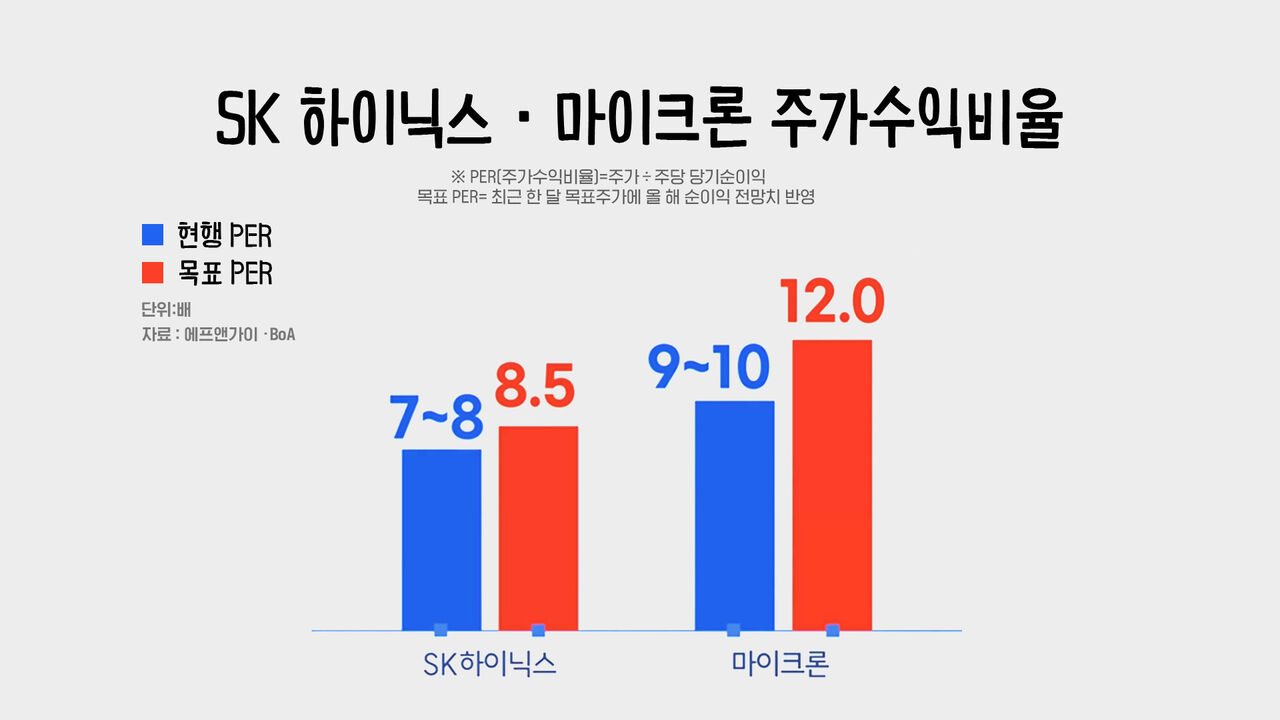
This can be viewed from two perspectives. ① First, from the standpoint of existing shareholders, this ADR listing carries concerns of "equity dilution" due to the issuance of new shares. The ADR issuance is valued at 42 trillion won, involving about 17 million new shares, which increases the existing share count by about 2%. Consequently, generating sufficient investment demand is essential. The success of the listing can be judged after observing the new valuation and supply-demand dynamics that form in the U.S. market. ② Another key point is that the company will be compared directly in the same market as U.S. semiconductor stocks. Once SK Hynix is traded on the Nasdaq, it will be evaluated alongside memory and storage companies listed on the U.S. stock market, such as Micron, SanDisk, and Seagate. Experts generally forecast that "considering its overwhelming valuation attractiveness, scale of profits, and technological superiority, this will be a golden opportunity for a re-evaluation."
The Second Half Has Just Begun... What Are the Key Variables?
In addition, other burdens include profit-taking sentiment among domestic and foreign semiconductor shareholders, margin calls (forced liquidation) that occur during sharp stock price drops in the domestic market, and the selling pressure from the National Pension Service's rebalancing, which could sporadically emerge in response to negative news related to AI investments. Another burden is the exchange rate. The continued weakness of the Korean won is a factor driving foreign selling and is putting pressure on domestic interest rate hikes. If the Bank of Korea raises its benchmark interest rate as signaled, it is expected to narrow the interest rate gap with the U.S., but this effect will vanish if the U.S. Fed raises rates in a hurry.

Still Robust 'Chip War'... Too Early for a Peak
In the grand scheme of things, the most critical variable will be the sustainability of AI investment intensity by U.S. big tech companies. Google's parent company, Alphabet, decided on a capital increase of over $80 billion in June, deviating from its previous pattern of utilizing surplus cash. This suggests that the fierce competition among big tech firms for dominance in the AI industry is advancing to the next level. While South Korea can expect semiconductor demand to strengthen further for the time being, it is necessary to prepare for the approaching finale, as the moment when winners and losers in the AI race are decided could mark an inflection point for DRAM demand.
Starting with TSMC's earnings announcement on July 16, followed by Microsoft, Amazon, Google, and then SanDisk and Nvidia in August, these earnings reports will serve as key events to gauge whether the semiconductor market has peaked. If big tech companies continue to expand their capital expenditure this quarter, the supercycle will steadily continue, but if changes occur, it will be a different story.
Industrially, the peak of the so-called semiconductor rally is highly likely to occur as early as the second half of next year, 2027. Although supply shortages are expected to persist into 2028, the demand structure is highly likely to be reorganized alongside the consolidation of related infrastructure centered on companies that win the AI dominance race. On the other hand, the peak of the stock market is bound to precede this. While the peak of stock prices can numerically be predicted for the first half of next year, not a few experts warn that investors should prepare for the actual peak in October of this year. Anticipating stock price trends through the industry's peak remains a homework assignment for investors.
※ Please note: This article was translated by AI and may contain errors.




 Video News
 Video News