
 KOR
KOR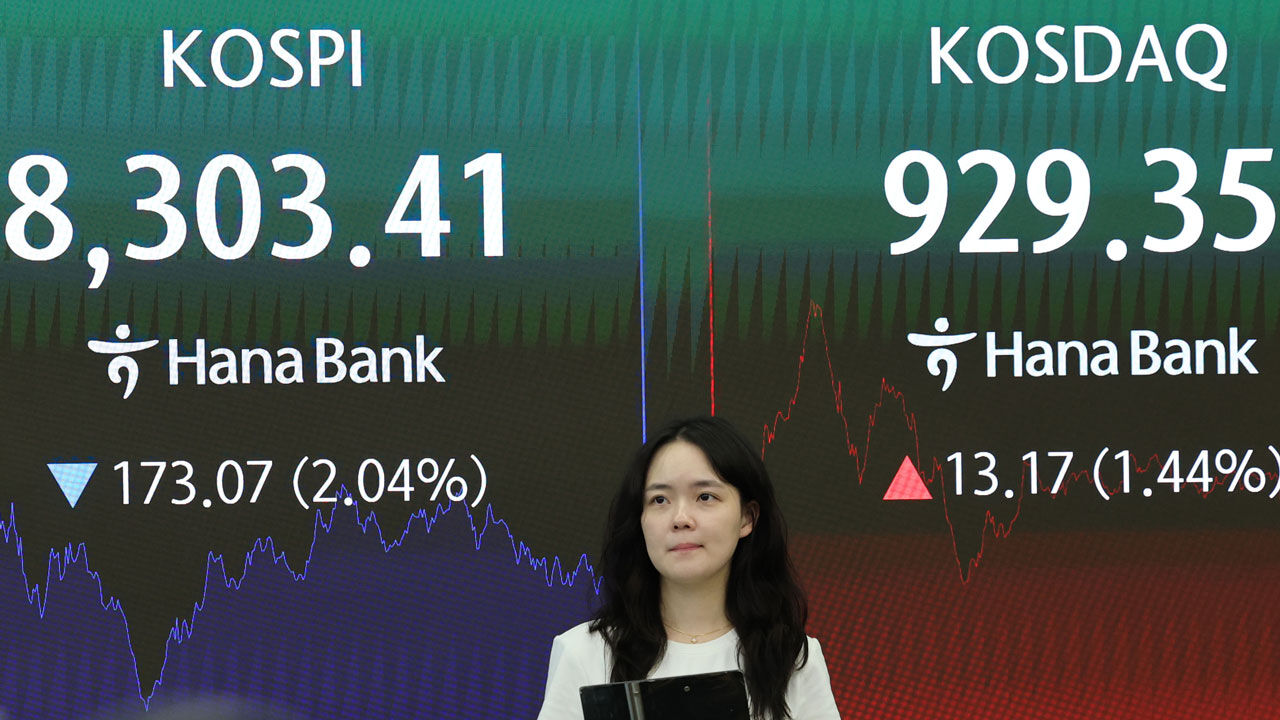
▲ Dealers work at the Hana Bank dealing room in Jung-gu, Seoul.
Forced stock liquidations, which occur when retail investors fail to repay money borrowed from securities firms, exceeded 1 trillion won during the month of June.
According to the Korea Financial Investment Association today (July 1), the total amount of forced liquidations related to short-term margin trading—often referred to as debt-financed investment—reached 1.1228 trillion won between June 1 and 30.
This type of transaction involves funds borrowed from securities firms for a period of just two days. It is the first time this year that the monthly volume of such forced liquidations has surpassed 1 trillion won.
The figure represents a 58.6 percent increase from May (707.6 billion won) and is double the amount recorded in March (550.8 billion won), when the Middle East conflict rattled the domestic stock market.
In June, there were 13 trading days where more than 30 billion won worth of retail stocks were forcibly liquidated, including four days where the amount exceeded 100 billion won.
In particular, 69.3 billion won was liquidated on June 30, the last day of the month. For six consecutive trading days starting from June 23, daily forced liquidations exceeded 40 billion won.
During that period alone, 370.6 billion won was forcibly sold off.
Previously, between June 5 and 9, the daily forced liquidation amounts reached 166.1 billion won, 139.1 billion won, and 169.7 billion won, respectively, over three trading days.
The ratio of forced liquidations to margin debt also spiked to 10.5 percent on June 10 and reached 5.6 percent on June 30, remaining above 2 percent for 12 trading days.
An increase in forced liquidations typically occurs when market volatility becomes unpredictable, and the KOSPI market experienced higher-than-usual volatility last month.
Throughout June, sidecars for both buying and selling were triggered 10 times due to the sharp fluctuations of the KOSPI.
There were five buying sidecars and five selling sidecars.
Circuit breakers were triggered three times.
A sidecar is triggered when the KOSPI 200 futures index rises or falls by more than 5 percent and sustains that level for one minute, while a circuit breaker is triggered when the KOSPI index falls by more than 8 percent from the previous day's closing price and sustains that level for one minute.
Notably, in the case of circuit breakers, which have been triggered 11 times in history, three of those instances occurred last month alone.
Consequently, the KOSPI 200 Volatility Index (VKOSPI) soared to 97.78 during intraday trading on June 24, marking its highest level since the 2008 global financial crisis.
(Photo: Yonhap News)
※ Please note: This article was translated by AI and may contain errors.


 Video News
 Video News
 Video News
 Video News
 Video News