
 KOR
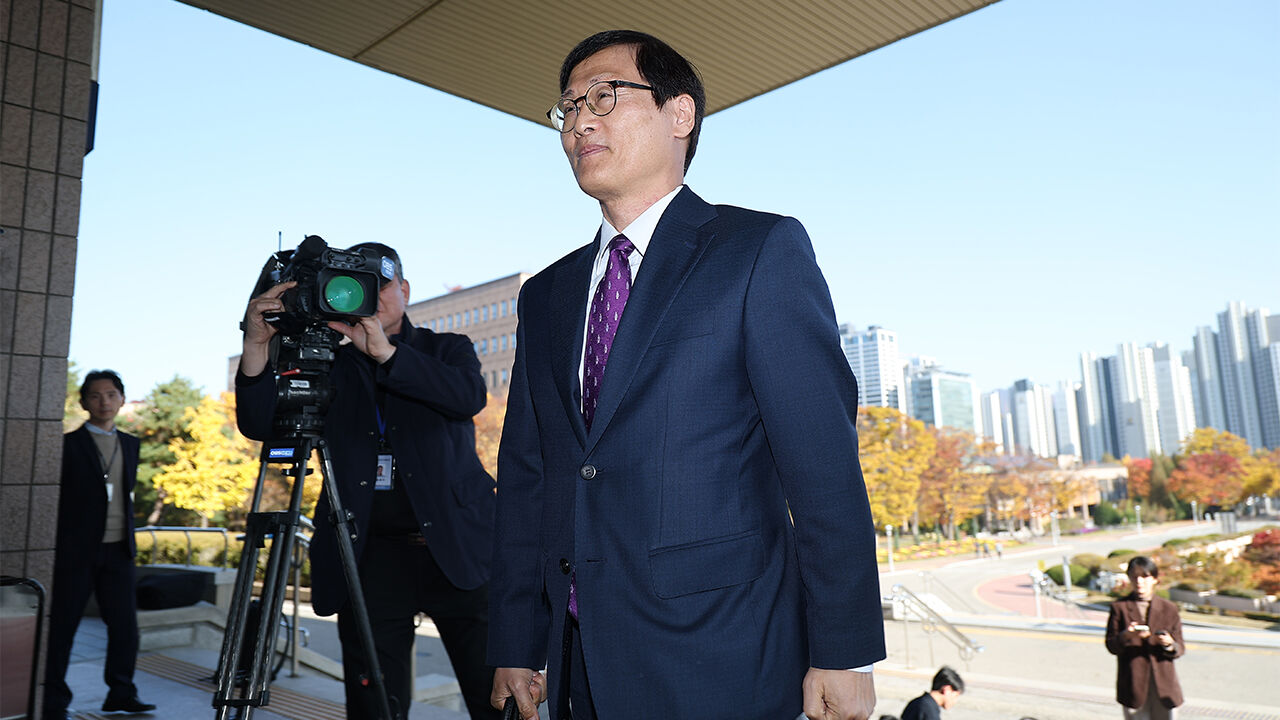
▲ Chang Ju-young, chairperson of the Prosecution Human Rights Respect and Future Committee, arrives to attend a meeting of the committee held at the Ministry of Justice in Gwacheon, Gyeonggi Province, on the 5th.
Chang Ju-young, chairperson of the Prosecution Human Rights Respect and Future Committee (Future Committee), stated that the nature of the committee differs from the so-called "fabricated prosecution special counsel" being pursued under the leadership of the Democratic Party of Korea.
Chairperson Chang made the remarks while attending a closed-door meeting of the Future Committee held at the Ministry of Justice in Gwacheon, Gyeonggi Province, today (the 5th).
Addressing criticisms that the roles of the Future Committee and the fabricated prosecution special counsel overlap, he explained, "While a special counsel investigates criminal acts and indicts when there are offenses, the Future Committee functions not only in that regard but also investigates wrongdoings and inadequate regulations to establish recurrence prevention measures and deliberate on victim recovery measures."
The targets of investigation in the fabricated prosecution special counsel bill submitted to the plenary session on this day include suspicions involving President Lee Jae-myung, such as Ssangbangwool's unauthorized remittance to North Korea, the Daejang-dong, Wirye New Town, and Baekhyeon-dong development projects, corporate card misuse, and Seongnam FC sponsorships.
This overlaps with the scope of fact-finding by the Future Committee.
Regarding whether the committee plans to issue recommendations at the Future Committee level before the launch of the fabricated prosecution special counsel, he said, "We need to discuss it with the members," adding, "I think it is necessary to make a comprehensive judgment after completing the deliberations on all seven cases for which a primary fact-finding investigation was requested."
Last June, the Future Committee held its first meeting and recommended investigations into seven cases, including the Ssangbangwool North Korea remittance case, the Daejang-dong case, the case involving Kim Yong, former vice president of the Democracy Research Institute, the Wirye New Town case, and the West Sea public official killing case.
On this day, the Future Committee is receiving reports on supplementary investigation results from the fact-finding team regarding three of those cases: the Wirye New Town case, suspicions of statistical manipulation under the Moon Jae-in administration, and the West Sea public official killing case.
The Future Committee is expected to discuss through this repeated reporting whether to conclude the investigations as they are or to request additional supplementary investigations.
When asked if it is correct that the fact-finding team reported last month that there were no illegalities in the investigation process, Chairperson Chang explained, "It can vary depending on one's perspective," and added, "The fact-finding team made legal judgments on each key issue at its level, and our Future Committee intends to primarily verify the facts and make separate legal judgments."
When asked again whether this could be interpreted as "rejecting" the fact-finding team's investigation results from that time, he said, "Rather than using the term rejection, it means that the members have various questions and would like to investigate in more detail or request supplementary investigations into areas that fell short," and added, "It is not a matter of sending it back implying 'we cannot accept this.'"
In response to a question pointing out that critics view the Future Committee's activities as a stepping stone to dismiss the indictment against President Lee Jae-myung, he answered, "The Future Committee investigates whether there were human rights violations or abuses of authority in the past process of exercising prosecutional powers, and discusses and deliberates on what measures and follow-up actions are necessary to prevent recurrence." He added, "Attention should be paid to these aspects, and it seems somewhat inappropriate to discuss matters that are not being discussed at all."
(Photo: Yonhap News)
※ Please note: This article was translated by AI and may contain errors.


 Video News
 Video News
 Video News
 Video News
 Video News