
 KOR
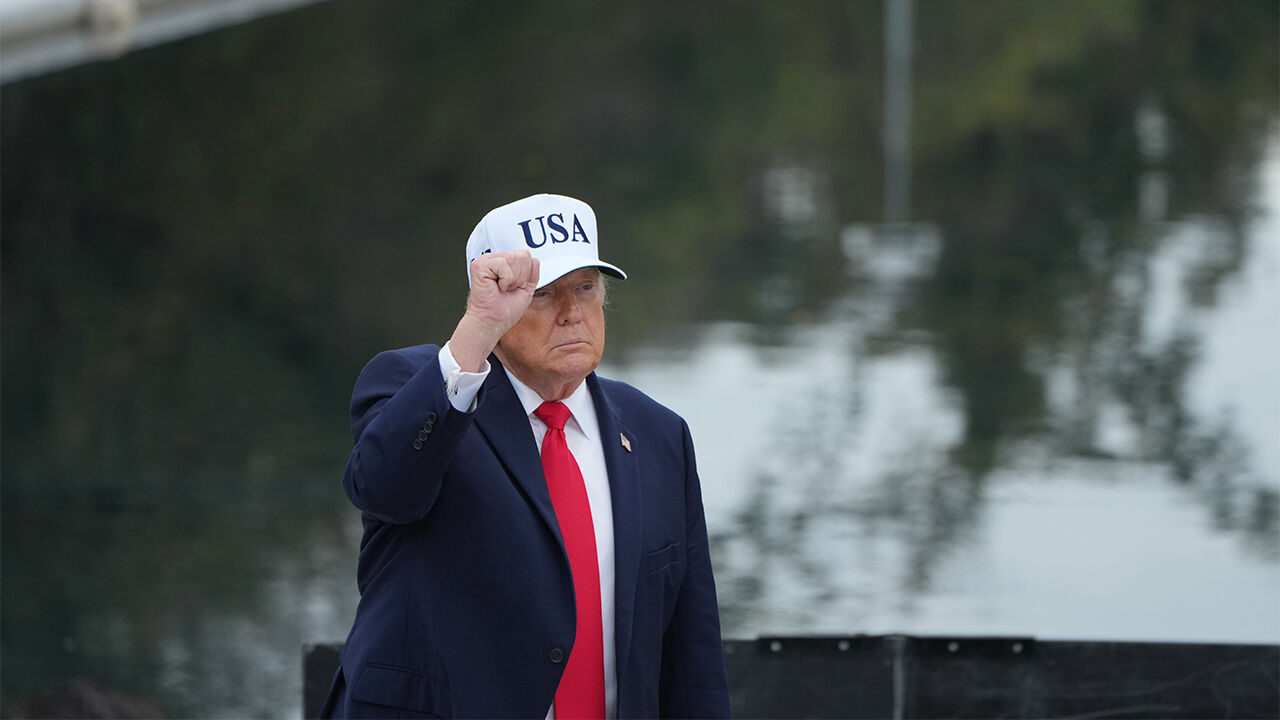
▲ U.S. President Donald Trump
As the Republican Party lost its majority in the Senate and fell behind the Democrats in the House in the U.S. midterm elections, the Japanese government is closely monitoring the possibility that President Donald Trump may adopt a hardline stance in future foreign policy.
Local media outlets, including the Asahi Shimbun, reported today (November 4) that President Trump could intensify hardline strategies in foreign policy—where congressional influence is relatively limited—to turn the political tide, raising the possibility of "bold deals" with countries that have strained relations with Japan, such as North Korea, China, and Russia.
Asahi pointed out, "What Japan is concerned about is the fact that the midterm election results will make the predictability of the Trump administration even lower."
The reasoning is that with just over two years left in his term, the likelihood has grown that President Trump will make extreme choices, such as resuming large-scale attacks on Iran, to secure achievements in the foreign policy arena where presidential discretion is relatively large.
Japanese media are also discussing the possibility that Israeli Prime Minister Benjamin Netanyahu, who is close to President Trump, might see his chances of extending his rule clouded following a reduced seat count in late October's general election, potentially prompting the U.S. and Israel to rush attacks on Iran.
Japan, which relies heavily on the U.S. for its defense capabilities, is concerned that an additional attack on Iran would further widen the "power vacuum" created in the Indo-Pacific region earlier this year when significant U.S. military assets, including the Pacific Fleet, were redeployed to the Middle East.
It is also unwelcome for Japan if President Trump, in an effort to leave a foreign policy legacy, engages in deals with North Korean leader Kim Jong Un over the North Korean nuclear and missile issues while sidelining Japan, or moves closer to Chinese President Xi Jinping, whose relations with Japanese Prime Minister Sanae Takaichi are strained.
President Trump is scheduled to visit Shenzhen, China, to hold a summit with President Xi on the sidelines of the Asia-Pacific Economic Cooperation (APEC) summit in mid-November.
If realized, this would be an unusually frequent third meeting between the two leaders this year.
Additionally, the possibility of a meeting with Russian President Vladimir Putin or a trilateral U.S.-China-Russia summit has been raised, keeping Japanese political and diplomatic circles on high alert over whether the U.S., North Korea, China, and Russia might engage in a "Japan-passing" phenomenon.
Asahi noted, "If President Trump, in his haste for diplomatic achievements, makes unilateral concessions to Chairman Kim and others, it could drastically shake the regional and global security environment."
Japan is also wary of the possibility that U.S. pressure regarding defense spending increases may intensify.
A senior official at the Prime Minister's Office told Asahi that given the Republican Party's struggles in the midterm elections, "Could it be that President Trump will step up pressure so that he can claim he extracted money from Japan?"
The Mainichi Shimbun observed that the Trump administration could heighten friction by presenting excessive demands on economic and security fronts to allies, including Japan and Europe.
The newspaper pointed out that while his influence in domestic politics weakens due to the midterm election defeat, his repeated coercive decisions abroad mean the international community may continue to be swayed by the uncertainties of the Trump administration.
The Republican defeat in the midterms is projected to put the brakes on the Trump administration's massive fiscal spending, potentially dampening upward pressure on U.S. long-term interest rates and consequently cooling the upward trend of interest rates in Japan.
However, assessments also suggest that as the possibility of heightened tensions in the Middle East emerges, the Japanese economy could be exposed to inflation driven by high oil prices and pressure for a weaker yen—areas where it is particularly vulnerable.
(Photo: AP, Yonhap News)
※ Please note: This article was translated by AI and may contain errors.


 Video News
 Video News
 Video News
 Video News
 Video News