
 KOR
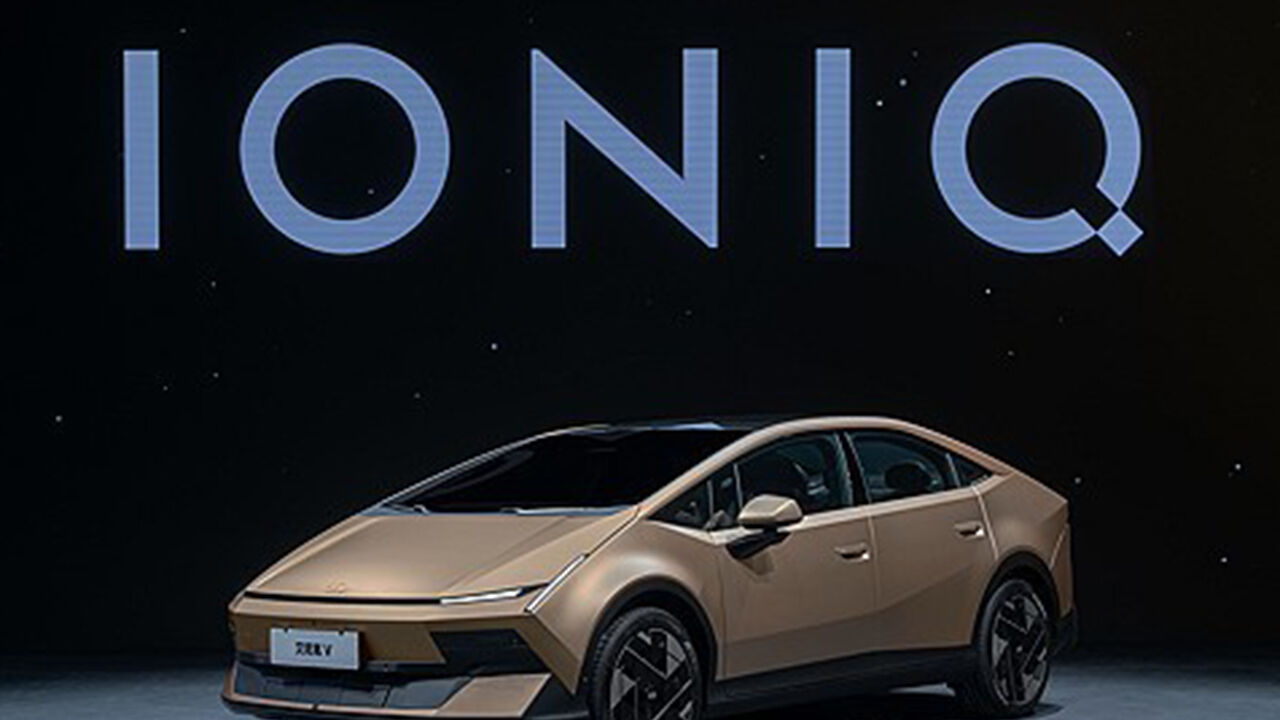
▲ Hyundai Motor's Ioniq V unveiled at the 2026 Beijing International Automotive Exhibition
Amid Hyundai Motor's continued sluggish performance in China, reports have emerged that the first Chinese general manager (chief executive) of Beijing Hyundai, Hyundai Motor's joint venture in China, will step down about a year after taking office.
Chinese media outlet Yicai reported on the 30th, citing internal sources at Beijing Hyundai, that General Manager Li Fenggang, who took office on November 10 of last year, is scheduled to step down on the 1st of next month.
The source claimed, "This is not a simple personnel change. Behind it are differences between the South Korean and Chinese shareholders over the development path of Beijing Hyundai."
The source added, "Over the past year, Beijing Hyundai failed to reach an agreement on core agendas such as business targets and the scale of cost reduction, and localization reforms faced difficulties," pointing out that "Li Fenggang, who was the first Chinese general manager, stood at the crossroads of conflict."
Beijing Hyundai is a joint venture established in 2002 with a 50-50 equity split between Beijing Automotive Investment Co. and Hyundai Motor.
Under the agreement, the South Korean side appoints the general manager while the Chinese side appoints the executive deputy general manager. Li, a Tsinghua University graduate with over 20 years of experience in the automotive industry, became the first Chinese national to serve as general manager.
There had been interpretations that this move was in line with the "management localization" strategy of José Muñoz, President and CEO, who became the first non-Korean global CEO at Hyundai Motor.
However, the source claimed, "Under the management system dispatched by the South Korean side, the recruitment of Chinese personnel was limited, and key positions were still predominantly held by South Koreans," adding that "in terms of operations, Li's actual resource allocation authority and decision-making leadership did not match his title."
Yicai also reported that although both the South Korean and Chinese sides were required to reach a consensus during major decision-making processes, substantial discussions had not taken place at the Beijing Hyundai board of directors over the past year.
Amid these circumstances, Beijing Hyundai's sales in the first half of the year fell 5.3% compared to the same period last year, remaining at around 94,000 units.
Yicai stated, "The localization of management means that the duties and jurisdictions of existing South Korean managers are readjusted, which was followed by internal competition," adding, "Products and technologies can be localized, but decision-making power is not so easily localized."
On the other hand, according to another Chinese media outlet, National Business Daily, another internal insider was cited as saying that while it is true Li is stepping down, "it is due to personal reasons. Internally, his actions during his tenure are highly recognized," presenting a contrasting claim.
(Photo provided by Hyundai Motor Group, Yonhap News)
※ Please note: This article was translated by AI and may contain errors.


 Video News
 Video News
 Video News
 Video News
 Video News