
 KOR
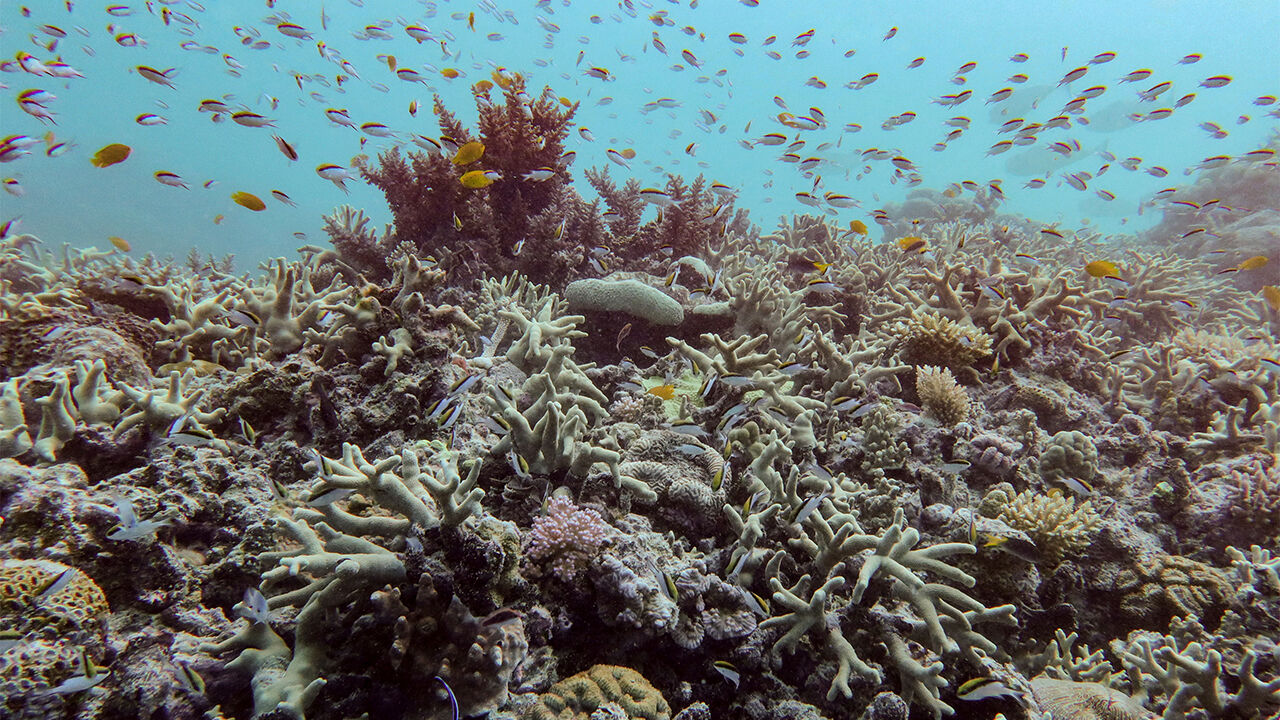
▲ Australia's Great Barrier Reef
Research has indicated that coral reef ecosystems, which boast the highest biodiversity in the world, are at risk of collapsing within 50 years due to rising ocean temperatures and heatwaves driven by climate change.
During the UN biodiversity conference held in Albania on the 22nd (local time), the International Union for Conservation of Nature (IUCN) announced that 96 percent of shallow-water coral reef ecosystems are already facing severe risks of extinction and could vanish by 2075.
The IUCN conducted its first-ever Red List of Ecosystems assessment for coral reefs, covering 127 tropical and subtropical ecoregions worldwide spanning 188,362 square kilometers of coral reef areas.
The study found that world-renowned locations such as Australia's Great Barrier Reef, the Coral Triangle in the western Pacific and Southeast Asia, and the Red Sea coral reefs are all facing severe threats of extinction.
Climate change was pointed out as the most persistent threat collapsing coral reef ecosystems.
In another research report published a week prior in the journal Nature, the IUCN also revealed that 44 percent of coral species that build reefs are threatened with extinction due to climate change.
Often called the "rainforests of the sea," coral reefs are home to a quarter of all marine life and serve as a buffer zone protecting coastlines from coastal erosion and storms.
"We must ambitiously reduce greenhouse gas emissions and strive to protect and restore coral reef ecosystems," emphasized IUCN Director General Grethel Aguilar, adding, "Investment must also continue in resilient coastal ecosystems and the local communities that depend on them."
(Photo: AP, Yonhap News)
※ Please note: This article was translated by AI and may contain errors.


 Video News
 Video News
 Video News
 Video News
 Video News