
 KOR
KOR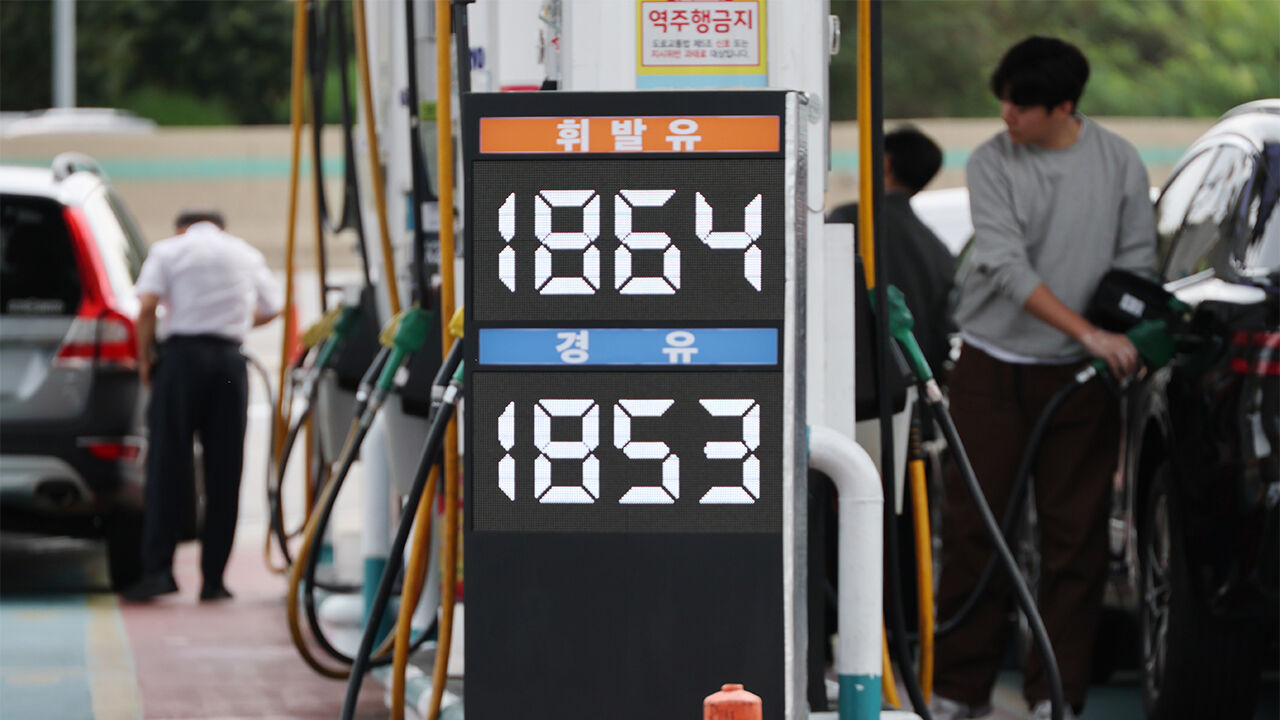
▲ Fuel prices are displayed at a gas station at the Seoul Meeting Square in Seocho-gu, Seoul, on the 16th, when the 11th maximum oil prices are announced. (Photo: Yonhap News)
The South Korean government will freeze maximum oil prices for an additional four weeks.
The Ministry of Trade, Industry and Energy announced today (the 16th) that "the 11th maximum oil prices, which will take effect for the next four weeks starting at midnight tomorrow (the 17th), will be frozen at the same levels as the 10th prices."
Consequently, the 11th maximum prices will remain unchanged from the 7th through 10th periods at 1,784 won per liter for gasoline, 1,773 won for diesel, and 1,380 won for kerosene.
This marks the continuation of the same price level since the 7th maximum prices were lowered by 150 won per liter following the end-of-war agreement between the United States and Iran in late June.
The decision takes into account the burden on household living costs, even as international crude oil prices maintain high levels in the 100-dollar range per barrel.
With middle east tensions persisting due to recent Iranian attacks on vessels passing through the Strait of Hormuz and Yemen's Houthi rebel attacks on major facilities in Saudi Arabia, Brent crude stood at 105.9 dollars per barrel, Dubai crude at 107.0 dollars, and West Texas Intermediate (WTI) at 98.0 dollars as of the 15th.
For international petroleum products, gasoline recorded 133 dollars per barrel and diesel recorded 170 dollars.
The Ministry of Trade, Industry and Energy explained that the decision to freeze the maximum prices was made by comprehensively considering recent burdens on everyday living costs and the oil supply and demand situation, while closely monitoring international oil price trends.
Although September's consumer price inflation rate dropped to 2.9 percent from the 3 percent range of the previous month, petroleum prices rose 14.8 percent compared to the previous year, increasing the burden stemming from energy inflation.
Some critics point out that government price controls have actually driven up petroleum consumption, noting that September gas station gasoline sales increased by 3.0 percent year-on-year.
In response, the Ministry of Trade, Industry and Energy analyzed that consumption increased temporarily due to concentrated demand during the Chuseok holiday and special discounts at expressway gas stations.
The ministry explained that approximately 29,000 kiloliters out of the estimated 36,000-kiloliter increase in September gasoline consumption were concentrated during the fourth week, which included the Chuseok holiday.
(Photo: Yonhap News)
※ Please note: This article was translated by AI and may contain errors.


 Video News
 Video News
 Video News
 Video News
 Video News