
 KOR
KOR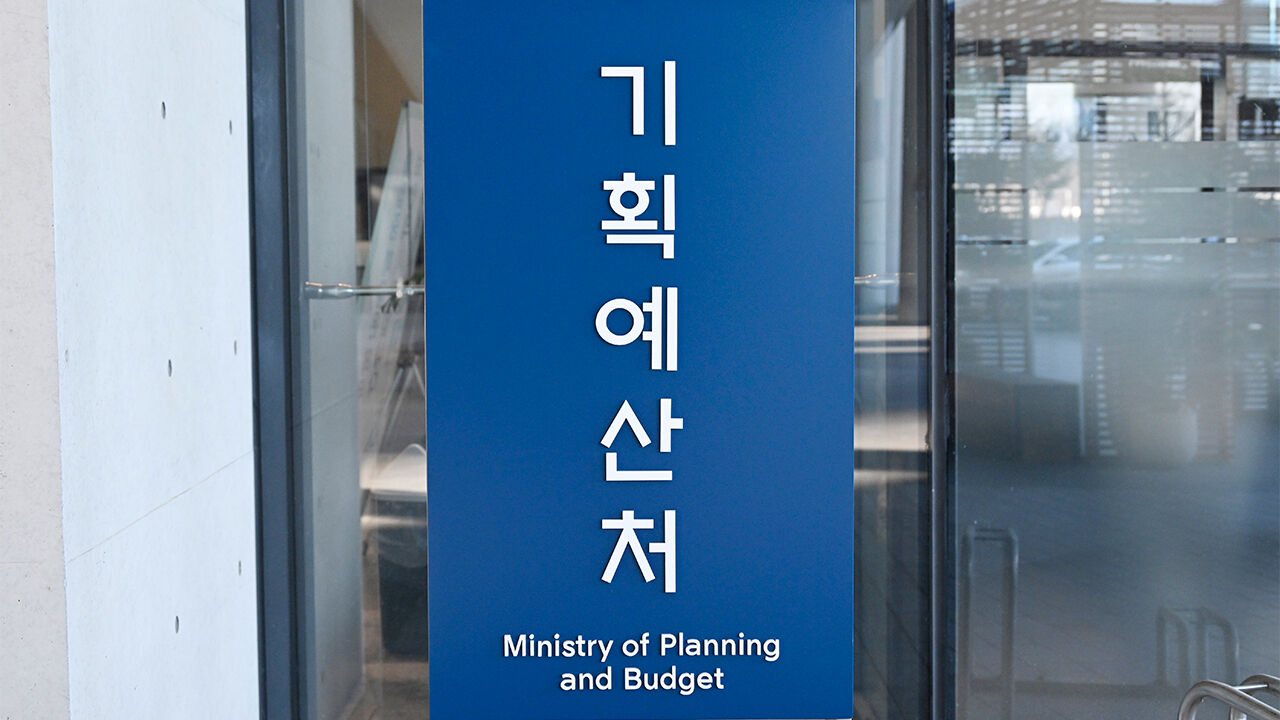
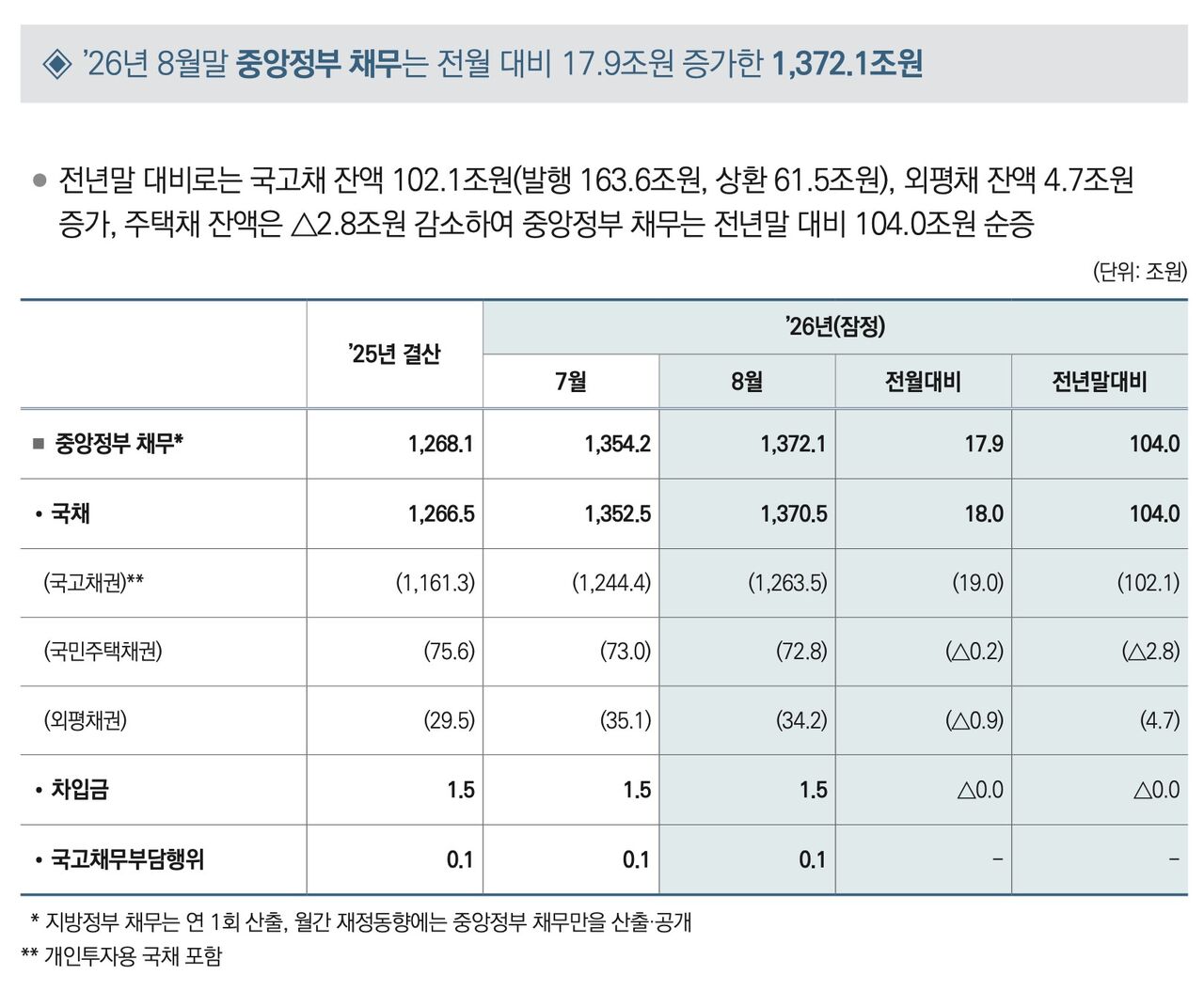
▲ Central Government Debt
Driven by a sharp surge in tax revenue fueled by semiconductor-led corporate income tax advance payments, the state fiscal deficit through August of this year reached its smallest level in eight years.
The consolidated fiscal balance, calculated by subtracting total expenditures from total revenues, also returned to a surplus for the first time in eight years.
According to the October edition of the "Monthly Fiscal Trends" published by the Ministry of Economy and Finance today (October 15), total accumulated revenue from January to August stood at 529.7 trillion won, an increase of 98 trillion won compared to the same period last year.
Of this total, national tax revenue rose by 69.1 trillion won.
The accumulated corporate income tax revenue from January to August amounted to 91.6 trillion won, which is 28.2 trillion won higher than the same period last year.
In August alone—when semiconductor companies such as Samsung Electronics and SK hynix began interim tax prepayments—corporate tax revenue surged by 23.8 trillion won from a year earlier to reach 39.7 trillion won.
Income tax increased by 14.4 trillion won, driven by higher earned income and capital gains taxes resulting from increased performance bonuses and a larger volume of real estate transactions.
Value-added tax rose by 7.4 trillion won amid increases in import values and private consumption.
Securities transaction tax grew by 7 trillion won, supported by higher securities trading values and the restoration of the securities transaction tax rate.
The special tax for rural development also increased by 9.5 trillion won due to higher Kospi trading values and other factors.
Accumulated non-tax revenue for the January-August period recorded 32 trillion won, up 9.2 trillion won from a year ago.
Fund revenues reached 167.8 trillion won, representing a 19.8 trillion won increase from the previous year.
Meanwhile, accumulated total expenditures during the same period rose by 39.3 trillion won year-on-year to 524.7 trillion won.
The execution rate against the budget stood at 69.7%.
The consolidated fiscal balance, which subtracts total expenditures from total revenues, recorded a surplus of 5 trillion won.
This marks the first surplus in eight years since 2018 (16 trillion won).
The balance improved by 58.8 trillion won compared to the same period last year (-53.7 trillion won).
The managed fiscal balance—which strips social security funds from the consolidated balance to reflect the government's actual financial health—recorded a deficit of 43 trillion won, also marking the smallest deficit scale since 2018 (-12 trillion won).
The managed fiscal deficit in August of last year was 88.3 trillion won, cutting the deficit scale by more than half.
Central government debt at the end of August stood at 1,372.1 trillion won, an increase of 17.9 trillion won from the previous month.
Treasury bond issuance in September totaled 17.4 trillion won.
The cumulative issuance volume from January to September reached 179.7 trillion won, fulfilling 80.4% of the annual issuance limit.
Foreign holdings of treasury bonds decreased by 3.7 trillion won in September.
(Photo provided by Ministry of Economy and Finance, Yonhap News)
※ Please note: This article was translated by AI and may contain errors.


 Video News


 Video News