
 KOR
KOR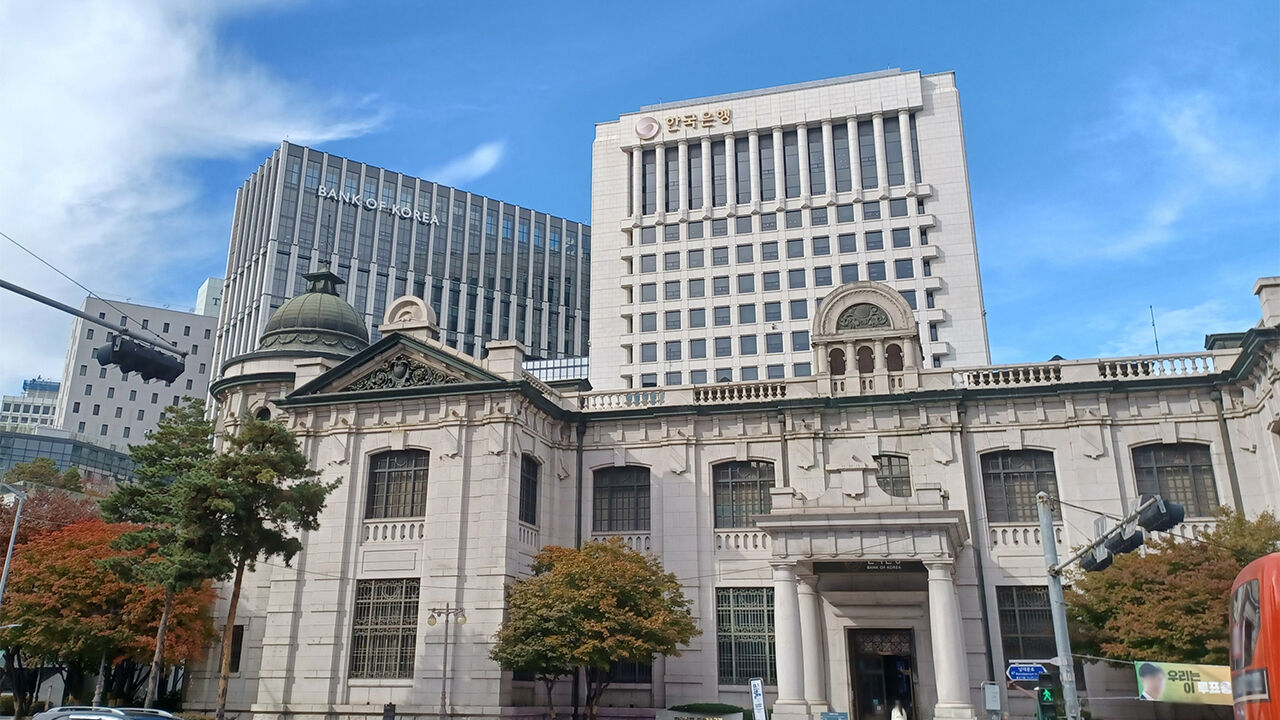
▲ The Bank of Korea
Morgan Stanley has projected that the Bank of Korea will freeze its benchmark interest rate at 3.0 percent during the Monetary Policy Board meeting on the 22nd before raising it in November.
The analysis suggests that while the central bank will pause in October to assess the policy effects following consecutive rate hikes in July and August, persistent inflationary pressures make it highly likely to resume its tightening stance.
In a report released on the 13th (local time), Morgan Stanley researcher Kathleen Oh projected that two board members will voice minority opinions advocating for a rate hike at next week's meeting.
As core inflation remains at a high level, the risk of inflation becoming entrenched was cited as the background for the push toward a hike.
Morgan Stanley forecasts that the benchmark interest rate will rise to 3.25 percent in November and reach a terminal rate of 3.50 percent in the first quarter of 2027.
Oh also highlighted the disparity between the export- and manufacturing-led economic recovery and vulnerable domestic sectors.
While export industries such as semiconductors show solid momentum, low-income earners, self-employed individuals, small and medium-sized enterprises, and labor-intensive or face-to-face service sectors are exposed to heavy debt burdens and risks of insolvency.

▲ Morgan Stanley projects BOK to freeze rates at October meeting with two minority votes for a hike
According to Morgan Stanley, delinquency rates among self-employed borrowers vary across income brackets.
The delinquency rate for low-income self-employed individuals rose from 0.67 percent in the first quarter of 2021 to 2.13 percent in the first quarter of this year, while that for middle-income earners increased from 1.08 percent to 3.64 percent over the same period.
The delinquency rate for small and medium-sized enterprises also hit a 10-year high of 0.856 percent in July of this year.
However, Morgan Stanley assessed that the broader economic recovery in South Korea is robust enough to absorb additional interest rate hikes.
Service sector output growth rose from 3.5 percent year-on-year in April of last year to 4.6 percent in August of this year, and business sentiment in the service and construction industries has improved since hitting a low in early 2025.
Oh suggested that monetary policy should prioritize curbing inflation, while targeted fiscal support remains necessary for vulnerable sectors.
(Photo: Morgan Stanley, Yonhap News)
※ Please note: This article was translated by AI and may contain errors.



 Video News
 Video News

 Video News