
 KOR
KOR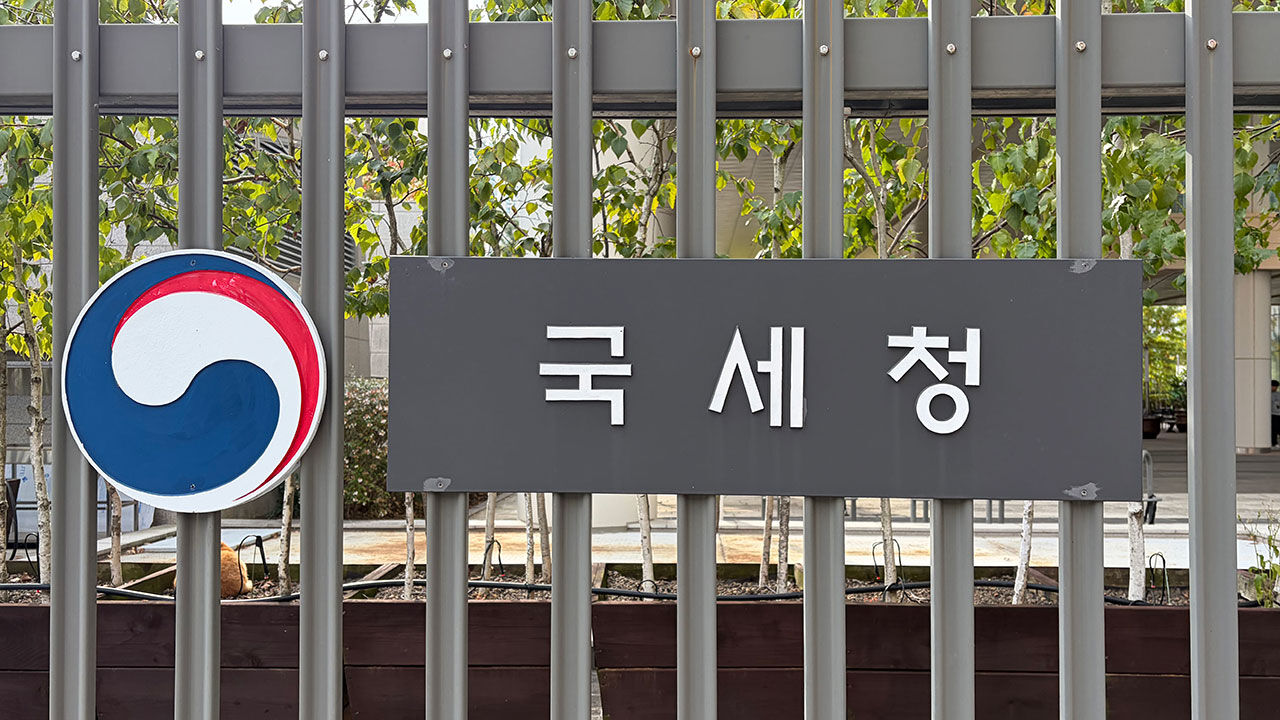
▲ National Tax Service headquarters sign
As accumulated national tax arrears have surpassed 116 trillion won, data shows that over 21 trillion won in late payment penalties accrued prior to tax notices by tax offices has been levied since 2021.
According to data received from the National Tax Service by Representative Kang Min-guk of the People Power Party on the Strategy and Finance Committee on October 11, cumulative national tax arrears stood at 110 trillion won—specifically, 116 trillion 31 billion won—as of the end of June this year.
The number of delinquent cases was 5,642,792.
Arrears have increased every year, rising from 99 trillion 860.7 billion won in 2021 to 102 trillion 514 billion won in 2022, crossing the 100 trillion won mark, followed by 106 trillion 597 billion won in 2023, 110 trillion 731 billion won in 2024, and 114 trillion 96.9 billion won last year.
By tax item as of June, value-added tax accounted for the largest share at 33 trillion 443.1 billion won.
This was followed by income tax at 27 trillion 430.5 billion won, capital gains tax at 13 trillion 387.1 billion won, corporate tax at 11 trillion 298 billion won, inheritance and gift tax at 3 trillion 368.1 billion won, and comprehensive real estate holding tax at 1 trillion 744 billion won.
Amid the increase in tax arrears, the scale of late payment penalties is also growing.
Pre-notice late payment penalties—which apply from the day following the reporting and payment deadline until the day before the tax notice is issued if taxes are not paid by the deadline—totaled 21 trillion 626.1 billion won cumulatively from 2021 through July of this year.
The number of levied cases reached 24,141,504.
Taxes such as income tax, corporate tax, and value-added tax are items that taxpayers report and pay themselves.
If taxes are not paid or are underpaid by the statutory payment deadline, such late payment penalties are imposed even before tax offices issue tax notices.
The levied amounts increased from 3 trillion 655.2 billion won in 2021 to 3 trillion 820.2 billion won in 2022, and 4 trillion 161.4 billion won in 2023.
After dropping to 3 trillion 810.4 billion won in 2024, the amount rose again to 4 trillion 101.7 billion won last year.
New penalty levies through July of this year were provisionally tallied at 2 trillion 77 billion won.
Post-notice late payment penalties—applied when taxes are not paid by the payment deadline specified in the tax notice—are also on an upward trend.
The levied amount was 702.1 billion won in 2021, but surpassed 1 trillion won to reach 1 trillion 132.9 billion won in 2022.
It subsequently increased to 1 trillion 616.6 billion won in 2023 and 2.1375 trillion won in 2024, reaching 2 trillion 656.6 billion won last year.
The levied amount from January to July of this year stood at 1 trillion 735.9 billion won.
Representative Kang Min-guk pointed out, "The sharp surge in tax penalties resulting from national tax arrears and unpaid taxes reflects the prolonged slump in domestic consumption and demonstrates the limitations in the scale and methods of tax collection by the National Tax Service."
He further advised, "Since national tax arrears are not problems that resolve themselves over time, the National Tax Service needs to shift its operational paradigm toward managing the growth rate of arrears and penalties rather than focusing on levying penalties, and formulate countermeasures."
In response, the National Tax Service stated, "Late payment penalties tend to increase depending on the scale and duration of arrears," adding, "We plan to manage long-term arrears more systematically by strengthening field-centric arrears management, such as operating a tax arrears management task force."
※ Please note: This article was translated by AI and may contain errors.



 Video News
 Video News
 Video News
 Video News