
 KOR
KOR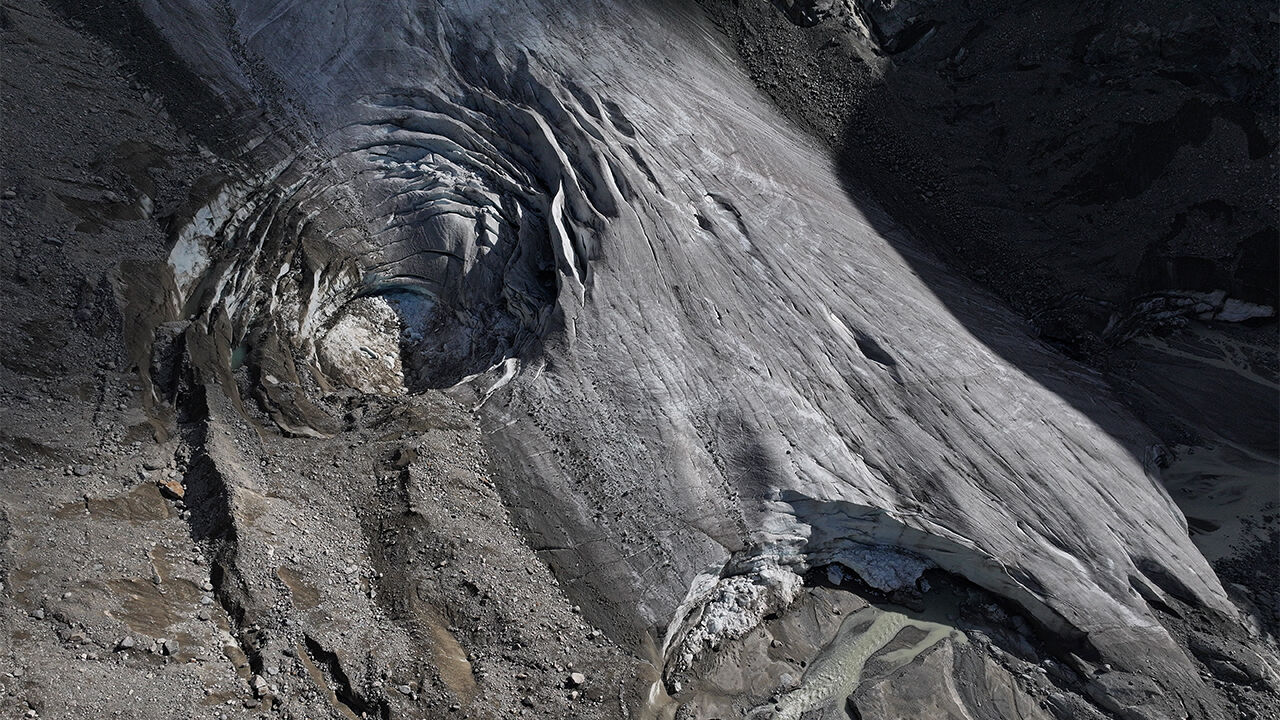
▲ Melting glaciers in the Alps (File photo)
AP통신이 스위스 기관들을 인용해 보도한 바에 따르면, 5.5% of the glaciers in the Swiss Alps, measured by volume, have melted and disappeared this year.
GLAMOS, a Swiss glacier observation network, and the Swiss Academy of Sciences announced these observation results in a press release on October 1, local time.
Citing heatwaves and a lack of winter snowfall as the causes, these institutions analyzed that "under these conditions, there is no long-term survival for the glaciers in the Alps."
The Swiss Alps is the region that contains the largest portion of the glaciers in the Alps.
Experts reported that the volume of glaciers in the Swiss Alps has decreased by nearly one-fifth over the past five years.
Matthias Huss, a professor at ETH Zurich who leads GLAMOS and studies glaciers, emphasized, "The warming we are experiencing now is 100% attributable to human-induced climate change. Without human emissions or fossil fuels, current warming would not exist."
When the glaciers that melted away from July to September of this year are converted into water volume, it amounts to 2.2 trillion liters (L), which is four times Switzerland's annual water consumption.
Switzerland, which has a population of about 9.1 million, generates more than half of its electricity through hydroelectric power.
Switzerland is called the "water tower" of Europe and supplies water to major European rivers such as the Danube, Po, Rhine, and Rhône.
Experts stated that the glaciers in the Swiss Alps suffered "extreme melting" this year, reducing the average thickness of individual glaciers by 2.5 to 4 meters, and by up to 10 meters at the terminals of some glaciers.
The 5.5% volume reduction rate of the Swiss Alps glaciers this year ranks as the second-highest on record.
The record for the highest reduction rate is approximately 6% in 2022.
At that time, compounding summer heatwaves and a lack of winter snowfall, an unusual amount of red dust blew in from the Sahara Desert, darkening the surface of the glaciers and causing them to absorb more heat.
Although the absolute amount of glacier reduction in the Swiss Alps this year was actually less than in 2003, the reduction rate of 5.5% was much larger than the 3.5% recorded in 2003.
This is because the total ice volume of the Swiss Alps glaciers is currently only about a third of what it was 23 years ago.
(Photo: Getty Images)
※ Please note: This article was translated by AI and may contain errors.


 Video News
 Video News
 Video News
 Video News
 Video News