
 KOR
KOR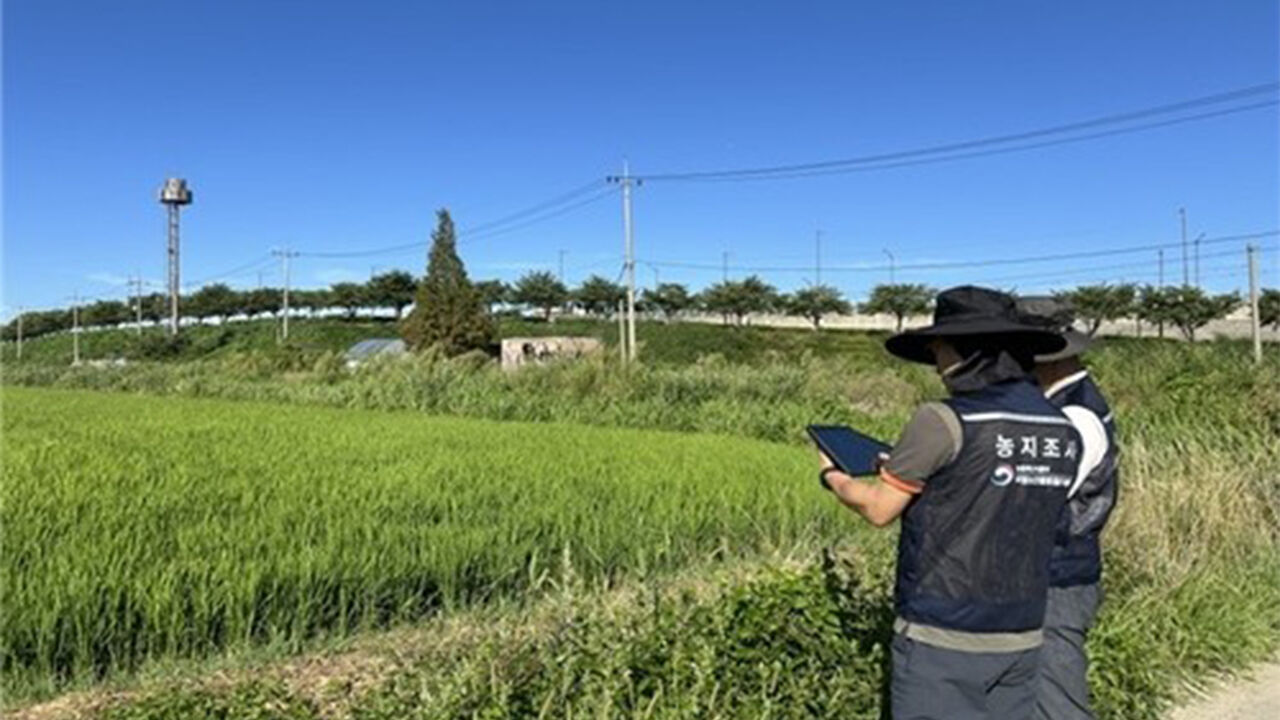
▲ A photo illustrating the preparation and inspection of the comprehensive farmland survey status
As the government embarks on its first-ever comprehensive nationwide farmland survey, criticisms are mounting that the initiative emphasizes the principle of "land-to-tiller" while ignoring the stark realities of rural communities.
The revised Farmland Act, which took effect on August 28, converted farmland disposal orders from a discretionary provision into a mandatory one.
Previously, mayors, county heads, and district chiefs were given the authority to order the disposal of farmland, but the revised law has made this compulsory.
In particular, owners of farmland who fail to farm without justifiable reasons or who illegally lease their land will be notified of a disposal obligation. Upon receiving this notice, they are generally required to dispose of the farmland within one year.
However, farmers point out that these regulations fail to reflect diverse reasons for land ownership, aging populations, and the harsh realities that make cultivation difficult due to labor shortages in rural areas.
There is widespread concern on the ground in rural communities regarding the revised law.
Anxiety stems from fears that the government is stripping land away from farmers who do not personally cultivate it, without considering individual circumstances—such as elderly farmers unable to work or those who inherited land to children who moved to the city but still help out.
Yang, a 55-year-old farmland owner in Namwon, North Jeolla Province, voiced concern, saying, "I inherited this farmland before my father passed away. Because all my siblings live in the city and there was no one to farm it, we leased the land to a neighbor. Under the revised law, this land will become subject to a disposal order, and if I fail to comply, I will even face compulsory compliance fines."
He added, "Although I am not farming it myself, it makes no sense to force us to dispose of family property that has been protected for over three generations simply because we are not personally farming it."
Farmers who rent other people's land for proxy cultivation also worry that they will be forced to give up farming because their own plots are too small to turn a profit.
A farmer living in Haseong-myeon, Gimpo, explained, "Many people farm their own land and rent adjacent plots at the same time. Since farming just my own land yields little income, this kind of proxy cultivation serves as a primary source of livelihood for quite a few farmers."
He also lamented, "If people are forced to farm only on their own land, actual small-scale farmers will see their profits shrink to the point where they cannot even maintain a basic standard of living."
Farmers are also burdened by expectations that if the enforcement of the revised law leads to an increase in the disposal of non-cultivated farmland, the decline in land prices will accelerate.
Yang pointed out, "Rumors are spreading that prospective buyers expect prices to drop further due to the legal revision, and as a result, they are withholding any intentions to buy."
Kim Sun-bok, head of the Chuncheon Potato Production Council in Gangwon Province, raised his voice, saying, "If government officials had visited rural areas even once to listen to the voices on the ground, they would know how difficult it is to sell farmland at its fair value. Farmers are furious over policies hatched behind office desks."
He continued, "The elderly people here lack the strength to farm, so they rent out their land for cultivation at around 1,000 won per pyeong just to earn meager pocket money. Instead of providing additional support to farming households, the government is only draining whatever strength they have left."
According to the Ministry of Land, Infrastructure and Transport's Real Estate Transaction Price Disclosure System (rt.molit.go.kr), the price per square meter of "dab" (paddy fields) in Namil-myeon, near Cheongju, North Chungcheong Province, was about 127,000 to 146,000 won before and after the launch of the nationwide survey on May 18. It has since dropped to about 92,000 won, marking a 28% to 37% decrease.
Over the same period (about 4.5 months), the number of transactions also plummeted by more than half, from 34 to 16.
A real estate agent in Namil-myeon explained, "Farmland prices have fallen by more than 30% compared to before. Only properties priced 30% to 40% below market value are barely managing to sell."
He added, "Structurally, the circumstances of acquisition vary widely—some inherited the land, others stopped farming due to old age, and some bought plots for weekend gardens and left them unattended. If investigated by rigid standards, not a single person will escape unscathed."
Choi, 84, who has farmed for over 40 years in Ungdong, Miryang, South Gyeongsang Province, complained, "There are many people who want to sell, but no buyers. Just two years ago, I thought I could get around 200,000 won per pyeong for the land, but now people are unwilling to offer even 100,000 won."
An official at a real estate agency in Yangpyeong, Gyeonggi Province, also hinted, "Calls occasionally come in asking us to help sell farmland even if we lower the price significantly. However, since there are virtually no buyers in the current climate, transactions are barely taking place."
Expressing concern, he added, "While it is appropriate to take proper measures against those who acquired farmland for speculative purposes, nowadays almost no one buys farmland to make money rather than apartments. This government measure is like 'burning down a whole house to catch a bedbug.'"
Criticisms have also been raised regarding the physical limitations of the comprehensive survey and unclear post-survey guidelines.
Due to the short survey period and a shortage of personnel, completion rates remain low.
Yangpyeong County in Gyeonggi Province, which is popular as a second-home or return-to-rural destination for metropolitan area residents, has currently hired about 60 investigators to conduct an in-depth survey of approximately 86,000 parcels of land.
However, only about 19,000 parcels have been surveyed so far, accounting for just 24% of the total target. It remains uncertain whether the survey can be fully completed by the end of next month as originally planned by the government.
Similarly, in Yeoju, where an in-depth survey is being conducted on a total of about 83,000 parcels using 32 hired investigators, the current survey rate lingers at 43%.
It is widely projected that the situation in local governments with a higher concentration of rural areas will be even worse.
Furthermore, local government officials note that before imposing fines or compulsory compliance penalties based on survey results, legally mandated procedures such as hearings must be conducted, which will realistically be difficult to handle given the time and workload involved.
While local governments are proceeding with the surveys in accordance with government directives, they maintain that they are facing confusion due to a lack of clear guidelines on issues such as whether land left uncultivated due to aging or inherited land should be unconditionally forced onto the market.
In Cheongsong County, North Gyeongsang Province, a flood of inquiries from farmers regarding the nationwide farmland survey has poured in recently, but local authorities are struggling to respond due to the absence of detailed guidelines.
A local government official said, "There is a significant gap between the law, which is based on the 'land-to-tiller principle,' and reality. We are worried that blindly forcing people to sell uncultivated land will cause rural areas to lose their vitality."
Another local official shared, "A considerable number of protest calls are coming in from farmland owners asking, 'What are we supposed to do when the land doesn't sell even when we put it on the market?' We hope the government will come up with supplementary measures that reflect conditions on the ground."
(Photo: Provided by the Ministry of Agriculture, Food and Rural Affairs, Yonhap News)
※ Please note: This article was translated by AI and may contain errors.



 Video News

 Video News
 Video News