
 KOR
KOR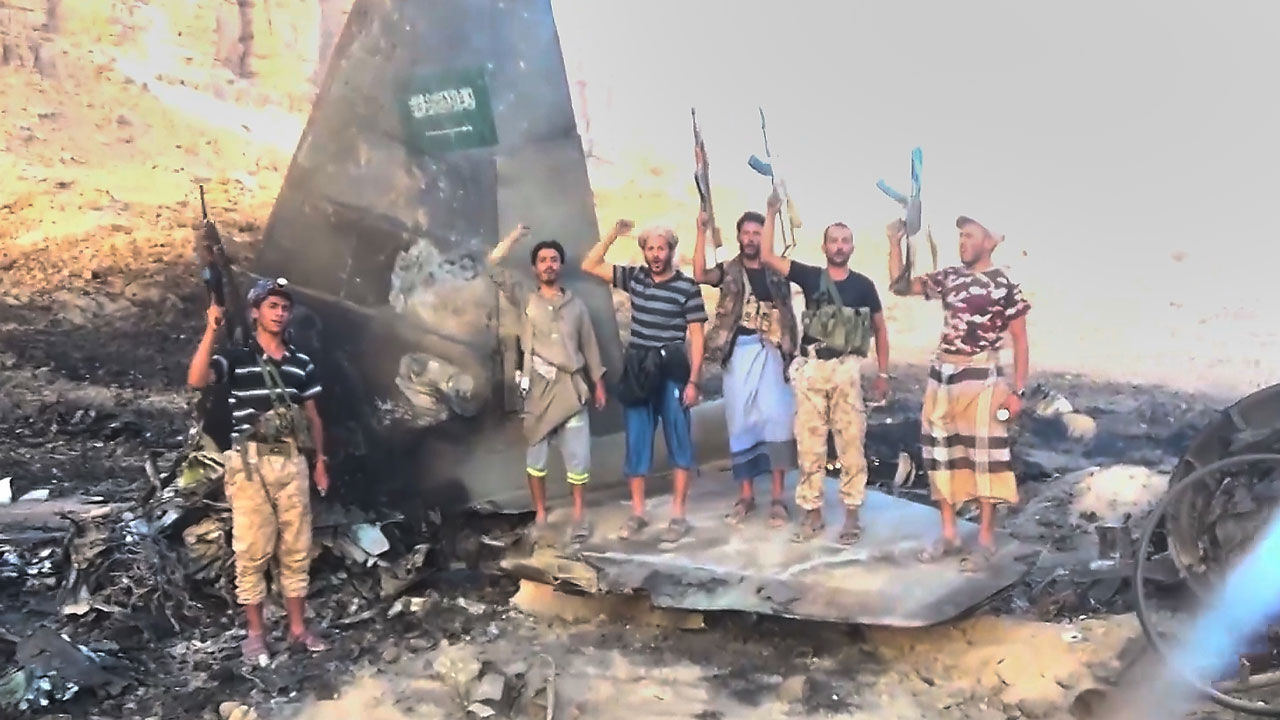
▲ Houthi rebels
Circumstances indicate that Saudi Arabia has used Chinese-made ballistic missiles in actual combat for the first time against the Iran-backed Houthi rebels in Yemen, the Wall Street Journal (WSJ) reported on the 16th local time.
According to the report, Yemeni officials and weapons experts stated that missile debris found in Yemen appears to be the Chinese-made Dongfeng (DF)-15 ballistic missile.
Videos circulating on social media showed Yemeni residents gathering around the missile fuselage, illuminating the fins, motor, and serial number with the lights of their mobile phones.
The designation "DF-15A" is printed in bold black letters on the side of the fuselage.
Experts noted that the missile's fixed fins and steering motor match those of Chinese-made ballistic missiles shown in training footage released by Chinese state media.
The DF-15A is a short-range solid-fueled ballistic missile designed by China, with a range of approximately 965 kilometers.
Both Houthi and Yemeni government officials stated that Saudi Arabia launched the missile.
A Saudi government official also remarked that "the Houthi rebels do not possess DF-15 missiles," pointing to the possibility that Saudi Arabia fired them.
Only the fuselage of the missile debris was found.
Because the warhead separates in flight and travels further, it has not been confirmed where inside Yemen the missile struck.
If it is confirmed that Saudi Arabia fired the missile, it would mark the first time Riyadh has used ballistic missiles during its long-running conflict with the Houthis, the WSJ pointed out.
Furthermore, if it is true that Saudi Arabia used Chinese-made ballistic missiles, it would newly shed light on the reality of China's missile sales to the Middle East, which Beijing has long denied.
The United States has long pointed to Saudi Arabia as a purchaser of Chinese missiles, but specifics have never been officially confirmed, according to the WSJ.
Sasha Bruchmann, a researcher at the International Institute for Strategic Studies (IISS) in London, analyzed that "Saudi Arabia is playing a card it has not shown before to balance the strategic equation."
This missile deployment comes as the Saudi economy faces pressure amid widening conflicts in the Middle East.
With the Strait of Hormuz, an energy artery, effectively blocked for months due to clashes between the United States and Iran, the Houthis recently seized control of the Bab el-Mandeb Strait, which has emerged as a key route for regional crude oil exports.
Last week, a key Saudi oil pipeline was hit by a drone attack, leading to a temporary suspension of operations.
Experts analyzed that the use of this missile could be intended as a warning not only to the Houthi rebels but also to Iran.
This is because the range of the DF-15A reaches the southern coast of Iran.
However, Sam Lehringer, a researcher at the U.S. think tank Foreign Policy Research Institute (FPRI), pointed out that "it is a heavy burden for Saudi Arabia, as a ballistic missile conflict with Iran could place its entire missile infrastructure at risk."
Meanwhile, the Houthis claimed in a statement posted on social media that Saudi Arabia carried out 40 airstrikes in western Yemen over the past 24 hours using F-15 fighter jets.
The Houthis also claimed to have shot down a Saudi F-15 fighter jet over the skies of Marib Province in northeastern Yemen using a domestically produced surface-to-air missile.
(Photo: AP, Yonhap News)
※ Please note: This article was translated by AI and may contain errors.


 Video News
 Video News

 Video News
