
 KOR
KOR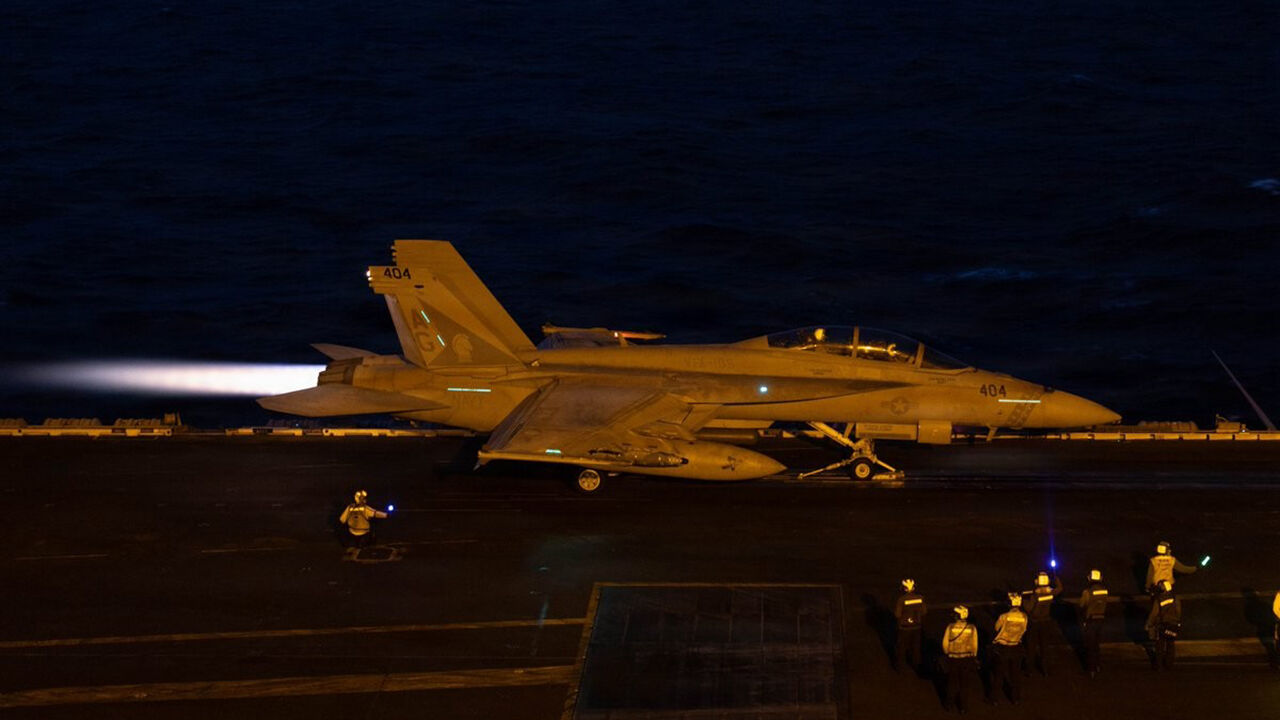
▲ A U.S. military fighter jet launches from an aircraft carrier deployed in the Middle East (The photo above is unrelated to the content of the article.)
CNN and other broadcasters reported that the U.S. Department of Defense Office of Inspector General released a special report on the 14th local time, officially tallying for the first time the scale of losses at U.S. military bases and diplomatic facilities in the Middle East due to the war with Iran.
In the report, the Inspector General stated that from February 28, when the war broke out, to June 30, hundreds of buildings and structures within U.S. military bases in Kuwait, Bahrain, Qatar, the United Arab Emirates (UAE), Saudi Arabia, Oman, Iraq, and Jordan were damaged or destroyed by Iranian attacks.
According to the report, more than 50 U.S. military aircraft were damaged or destroyed during the war, including four F-15Es, seven KC-135 aerial refuelers, four AH-6 helicopters, and at least 30 MQ-9 Reaper drones.
The report also included the fact that stockpiles of major ammunition, such as core surface-to-air and ship-to-air interceptor missiles like the SM-3 and PAC-3 (Patriot interceptor missiles) and precision-guided bombs for airstrikes (such as JDAMs), have been severely depleted.
It points out that due to production bottlenecks in the defense industry, it will take at least three years or more to restore the depleted stockpiles of major munitions to pre-war levels.
The report also noted that the war has changed the traditional operational methods of the U.S. military.
As attacks from Iran and its proxy forces continued, the U.S. Central Command redeployed personnel, assets, and logistics storage facilities, according to the report.
The report explained that "the redeployment included the withdrawal of Army medical evacuation (MEDEVAC) helicopters previously stationed in Iraq and Kuwait, which resulted in most medical evacuations to local treatment facilities being conducted overland."
Due to the destruction of the U.S. Navy hub base stationed in Bahrain, Diego Garcia Island in the Indian Ocean became a logistical hub, extending the resupply cycle from 14 days to 18 days.
Regarding this Bahrain base, Acting U.S. Secretary of the Navy, Hung Cao, told the U.S. media outlet The Epoch Times on the 9th, "They (Iran) smashed Bahrain."
Previously, the U.S. Department of Defense estimated the cost of the war with Iran from February 28 to June 29 at $33.4 billion (approx. 45 trillion won), but this excluded recovery costs.
In addition to military facilities in the Middle East, diplomatic facilities such as embassies and consulates-general stationed in the region also suffered approximately $184 million (approx. 250 billion won) in damages due to Iranian attacks.
U.S. diplomatic facilities in Iraq, Kuwait, Saudi Arabia, and the UAE suffered the brunt of the damage.
During the war, a maximum of about 3,500 diplomatic mission personnel in the Middle East also evacuated back to their home country.
(Photo provided by U.S. Central Command, Yonhap News)
※ Please note: This article was translated by AI and may contain errors.


![The 'Crazy Race' of a Korean High Schooler That Shattered Japan Swimming's 'Solo Run'... [AG Then and There]](http://img.sbs.co.kr/newimg/news/20260915/202222542_300.jpg) Video News
Video News
 Video News
!["It Has Become a Sea of Tears, Are You Going Through Menopause?" Rep. Kim Seung-won Direct Hit Over Remarks [Baroi News]](http://img.sbs.co.kr/newimg/news/20260915/202222565_300.jpg) Video News
Video News
 Video News
