
 KOR
KOR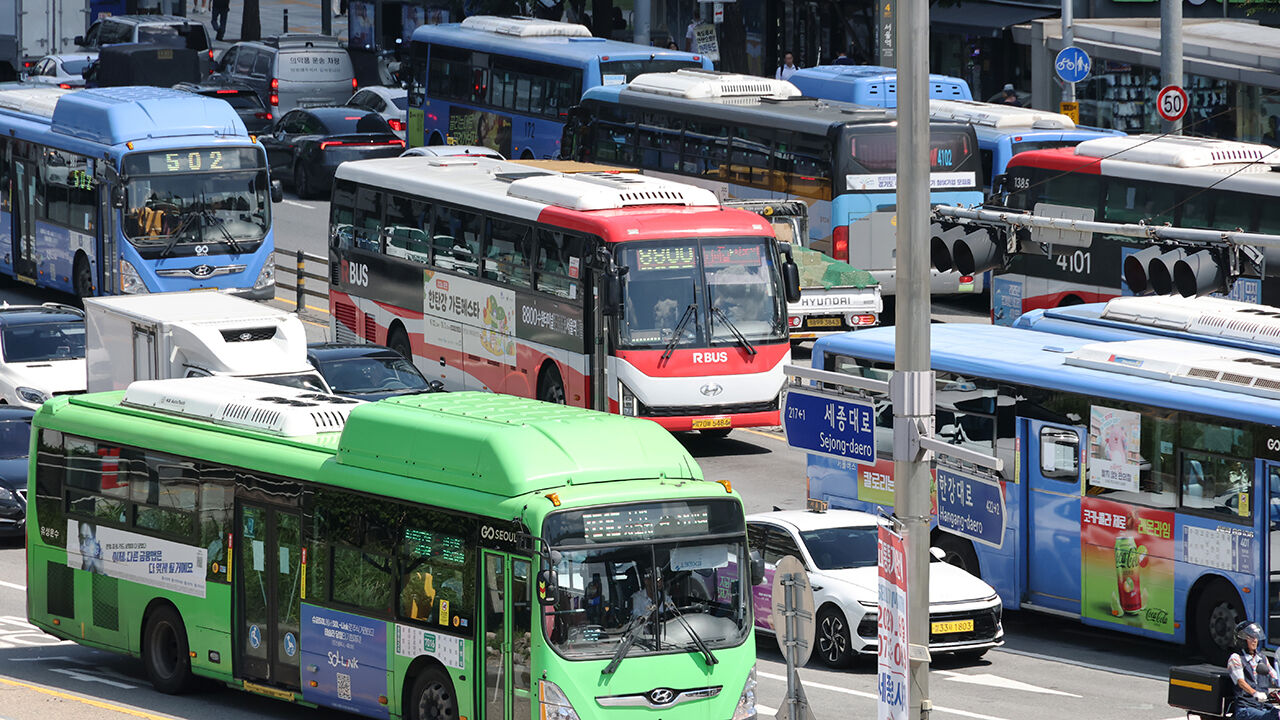
▲ Will Seoul City buses come to a halt starting the 16th?
The Seoul Metropolitan Government announced that it will implement emergency transport measures in preparation for the city bus strike scheduled for the 16th.
The Seoul City Bus Labor Union has warned that it will go on strike starting with the first trains on the 16th if a wage agreement is not reached by the 15th.
The city explained that it has prepared emergency transport measures with all possibilities open to brace for an unprecedented situation where a city bus strike could occur for the second time this year.
First, the city decided to scale up the operation of chartered shuttle buses—which numbered around 700 during the strike in January—to a maximum of 1,500 this time.
In particular, about 200 of these will be deployed to major arterial roads to support travel between autonomous districts (gu).
If the strike is prolonged, the city plans to further expand the deployment of shuttle buses on arterial routes.
The 25 autonomous districts in Seoul will operate up to 1,300 free shuttle buses connecting major hubs and residential areas to subway stations.
Additionally, to support the movement of residents in transportation-vulnerable areas and facilitate smooth commuting, the city will additionally deploy about 200 free shuttle buses across 10 routes on major arterial roads such as Gangnam-daero, Tongil-ro, and Dobong-ro.
The subway system also plans to increase operations by a total of 202 trips per day to alleviate congestion during rush hours and inconvenience in using public transportation, while extending the last train hours to support late-night travel.
Train operations will be significantly increased by extending peak commuting hours by two hours each (four hours per day) compared to usual, and the last subway trains will be extended until 2:00 AM the following day, just as during the previous strike.
During the strike earlier this year, the city also operated by extending congestion hours and last train times by one hour each.
This time, the city plans to further expand the operating hours during congested periods to minimize citizens' commuting inconveniences.
Furthermore, in anticipation of an increase in the use of private cars, the city plans to temporarily suspend the operation of curbside bus-only lanes and permit general vehicle traffic.
The measure will apply to curbside bus-only lanes operated by the Seoul Metropolitan Government and will be implemented from the start until the end of the strike.
However, median bus-only lanes will remain restricted to buses only, as usual.
Notably, this emergency transport plan newly includes measures to expand alternative transportation means utilizing village buses and Ttareungi (Seoul's public bicycles).
The city plans to accept applications from village bus companies to deploy them to temporary arterial routes and support free use of Ttareungi to alleviate public inconvenience caused by the bus strike.
For real-time guidance to citizens, traffic information will be provided through the 120 Dasan Call Center, the Seoul Transport Operation and Information Service (TOPIS), the city website and social media accounts, roadside LED display boards, and bus information terminals at each bus stop.
The city plans to operate temporary routes flexibly depending on the status of drivers returning to work.
It has also established a response system for each bus depot to ensure that the business rights of transport companies and drivers who wish to operate normally are not infringed upon even if bus operations are suspended due to the strike.
In addition, to reduce traffic congestion during the strike, the city has requested elementary, middle, and high schools, public institutions, and private companies in Seoul to adjust school arrival and work start times by one hour.
The city noted that actively utilizing working-from-home and flexible work arrangements would be helpful if necessary.
The city held a meeting of district transportation bureau directors and a meeting of transport company representatives on this day to encourage total response and cooperation for emergency transport measures in the event of a strike, and plans to hold an emergency transport measure inspection meeting for final checks on the 15th.
Yeo Jang-kwon, head of the Seoul Metropolitan Government's Transportation Office, said, "Seoul will operate alternative transport options to the maximum extent to minimize citizens' travel inconveniences, and at the same time, we will strictly respond in accordance with law and principles against any illegal acts that obstruct the operations of transport companies and drivers wishing to work normally."
He added, "As there is still time left for labor and management to resolve the issue through dialogue, I ask for understanding and concession so that negotiations can be concluded at a rational level that citizens can accept."
(Photo: Yonhap News)
※ Please note: This article was translated by AI and may contain errors.



 Video News
 Video News

 Video News
![[자막뉴스] "피 토하고 폐 비대" 충격 결과…숨기고 승인해 93명 '생체 실험'](http://img.sbs.co.kr/newimg/news/20260914/202222078_300.jpg) Video News
Video News