
 KOR
KOR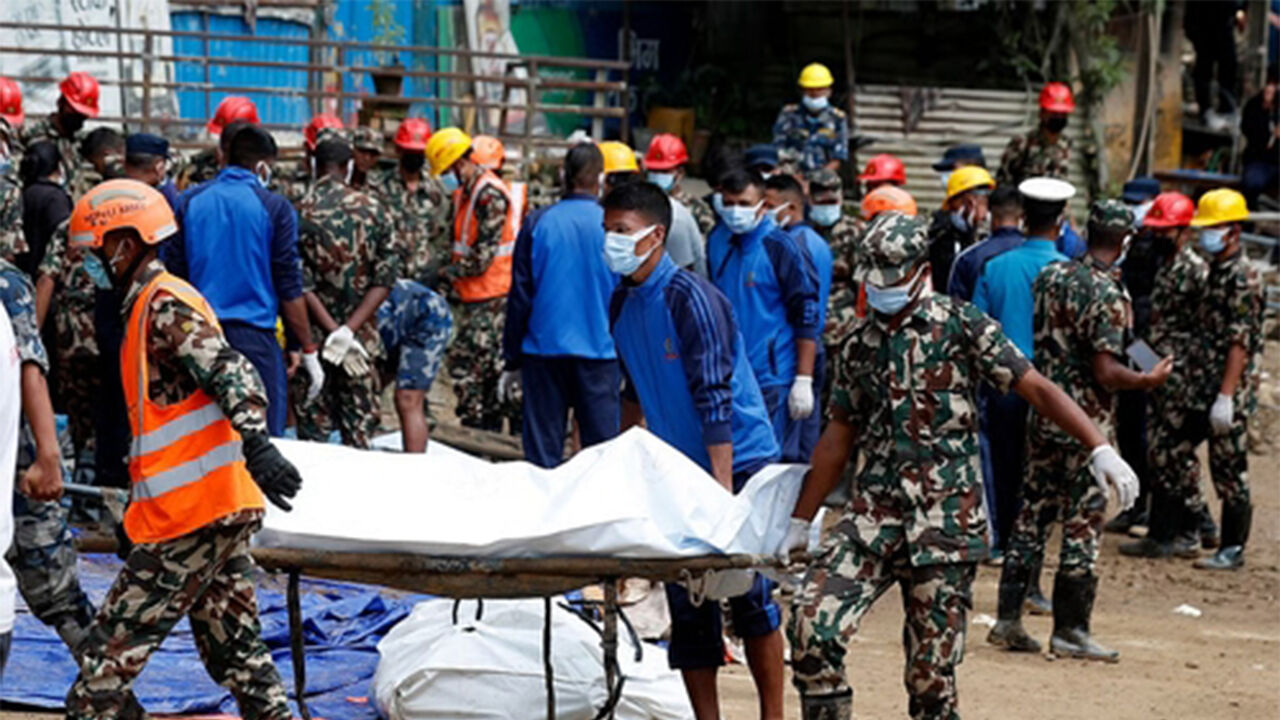
▲ A body recovered from the Gandak River is transported in the Maharajganj district of India's northern Uttar Pradesh state, near the border with Nepal.
As Nepal faces a national crisis from severe flooding, warnings are rising that India, where many of Nepal's rivers flow, could also face impending floods.
According to the British broadcaster BBC on the 4th (local time), there are some 6,000 rivers and streams originating in Nepal, home to the Himalayan mountain range known as the "roof of the world." Most of these flow southward into northern Indian states such as Bihar, Uttar Pradesh, and Uttarakhand.
Nepal's Trishuli River, which was hit hardest by the recent massive floods, flows into the Gandak River in India's Bihar and Uttar Pradesh states before merging with the main stem of the Ganges River.
Manish Shrestha, a water resource management expert at the International Centre for Integrated Mountain Development (ICIMOD), an intergovernmental organization based in Kathmandu, Nepal, stated that 7 to 9 major rivers flowing from Nepal into the plains of northern India are the "main culprits" triggering floods in India.
Bihar is India's most flood-prone state, with approximately three-quarters of its northern region officially classified as flood-vulnerable zones.
Nearly all major rivers causing floods in Bihar originate in Nepal, including the Gandak River, while Uttar Pradesh and Uttarakhand also frequently suffer flood damage from waters flowing in from Nepal.
Because about 40 percent of the annual average water volume of the Ganges River—the lifeline of northern India—comes from Nepal, and an even higher proportion during the dry season, Nepal's significance in India's flood prevention is immense.
The problem is that, as demonstrated by the recent severe floods, climate change is melting Himalayan glaciers and thawing permafrost, making them unstable and continuously amplifying the risk of floods originating from Nepal.
This risk is further heightened by the fact that Nepal has almost no large reservoirs to trap rising waters.
Saswata Sanyal, a disaster risk reduction specialist at ICIMOD, explained that Kulekhani Dam, Nepal's main storage dam in the central region, has a storage capacity of less than 0.1 cubic kilometers.
Furthermore, experts warn that if a "Himalayan tsunami" occurs—where massive amounts of sediment and rock debris are poured out by large-scale collapses of Himalayan glaciers, as seen this time—it can be far more destructive than a simple flood consisting mostly of water.
The BBC noted that a tragic example occurred in February 2021 in the Chamoli valley of Uttarakhand, where a Himalayan glacier collapse sent a torrent of debris and water crashing down, destroying a hydroelectric power plant and causing around 200 deaths and disappearances.
Meanwhile, authorities in Bihar have warned residents not to catch, trade, or eat unusually large and peculiar fish that have been washed down in rivers originating from Nepal following the massive floods.
According to the British newspaper The Independent, after floodwaters overflowed from Nepal's Trishuli River last week and flowed into Bihar via the Gandak River and other waterways, unusually large and strange fish began to be caught alongside flood debris and bodies presumed to be victims.
Chattu Sahani, a fisherman in the Mangalpur area, told local media in an interview that "strange and unusual fish are being spotted in the strong currents of Bihar's rivers following the flash floods in Nepal."
After reports emerged that some residents who caught and ate these fish fell ill, Bihar authorities issued a public notice stating that "unfamiliar or unusual fish must not be consumed without confirmation from relevant departments."
Authorities urged residents to refrain from eating such fish until the situation stabilizes, warning that they may have absorbed pollutants from the floodwaters.
Indeed, contamination from mixed floodwaters has been confirmed in groundwater across several areas near the Nepal border in Bihar, where arsenic levels exceeded safety standards and high iron content was detected.
Consequently, health experts have warned that if contaminated floodwaters infiltrate drinking water sources, diseases such as diarrhea and cholera could spread rapidly.
Following the massive floods, authorities in Uttar Pradesh recovered at least 17 bodies presumed to be flood victims from the Gandak River and other areas.
(Photo: AP, Yonhap News)
※ Please note: This article was translated by AI and may contain errors.



 Video News

 Video News
 Video News
