
 KOR
KOR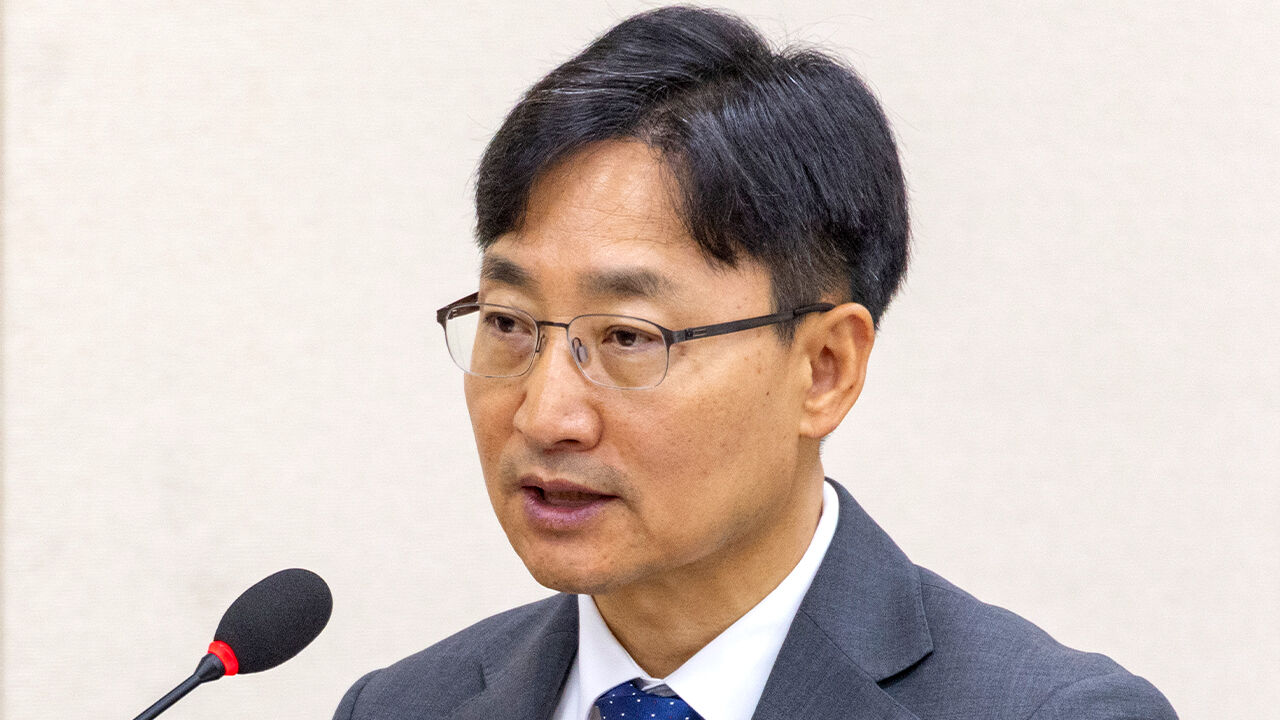
▲ National Tax Service Commissioner Lim Kwang-hyun
A comprehensive National Tax Service inspection of high-end corporate-owned residences has revealed that more than 40% of them are so-called "emperor residences" used privately by controlling owners' families.
National Tax Service Commissioner Lim Kwang-hyun made the findings public today (August 23) in a post on his X (formerly Twitter) account titled, "Normalizing the abnormal: We will root out the practice of emperor residences."
The tax agency conducted a full inspection of 2,639 high-end corporate residences subject to the comprehensive real estate holding tax, which exceed the standard housing size and have an officially assessed public price of over 900 million won.
"The results were more serious than expected," Commissioner Lim pointed out, noting that "excluding 1,157 properties used for rental purposes and 385 used for business purposes such as employee dormitories, the remaining 1,097 properties—about 42%—were found to be inhabited or privately used by the owner's family."
The average official public price of these properties exceeded 2 billion won.
Commissioner Lim stated that 453 properties were valued at over 3 billion won, 12 properties exceeded 100 billion won, and the highest-priced property surpassed 20 billion won.
The corporations that let their owners privately use these high-end homes ranged widely from small and medium-sized enterprises with annual sales in the billions of won to massive conglomerates with tens of trillions of won in revenue.
"Although current tax laws clearly stipulate that the benefits and maintenance costs of residential properties used by executive shareholders and their relatives are subject to taxation, it is true that irregular, free-of-charge residency has persisted as a customary practice in some parts of the industry," Lim noted.
According to cases presented by Commissioner Lim, some companies provided ultra-luxury apartments with scenic Han River views or located in upscale Seoul districts such as Gangnam and Yongsan as lavish residences for owners or their children, keeping it an open secret from regular employees.
He added that there were also real estate speculation cases where individuals transferred their own high-end homes to corporations to evade multiple-home regulations.
Commissioner Lim wrote that it was confirmed as fact that some companies secured luxury condominiums worth over 10 billion won under corporate names under the guise of employee welfare, which were then used privately by the owner's family or select executives while remaining "pie in the sky" for ordinary workers.
"From the perspective of wage earners who pay every penny of their taxes through withholding and face scrutiny over a single office supply item at work, it is difficult to understand the private misuse of corporate assets by owners," Lim criticized.
This does not mean that all 1,097 properties identified in the comprehensive audit have committed tax evasion.
However, Commissioner Lim defined such private use as an abnormal practice and views it as a significant signal indicating tax evasion risks across corporations.
"We plan to conduct rigorous tax audits on the overall tax compliance of corporations where irregularities have been confirmed," he warned, adding, "The National Tax Service will expand its verification to encompass overall embezzlement of corporate funds, such as providing luxury condominiums or free overseas residences and study abroad expenses for a chairman's studying children."
"We will ensure this serves as an opportunity to establish clear principles for companies where the boundary between 'the public domain of the company' and 'the pursuit of private gain by the owner' is blurred," he said. "We will realize tax justice and build a fair society where the majority who follow the rules are respected, rather than a privileged few who bend the rules."
An official from the National Tax Service explained, "This is a follow-up measure implemented at the tax agency level as an extension of the Anti-Corruption Policy Council presided over by President Lee Jae-myung on the 21st."
(Photo: Yonhap News)
※ Please note: This article was translated by AI and may contain errors.




 Video News
 Video News
 Video News
![기침 한 번에 5cm '이것' 나왔다…"피 300mL씩 토했다" 정체는? [현장영상]](http://img.sbs.co.kr/newimg/news/20260821/202214670_300.jpg) Video News
Video News