
 KOR
KOR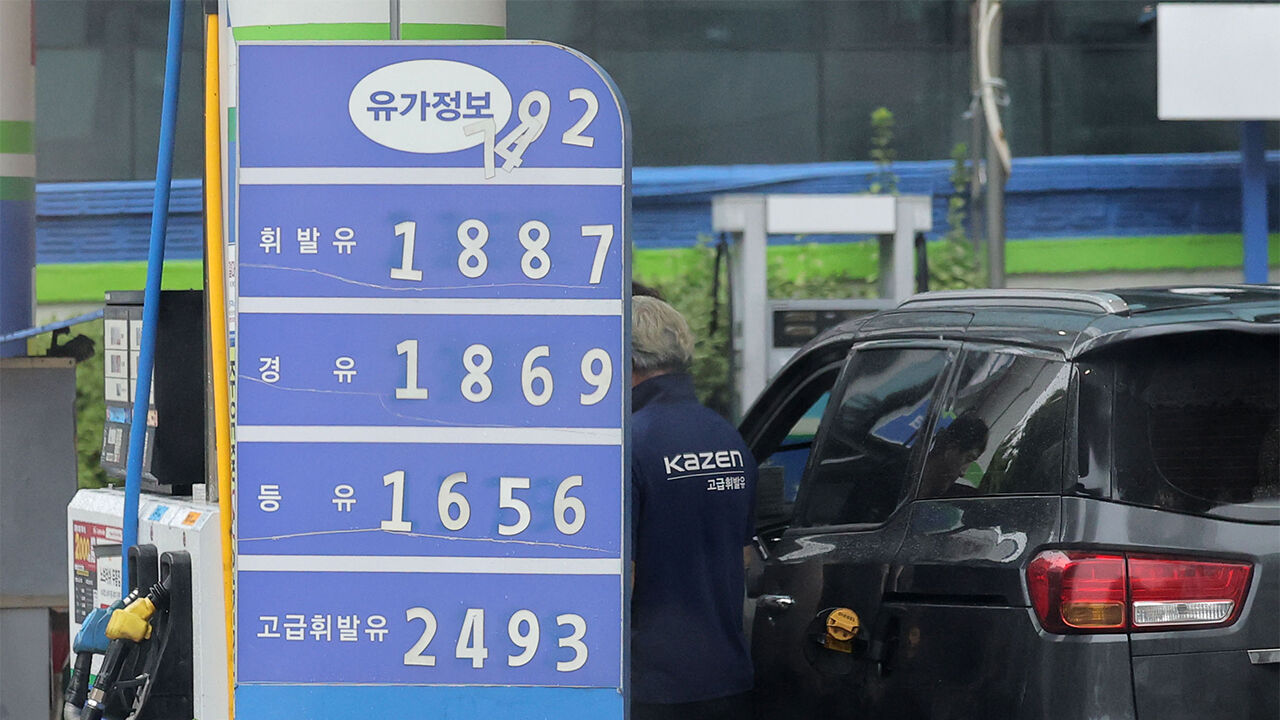
▲ Fuel price information displayed at a gas station in Seoul
Amid ongoing uncertainties in the Middle East, the government has decided to freeze the 9th maximum oil price cap.
With the application of this 9th round of pricing, the maximum petroleum price system—first implemented on March 13—will exceed six months since its introduction.
The Ministry of Trade, Industry and Energy announced today (August 21) that "the 9th maximum oil price, effective for the next four weeks starting at midnight on the 22nd, will be frozen at the same level as the 8th maximum price."
Consequently, the 9th maximum prices will remain unchanged from the 7th and 8th rounds at 1,784 won per liter for gasoline, 1,773 won for diesel, and 1,380 won for kerosene.
This pricing has been maintained since international oil prices fell following the agreement between the United States and Iran to end the Middle East war, which led to a 150 won per liter cut in the 7th price on June 26.
The ministry stated that the decision to freeze prices was made in consideration of the livelihoods of citizens and international oil trends.
Even after the expiration of the 60-day deadline for the memorandum of understanding (MOU) on ending the war between the U.S. and Iran, the standoff between the two countries has continued. As a result, international oil prices—which had dropped to the 70 dollar range per barrel earlier this month—rose to 93.8 dollars for Brent crude and 95.6 dollars for Dubai crude on August 20.
The ministry explained that while international oil prices could potentially rise further, it comprehensively factored in conditions similar to those during the 8th price determination, as well as the financial strain on the public caused by recent domestic extreme weather events such as heatwaves and torrential downpours.
Domestic fuel prices have continued to decline since June 27, standing at 1,862 won per liter for gasoline and 1,845 won for diesel as of August 20.
Initially, the ministry had planned to seek an exit strategy for the maximum price system while monitoring the situation regarding the end of hostilities, the normalization of passage through the Strait of Hormuz, and global crude prices.
It had even allocated 4.2 trillion won in general reserve funds to compensate for refinery losses under the premise of maintaining the maximum price system for six months.
However, as conflict in the Middle East persists, an exit has moved further away.
The ministry expects to maintain the maximum price system for the time being until the situation in the Middle East stabilizes, even if its operational period exceeds six months.
President Lee Jae-myung instructed during a senior secretaries meeting late last month, "I hope that the maximum oil price system will be maintained until oil price instability is fully resolved, and that policy measures such as fuel tax cuts are also kept in place as much as possible."
An official from the ministry said, "We will monitor domestic and international conditions in real time and operate the maximum price system agilely and flexibly, taking into comprehensive account Middle East affairs, petroleum supply and demand, price stability, public livelihood burdens, and the need for demand management."
Regarding concerns that the reserve funds might fall short, the official stated, "Settlements are underway and the maximum price system is being prolonged, making it difficult to predict whether there will be a shortfall, but we currently expect that it can be managed within the allocated budget."
(Photo: Yonhap News)
※ Please note: This article was translated by AI and may contain errors.



 Video News
 Video News
 Video News
 Video News
 Video News